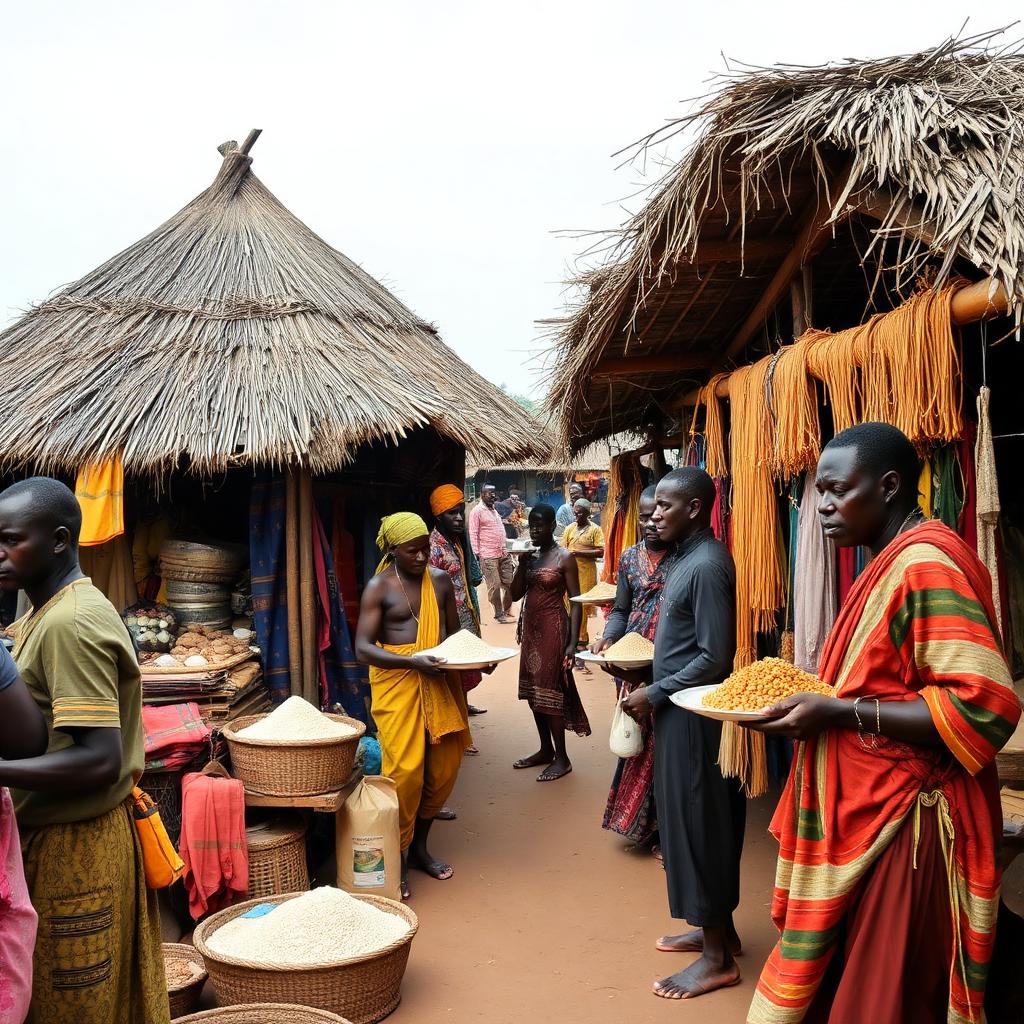
Long before banks, coins and mobile money came to Ghana, our ancestors carried out business using a simple system called barter trade. In barter, a person exchanges one good or service directly for another — for example, a basket of yam for a piece of cloth, or a goat for a load of salt.
Barter trade shaped the economy, the culture and even the politics of the people who lived in the area we now call Ghana for hundreds of years.
What Is Barter Trade?
Barter trade is the direct exchange of goods or services without using money. Both parties must want what the other is offering. This is called the 'double coincidence of wants'. If a farmer has yam and needs salt, he must find a trader who has salt and needs yam.
Because finding a perfect match is hard, traders in old Ghana slowly began to use 'in-between' items that almost everyone would accept — gold dust, cowrie shells, iron rods, lengths of cloth and bars of salt. These items acted like early forms of money.
The Trans-Saharan Trade
From around the 8th century AD, traders from North Africa crossed the Sahara desert on camels to reach the empires of West Africa. They brought salt, books, glass beads, horses and copper. They took back gold, kola nuts, ivory, leather and, sadly, enslaved people.
This trade made the ancient kingdoms of Ghana, Mali and Songhai very rich. Although the ancient Ghana Empire was further north than today's Ghana, the trade routes eventually stretched south into the forest belt where the Ashanti, the Akan and other groups lived.
Markets and Market Days
Across Ghana, communities organised market days every four, six or eight days. Markets like Salaga in the north and Kumasi in the middle belt became famous trading centres. Salaga was especially known as the 'Timbuktu of the South' because so many goods from across West Africa passed through it.
At the market, traders haggled over the value of one item against another. A skilled trader knew how many cowries equalled a handful of salt, or how many yards of kente could be exchanged for a sheep.
Advertisement
From Barter to Money
When European traders arrived on the coast from the 15th century, they introduced gold coins, silver dollars and later British pounds. Slowly, money replaced barter for most large transactions.
But barter never fully died. Even today in many Ghanaian villages, people still exchange labour for food, fish for tomatoes, or firewood for cassava. Modern 'trade by barter' also lives on in international agreements, where countries swap oil for machinery or cocoa for cars.
Understanding the background
Barter Trade in Ghana: How Our Ancestors Did Business is an important topic because it helps learners connect names, dates, places and decisions to the wider story of Ghana. The subject belongs to culture & traditions, but it also links with citizenship, geography, culture and moral education. When students read about Barter Trade in Ghana: How Our Ancestors Did Business, they are not only memorising facts; they are learning how people solved problems, protected communities, built institutions and passed lessons from one generation to another.
A useful way to study this topic is to begin with the main evidence. One important fact is: Barter = direct exchange of goods without money. Another point to remember is: Common 'in-between' items: gold dust, cowrie shells, salt, cloth, iron rods. These details give the article a clear anchor. They help learners explain what happened, where it happened, who was involved and why the event or place remains important in Ghanaian life today.
The story should also be read with empathy. History is about real people: leaders making hard choices, ordinary families facing change, traders moving goods, chiefs protecting their people, students demanding a better future, and communities keeping traditions alive. Some parts of Ghana's past are joyful and proud, while others are painful. A good reader respects both sides and tries to understand the human experience behind the facts.
For long reading, pause after each section and ask three simple questions: What is the main idea? Which details support it? How does it connect to Ghana today? This method makes Barter Trade in Ghana: How Our Ancestors Did Business easier to remember and easier to discuss in class. It also helps learners write stronger essays because every paragraph can be connected to a clear point, a clear example and a clear explanation.
This topic is also useful for national identity. Ghana is made up of many regions, languages, ethnic groups, faiths and occupations, yet the history of the country shows repeated efforts to build unity. Whether the topic is a president, a castle, a kingdom, a region, a festival or a national event, the lesson is that Ghana's story was built by many hands. Understanding Barter Trade in Ghana: How Our Ancestors Did Business helps learners appreciate that shared responsibility.
When preparing for quizzes or examinations, learners should create a short timeline, write down key names, mark important places on a map and explain the meaning of each fact in their own words. Copying sentences is less helpful than retelling the story clearly. If a learner can explain Barter Trade in Ghana: How Our Ancestors Did Business to a younger pupil in simple English, then the learner has truly understood the topic.
People, places and decisions
Barter Trade in Ghana: How Our Ancestors Did Business is an important topic because it helps learners connect names, dates, places and decisions to the wider story of Ghana. The subject belongs to culture & traditions, but it also links with citizenship, geography, culture and moral education. When students read about Barter Trade in Ghana: How Our Ancestors Did Business, they are not only memorising facts; they are learning how people solved problems, protected communities, built institutions and passed lessons from one generation to another.
A useful way to study this topic is to begin with the main evidence. One important fact is: Common 'in-between' items: gold dust, cowrie shells, salt, cloth, iron rods. Another point to remember is: Salaga and Kumasi were major trading centres. These details give the article a clear anchor. They help learners explain what happened, where it happened, who was involved and why the event or place remains important in Ghanaian life today.
The story should also be read with empathy. History is about real people: leaders making hard choices, ordinary families facing change, traders moving goods, chiefs protecting their people, students demanding a better future, and communities keeping traditions alive. Some parts of Ghana's past are joyful and proud, while others are painful. A good reader respects both sides and tries to understand the human experience behind the facts.
For long reading, pause after each section and ask three simple questions: What is the main idea? Which details support it? How does it connect to Ghana today? This method makes Barter Trade in Ghana: How Our Ancestors Did Business easier to remember and easier to discuss in class. It also helps learners write stronger essays because every paragraph can be connected to a clear point, a clear example and a clear explanation.
This topic is also useful for national identity. Ghana is made up of many regions, languages, ethnic groups, faiths and occupations, yet the history of the country shows repeated efforts to build unity. Whether the topic is a president, a castle, a kingdom, a region, a festival or a national event, the lesson is that Ghana's story was built by many hands. Understanding Barter Trade in Ghana: How Our Ancestors Did Business helps learners appreciate that shared responsibility.
When preparing for quizzes or examinations, learners should create a short timeline, write down key names, mark important places on a map and explain the meaning of each fact in their own words. Copying sentences is less helpful than retelling the story clearly. If a learner can explain Barter Trade in Ghana: How Our Ancestors Did Business to a younger pupil in simple English, then the learner has truly understood the topic.
Cause and effect
Barter Trade in Ghana: How Our Ancestors Did Business is an important topic because it helps learners connect names, dates, places and decisions to the wider story of Ghana. The subject belongs to culture & traditions, but it also links with citizenship, geography, culture and moral education. When students read about Barter Trade in Ghana: How Our Ancestors Did Business, they are not only memorising facts; they are learning how people solved problems, protected communities, built institutions and passed lessons from one generation to another.
A useful way to study this topic is to begin with the main evidence. One important fact is: Salaga and Kumasi were major trading centres. Another point to remember is: Trans-Saharan trade linked Ghana to North Africa from the 8th century. These details give the article a clear anchor. They help learners explain what happened, where it happened, who was involved and why the event or place remains important in Ghanaian life today.
The story should also be read with empathy. History is about real people: leaders making hard choices, ordinary families facing change, traders moving goods, chiefs protecting their people, students demanding a better future, and communities keeping traditions alive. Some parts of Ghana's past are joyful and proud, while others are painful. A good reader respects both sides and tries to understand the human experience behind the facts.
For long reading, pause after each section and ask three simple questions: What is the main idea? Which details support it? How does it connect to Ghana today? This method makes Barter Trade in Ghana: How Our Ancestors Did Business easier to remember and easier to discuss in class. It also helps learners write stronger essays because every paragraph can be connected to a clear point, a clear example and a clear explanation.
This topic is also useful for national identity. Ghana is made up of many regions, languages, ethnic groups, faiths and occupations, yet the history of the country shows repeated efforts to build unity. Whether the topic is a president, a castle, a kingdom, a region, a festival or a national event, the lesson is that Ghana's story was built by many hands. Understanding Barter Trade in Ghana: How Our Ancestors Did Business helps learners appreciate that shared responsibility.
When preparing for quizzes or examinations, learners should create a short timeline, write down key names, mark important places on a map and explain the meaning of each fact in their own words. Copying sentences is less helpful than retelling the story clearly. If a learner can explain Barter Trade in Ghana: How Our Ancestors Did Business to a younger pupil in simple English, then the learner has truly understood the topic.
Life in Ghana at the time
Barter Trade in Ghana: How Our Ancestors Did Business is an important topic because it helps learners connect names, dates, places and decisions to the wider story of Ghana. The subject belongs to culture & traditions, but it also links with citizenship, geography, culture and moral education. When students read about Barter Trade in Ghana: How Our Ancestors Did Business, they are not only memorising facts; they are learning how people solved problems, protected communities, built institutions and passed lessons from one generation to another.
A useful way to study this topic is to begin with the main evidence. One important fact is: Trans-Saharan trade linked Ghana to North Africa from the 8th century. Another point to remember is: European coins gradually replaced barter from the 15th century onwards. These details give the article a clear anchor. They help learners explain what happened, where it happened, who was involved and why the event or place remains important in Ghanaian life today.
The story should also be read with empathy. History is about real people: leaders making hard choices, ordinary families facing change, traders moving goods, chiefs protecting their people, students demanding a better future, and communities keeping traditions alive. Some parts of Ghana's past are joyful and proud, while others are painful. A good reader respects both sides and tries to understand the human experience behind the facts.
For long reading, pause after each section and ask three simple questions: What is the main idea? Which details support it? How does it connect to Ghana today? This method makes Barter Trade in Ghana: How Our Ancestors Did Business easier to remember and easier to discuss in class. It also helps learners write stronger essays because every paragraph can be connected to a clear point, a clear example and a clear explanation.
This topic is also useful for national identity. Ghana is made up of many regions, languages, ethnic groups, faiths and occupations, yet the history of the country shows repeated efforts to build unity. Whether the topic is a president, a castle, a kingdom, a region, a festival or a national event, the lesson is that Ghana's story was built by many hands. Understanding Barter Trade in Ghana: How Our Ancestors Did Business helps learners appreciate that shared responsibility.
When preparing for quizzes or examinations, learners should create a short timeline, write down key names, mark important places on a map and explain the meaning of each fact in their own words. Copying sentences is less helpful than retelling the story clearly. If a learner can explain Barter Trade in Ghana: How Our Ancestors Did Business to a younger pupil in simple English, then the learner has truly understood the topic.
Why the topic matters today
Barter Trade in Ghana: How Our Ancestors Did Business is an important topic because it helps learners connect names, dates, places and decisions to the wider story of Ghana. The subject belongs to culture & traditions, but it also links with citizenship, geography, culture and moral education. When students read about Barter Trade in Ghana: How Our Ancestors Did Business, they are not only memorising facts; they are learning how people solved problems, protected communities, built institutions and passed lessons from one generation to another.
A useful way to study this topic is to begin with the main evidence. One important fact is: European coins gradually replaced barter from the 15th century onwards. Another point to remember is: Barter = direct exchange of goods without money. These details give the article a clear anchor. They help learners explain what happened, where it happened, who was involved and why the event or place remains important in Ghanaian life today.
The story should also be read with empathy. History is about real people: leaders making hard choices, ordinary families facing change, traders moving goods, chiefs protecting their people, students demanding a better future, and communities keeping traditions alive. Some parts of Ghana's past are joyful and proud, while others are painful. A good reader respects both sides and tries to understand the human experience behind the facts.
For long reading, pause after each section and ask three simple questions: What is the main idea? Which details support it? How does it connect to Ghana today? This method makes Barter Trade in Ghana: How Our Ancestors Did Business easier to remember and easier to discuss in class. It also helps learners write stronger essays because every paragraph can be connected to a clear point, a clear example and a clear explanation.
This topic is also useful for national identity. Ghana is made up of many regions, languages, ethnic groups, faiths and occupations, yet the history of the country shows repeated efforts to build unity. Whether the topic is a president, a castle, a kingdom, a region, a festival or a national event, the lesson is that Ghana's story was built by many hands. Understanding Barter Trade in Ghana: How Our Ancestors Did Business helps learners appreciate that shared responsibility.
When preparing for quizzes or examinations, learners should create a short timeline, write down key names, mark important places on a map and explain the meaning of each fact in their own words. Copying sentences is less helpful than retelling the story clearly. If a learner can explain Barter Trade in Ghana: How Our Ancestors Did Business to a younger pupil in simple English, then the learner has truly understood the topic.
Common misunderstandings
Barter Trade in Ghana: How Our Ancestors Did Business is an important topic because it helps learners connect names, dates, places and decisions to the wider story of Ghana. The subject belongs to culture & traditions, but it also links with citizenship, geography, culture and moral education. When students read about Barter Trade in Ghana: How Our Ancestors Did Business, they are not only memorising facts; they are learning how people solved problems, protected communities, built institutions and passed lessons from one generation to another.
A useful way to study this topic is to begin with the main evidence. One important fact is: Barter = direct exchange of goods without money. Another point to remember is: Common 'in-between' items: gold dust, cowrie shells, salt, cloth, iron rods. These details give the article a clear anchor. They help learners explain what happened, where it happened, who was involved and why the event or place remains important in Ghanaian life today.
The story should also be read with empathy. History is about real people: leaders making hard choices, ordinary families facing change, traders moving goods, chiefs protecting their people, students demanding a better future, and communities keeping traditions alive. Some parts of Ghana's past are joyful and proud, while others are painful. A good reader respects both sides and tries to understand the human experience behind the facts.
For long reading, pause after each section and ask three simple questions: What is the main idea? Which details support it? How does it connect to Ghana today? This method makes Barter Trade in Ghana: How Our Ancestors Did Business easier to remember and easier to discuss in class. It also helps learners write stronger essays because every paragraph can be connected to a clear point, a clear example and a clear explanation.
This topic is also useful for national identity. Ghana is made up of many regions, languages, ethnic groups, faiths and occupations, yet the history of the country shows repeated efforts to build unity. Whether the topic is a president, a castle, a kingdom, a region, a festival or a national event, the lesson is that Ghana's story was built by many hands. Understanding Barter Trade in Ghana: How Our Ancestors Did Business helps learners appreciate that shared responsibility.
When preparing for quizzes or examinations, learners should create a short timeline, write down key names, mark important places on a map and explain the meaning of each fact in their own words. Copying sentences is less helpful than retelling the story clearly. If a learner can explain Barter Trade in Ghana: How Our Ancestors Did Business to a younger pupil in simple English, then the learner has truly understood the topic.
Classroom study notes
Barter Trade in Ghana: How Our Ancestors Did Business is an important topic because it helps learners connect names, dates, places and decisions to the wider story of Ghana. The subject belongs to culture & traditions, but it also links with citizenship, geography, culture and moral education. When students read about Barter Trade in Ghana: How Our Ancestors Did Business, they are not only memorising facts; they are learning how people solved problems, protected communities, built institutions and passed lessons from one generation to another.
A useful way to study this topic is to begin with the main evidence. One important fact is: Common 'in-between' items: gold dust, cowrie shells, salt, cloth, iron rods. Another point to remember is: Salaga and Kumasi were major trading centres. These details give the article a clear anchor. They help learners explain what happened, where it happened, who was involved and why the event or place remains important in Ghanaian life today.
The story should also be read with empathy. History is about real people: leaders making hard choices, ordinary families facing change, traders moving goods, chiefs protecting their people, students demanding a better future, and communities keeping traditions alive. Some parts of Ghana's past are joyful and proud, while others are painful. A good reader respects both sides and tries to understand the human experience behind the facts.
For long reading, pause after each section and ask three simple questions: What is the main idea? Which details support it? How does it connect to Ghana today? This method makes Barter Trade in Ghana: How Our Ancestors Did Business easier to remember and easier to discuss in class. It also helps learners write stronger essays because every paragraph can be connected to a clear point, a clear example and a clear explanation.
This topic is also useful for national identity. Ghana is made up of many regions, languages, ethnic groups, faiths and occupations, yet the history of the country shows repeated efforts to build unity. Whether the topic is a president, a castle, a kingdom, a region, a festival or a national event, the lesson is that Ghana's story was built by many hands. Understanding Barter Trade in Ghana: How Our Ancestors Did Business helps learners appreciate that shared responsibility.
When preparing for quizzes or examinations, learners should create a short timeline, write down key names, mark important places on a map and explain the meaning of each fact in their own words. Copying sentences is less helpful than retelling the story clearly. If a learner can explain Barter Trade in Ghana: How Our Ancestors Did Business to a younger pupil in simple English, then the learner has truly understood the topic.
How to remember the lesson
Barter Trade in Ghana: How Our Ancestors Did Business is an important topic because it helps learners connect names, dates, places and decisions to the wider story of Ghana. The subject belongs to culture & traditions, but it also links with citizenship, geography, culture and moral education. When students read about Barter Trade in Ghana: How Our Ancestors Did Business, they are not only memorising facts; they are learning how people solved problems, protected communities, built institutions and passed lessons from one generation to another.
A useful way to study this topic is to begin with the main evidence. One important fact is: Salaga and Kumasi were major trading centres. Another point to remember is: Trans-Saharan trade linked Ghana to North Africa from the 8th century. These details give the article a clear anchor. They help learners explain what happened, where it happened, who was involved and why the event or place remains important in Ghanaian life today.
The story should also be read with empathy. History is about real people: leaders making hard choices, ordinary families facing change, traders moving goods, chiefs protecting their people, students demanding a better future, and communities keeping traditions alive. Some parts of Ghana's past are joyful and proud, while others are painful. A good reader respects both sides and tries to understand the human experience behind the facts.
For long reading, pause after each section and ask three simple questions: What is the main idea? Which details support it? How does it connect to Ghana today? This method makes Barter Trade in Ghana: How Our Ancestors Did Business easier to remember and easier to discuss in class. It also helps learners write stronger essays because every paragraph can be connected to a clear point, a clear example and a clear explanation.
This topic is also useful for national identity. Ghana is made up of many regions, languages, ethnic groups, faiths and occupations, yet the history of the country shows repeated efforts to build unity. Whether the topic is a president, a castle, a kingdom, a region, a festival or a national event, the lesson is that Ghana's story was built by many hands. Understanding Barter Trade in Ghana: How Our Ancestors Did Business helps learners appreciate that shared responsibility.
When preparing for quizzes or examinations, learners should create a short timeline, write down key names, mark important places on a map and explain the meaning of each fact in their own words. Copying sentences is less helpful than retelling the story clearly. If a learner can explain Barter Trade in Ghana: How Our Ancestors Did Business to a younger pupil in simple English, then the learner has truly understood the topic.
Summary
Barter trade was the backbone of Ghana's economy for centuries. It taught our people the value of negotiation, trust and long-distance trade — skills that still shape Ghanaian business today.
Frequently Asked Questions
Q:What is the biggest problem with barter?
Finding someone who has what you want AND wants what you have — the double coincidence of wants.
Q:Is barter still legal in Ghana?
Yes. Barter is not illegal; it is just less common than buying and selling with money.