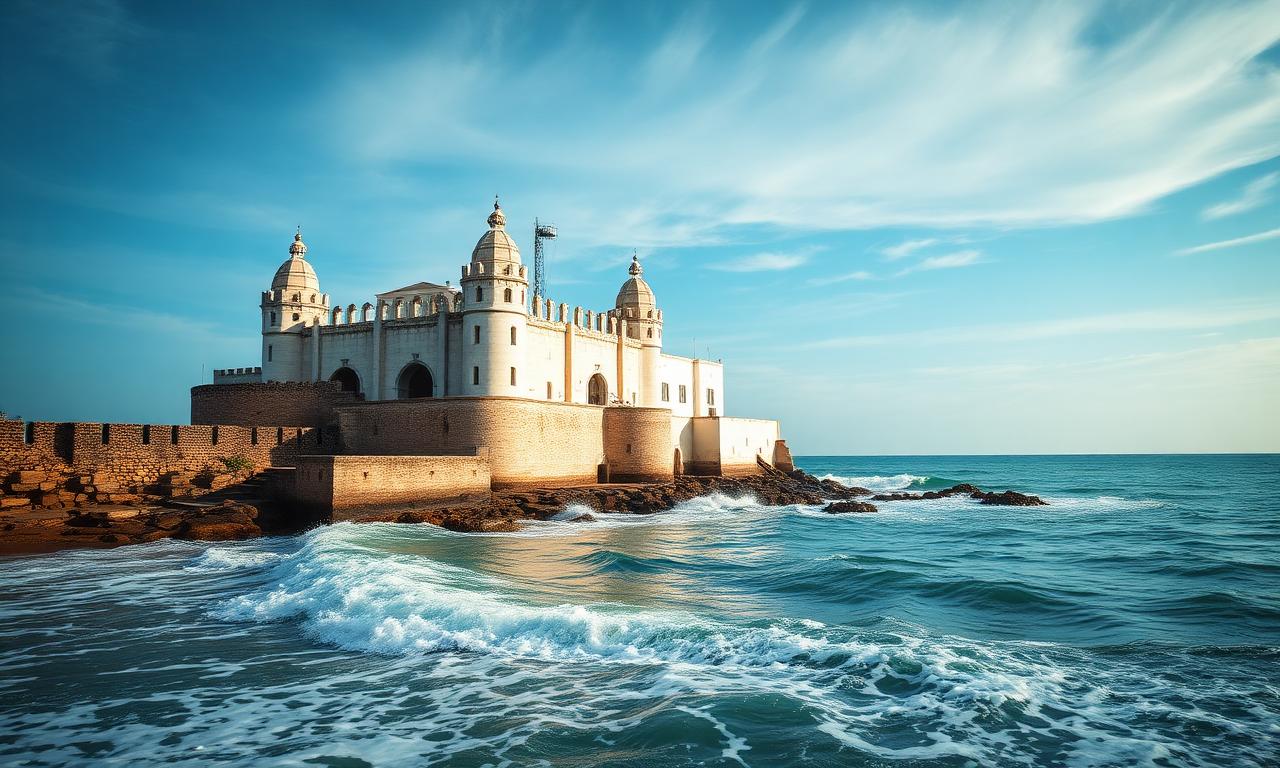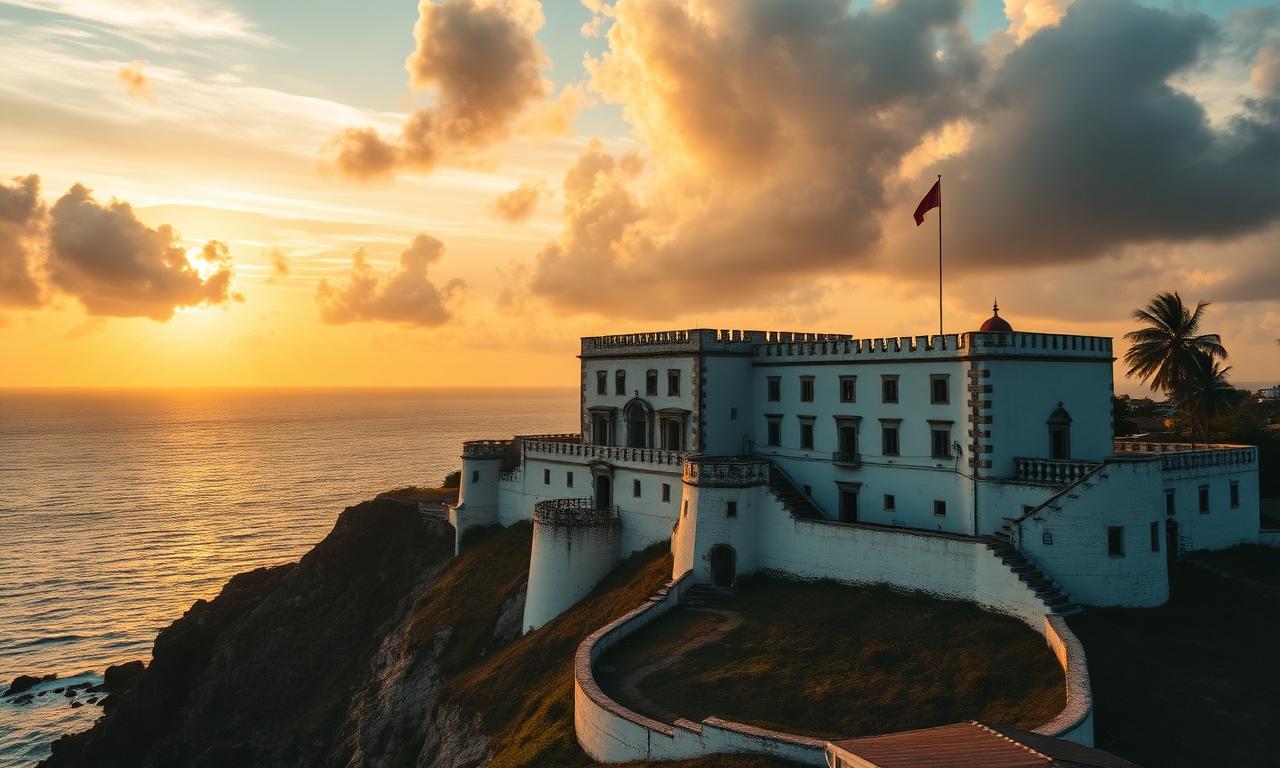
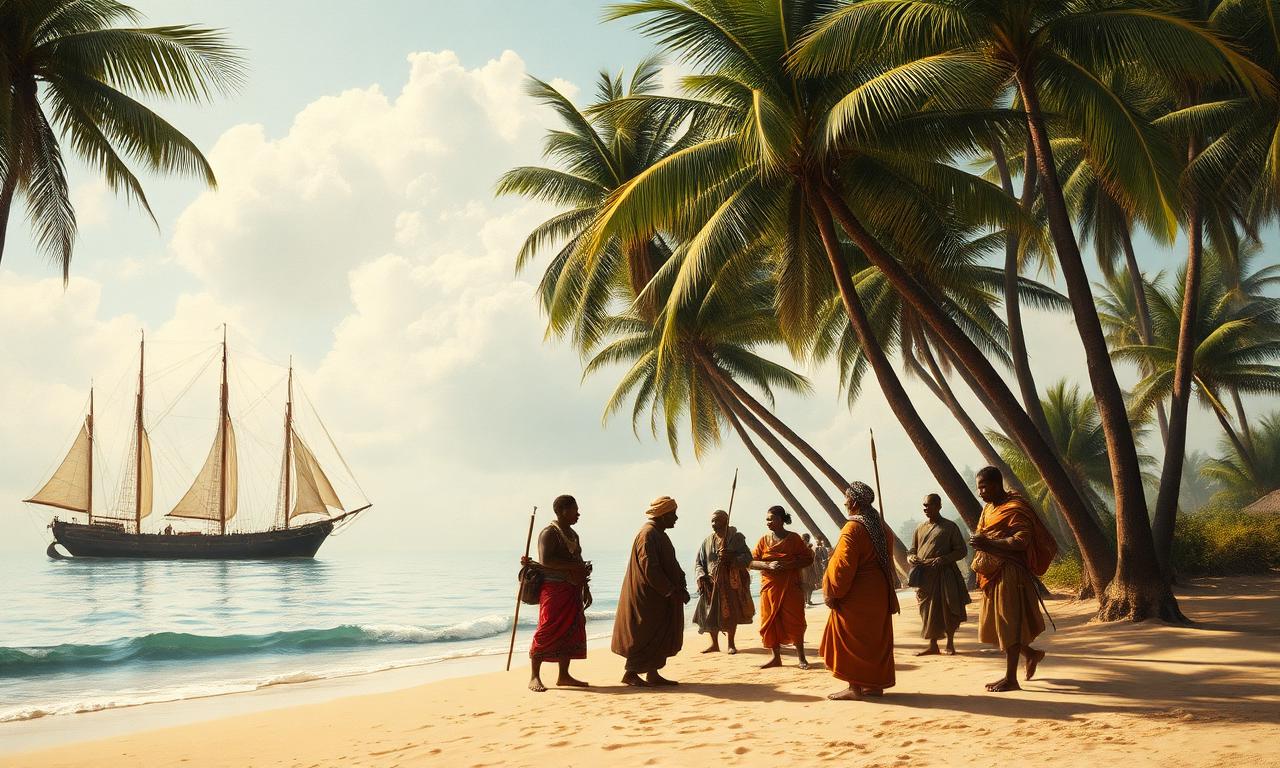
European contact with Ghana began more than 550 years ago when Portuguese sailors first landed on our shores in search of gold. Over the next four centuries, five different European nations — Portugal, the Netherlands, Sweden, Denmark and Britain — built forts and castles along the coast and traded with the African chiefs.
This article explains who came first, why they came, what they built, what they bought and sold, and how their presence changed the history of present-day Ghana forever.
Background and Historical Overview
Before 1471, the people of present-day Ghana traded mainly with their neighbours and with merchants from the Sahel who brought goods from across the Sahara. There were no Europeans on the coast.
By the 1400s European countries were looking for a sea route to the gold-producing regions of West Africa, and later to India. Portugal led the way because of improvements in shipbuilding and navigation made under Prince Henry the Navigator.
When the Portuguese saw the huge amount of gold being traded on our shores, they named the land 'A Mina' (the mine) and the coast became known as the 'Gold Coast' — a name it kept until 1957.
Main Events Explained Clearly
1471 — Portuguese sailors João de Santarém and Pêro Escobar reached the area now called Shama. They traded cloth, beads and brassware for gold.
1482 — The Portuguese built São Jorge da Mina (Elmina Castle), the first European castle in sub-Saharan Africa, after getting permission from Chief Kwamena Ansah.
1598 — The Dutch arrived and built Fort Nassau at Mouri. In 1637 they captured Elmina from the Portuguese.
1650 — The Swedes built Fort Carolusborg at Cape Coast in 1653; the Danes took it in 1657; finally the British captured it in 1664 and renamed it Cape Coast Castle.
1659 — The Danes built Christiansborg Castle in Osu, Accra. It later became the seat of government and is today known as the Osu Castle.
1683 — The Brandenburg-Prussians built Fort Großfriedrichsburg at Princess Town in the Western Region.
1850 — The Danes sold all their forts to Britain. In 1872 the Dutch did the same, leaving Britain as the only European power on the coast.
1874 — Britain declared the Gold Coast a Crown Colony, ending the era of competing European powers and beginning full colonial rule.
Important People Involved
Prince Henry the Navigator — Portuguese prince whose support for exploration made the journey to Ghana possible.
João de Santarém and Pêro Escobar — first Portuguese sailors to reach the Gold Coast in 1471.
Chief Kwamena Ansah — the Edina chief who, in 1482, gave permission for the Portuguese to build Elmina Castle.
Hendrik Caerlof — the Dutch trader who captured Elmina from the Portuguese in 1637.
George Maclean — British officer in the 1830s who increased British influence beyond the forts.
Komenda chiefs — who played the Dutch and English against each other in the Komenda Wars (1694–1700).
Advertisement
Causes and Effects
Causes of European contact: the search for gold and other riches, the desire to find a sea route to India, the competition between European nations, improvements in shipbuilding and navigation, and the spread of Christianity through missionaries.
Positive effects: introduction of new crops such as maize and cassava, building of castles that became schools and museums today, exchange of new ideas and technologies, and exposure to writing and Christianity.
Negative effects: the trans-Atlantic slave trade which carried away millions of Africans, decline of African industries that could not compete with cheap imports, weakening of traditional rulers through European meddling, and finally the loss of independence under British colonial rule.
Simple Real-Life Explanation
Picture a busy market in your hometown. One day strangers from a distant land arrive at the market in big boats. At first they only buy and sell, but soon they build a strong stone shop right next to the chief's palace. They invite friends from other towns; those friends also build shops. After many years, the strangers and their relatives have more shops than the original traders. They begin to make the rules of the market itself.
This is what happened when the Portuguese, Dutch, Danes, Swedes and British came to our coast. What started as simple trading slowly turned into permanent settlements and finally into colonial rule.
Understanding the background
European Contact with Ghana is an important topic because it helps learners connect names, dates, places and decisions to the wider story of Ghana. The subject belongs to historical events, but it also links with citizenship, geography, culture and moral education. When students read about European Contact with Ghana, they are not only memorising facts; they are learning how people solved problems, protected communities, built institutions and passed lessons from one generation to another.
A useful way to study this topic is to begin with the main evidence. One important fact is: Key lesson 1: Trade can be friendly at first but turn into domination if one side becomes much stronger.. Another point to remember is: Key lesson 2: Geography and technology (better ships, stronger weapons) often decide who controls trade.. These details give the article a clear anchor. They help learners explain what happened, where it happened, who was involved and why the event or place remains important in Ghanaian life today.
The story should also be read with empathy. History is about real people: leaders making hard choices, ordinary families facing change, traders moving goods, chiefs protecting their people, students demanding a better future, and communities keeping traditions alive. Some parts of Ghana's past are joyful and proud, while others are painful. A good reader respects both sides and tries to understand the human experience behind the facts.
For long reading, pause after each section and ask three simple questions: What is the main idea? Which details support it? How does it connect to Ghana today? This method makes European Contact with Ghana easier to remember and easier to discuss in class. It also helps learners write stronger essays because every paragraph can be connected to a clear point, a clear example and a clear explanation.
This topic is also useful for national identity. Ghana is made up of many regions, languages, ethnic groups, faiths and occupations, yet the history of the country shows repeated efforts to build unity. Whether the topic is a president, a castle, a kingdom, a region, a festival or a national event, the lesson is that Ghana's story was built by many hands. Understanding European Contact with Ghana helps learners appreciate that shared responsibility.
When preparing for quizzes or examinations, learners should create a short timeline, write down key names, mark important places on a map and explain the meaning of each fact in their own words. Copying sentences is less helpful than retelling the story clearly. If a learner can explain European Contact with Ghana to a younger pupil in simple English, then the learner has truly understood the topic.
People, places and decisions
European Contact with Ghana is an important topic because it helps learners connect names, dates, places and decisions to the wider story of Ghana. The subject belongs to historical events, but it also links with citizenship, geography, culture and moral education. When students read about European Contact with Ghana, they are not only memorising facts; they are learning how people solved problems, protected communities, built institutions and passed lessons from one generation to another.
A useful way to study this topic is to begin with the main evidence. One important fact is: Key lesson 2: Geography and technology (better ships, stronger weapons) often decide who controls trade.. Another point to remember is: Key lesson 3: Cultural exchange has both good and bad sides; we must learn to keep the good and reject the harmful.. These details give the article a clear anchor. They help learners explain what happened, where it happened, who was involved and why the event or place remains important in Ghanaian life today.
The story should also be read with empathy. History is about real people: leaders making hard choices, ordinary families facing change, traders moving goods, chiefs protecting their people, students demanding a better future, and communities keeping traditions alive. Some parts of Ghana's past are joyful and proud, while others are painful. A good reader respects both sides and tries to understand the human experience behind the facts.
For long reading, pause after each section and ask three simple questions: What is the main idea? Which details support it? How does it connect to Ghana today? This method makes European Contact with Ghana easier to remember and easier to discuss in class. It also helps learners write stronger essays because every paragraph can be connected to a clear point, a clear example and a clear explanation.
This topic is also useful for national identity. Ghana is made up of many regions, languages, ethnic groups, faiths and occupations, yet the history of the country shows repeated efforts to build unity. Whether the topic is a president, a castle, a kingdom, a region, a festival or a national event, the lesson is that Ghana's story was built by many hands. Understanding European Contact with Ghana helps learners appreciate that shared responsibility.
When preparing for quizzes or examinations, learners should create a short timeline, write down key names, mark important places on a map and explain the meaning of each fact in their own words. Copying sentences is less helpful than retelling the story clearly. If a learner can explain European Contact with Ghana to a younger pupil in simple English, then the learner has truly understood the topic.
Cause and effect
European Contact with Ghana is an important topic because it helps learners connect names, dates, places and decisions to the wider story of Ghana. The subject belongs to historical events, but it also links with citizenship, geography, culture and moral education. When students read about European Contact with Ghana, they are not only memorising facts; they are learning how people solved problems, protected communities, built institutions and passed lessons from one generation to another.
A useful way to study this topic is to begin with the main evidence. One important fact is: Key lesson 3: Cultural exchange has both good and bad sides; we must learn to keep the good and reject the harmful.. Another point to remember is: Key lesson 4: Disunity among local rulers made it easy for outsiders to play one against the other.. These details give the article a clear anchor. They help learners explain what happened, where it happened, who was involved and why the event or place remains important in Ghanaian life today.
The story should also be read with empathy. History is about real people: leaders making hard choices, ordinary families facing change, traders moving goods, chiefs protecting their people, students demanding a better future, and communities keeping traditions alive. Some parts of Ghana's past are joyful and proud, while others are painful. A good reader respects both sides and tries to understand the human experience behind the facts.
For long reading, pause after each section and ask three simple questions: What is the main idea? Which details support it? How does it connect to Ghana today? This method makes European Contact with Ghana easier to remember and easier to discuss in class. It also helps learners write stronger essays because every paragraph can be connected to a clear point, a clear example and a clear explanation.
This topic is also useful for national identity. Ghana is made up of many regions, languages, ethnic groups, faiths and occupations, yet the history of the country shows repeated efforts to build unity. Whether the topic is a president, a castle, a kingdom, a region, a festival or a national event, the lesson is that Ghana's story was built by many hands. Understanding European Contact with Ghana helps learners appreciate that shared responsibility.
When preparing for quizzes or examinations, learners should create a short timeline, write down key names, mark important places on a map and explain the meaning of each fact in their own words. Copying sentences is less helpful than retelling the story clearly. If a learner can explain European Contact with Ghana to a younger pupil in simple English, then the learner has truly understood the topic.
Life in Ghana at the time
European Contact with Ghana is an important topic because it helps learners connect names, dates, places and decisions to the wider story of Ghana. The subject belongs to historical events, but it also links with citizenship, geography, culture and moral education. When students read about European Contact with Ghana, they are not only memorising facts; they are learning how people solved problems, protected communities, built institutions and passed lessons from one generation to another.
A useful way to study this topic is to begin with the main evidence. One important fact is: Key lesson 4: Disunity among local rulers made it easy for outsiders to play one against the other.. Another point to remember is: Key lesson 5: The castles that stand today are reminders of both shame and resilience; we must preserve them and learn from them.. These details give the article a clear anchor. They help learners explain what happened, where it happened, who was involved and why the event or place remains important in Ghanaian life today.
The story should also be read with empathy. History is about real people: leaders making hard choices, ordinary families facing change, traders moving goods, chiefs protecting their people, students demanding a better future, and communities keeping traditions alive. Some parts of Ghana's past are joyful and proud, while others are painful. A good reader respects both sides and tries to understand the human experience behind the facts.
For long reading, pause after each section and ask three simple questions: What is the main idea? Which details support it? How does it connect to Ghana today? This method makes European Contact with Ghana easier to remember and easier to discuss in class. It also helps learners write stronger essays because every paragraph can be connected to a clear point, a clear example and a clear explanation.
This topic is also useful for national identity. Ghana is made up of many regions, languages, ethnic groups, faiths and occupations, yet the history of the country shows repeated efforts to build unity. Whether the topic is a president, a castle, a kingdom, a region, a festival or a national event, the lesson is that Ghana's story was built by many hands. Understanding European Contact with Ghana helps learners appreciate that shared responsibility.
When preparing for quizzes or examinations, learners should create a short timeline, write down key names, mark important places on a map and explain the meaning of each fact in their own words. Copying sentences is less helpful than retelling the story clearly. If a learner can explain European Contact with Ghana to a younger pupil in simple English, then the learner has truly understood the topic.
Why the topic matters today
European Contact with Ghana is an important topic because it helps learners connect names, dates, places and decisions to the wider story of Ghana. The subject belongs to historical events, but it also links with citizenship, geography, culture and moral education. When students read about European Contact with Ghana, they are not only memorising facts; they are learning how people solved problems, protected communities, built institutions and passed lessons from one generation to another.
A useful way to study this topic is to begin with the main evidence. One important fact is: Key lesson 5: The castles that stand today are reminders of both shame and resilience; we must preserve them and learn from them.. Another point to remember is: Key lesson 1: Trade can be friendly at first but turn into domination if one side becomes much stronger.. These details give the article a clear anchor. They help learners explain what happened, where it happened, who was involved and why the event or place remains important in Ghanaian life today.
The story should also be read with empathy. History is about real people: leaders making hard choices, ordinary families facing change, traders moving goods, chiefs protecting their people, students demanding a better future, and communities keeping traditions alive. Some parts of Ghana's past are joyful and proud, while others are painful. A good reader respects both sides and tries to understand the human experience behind the facts.
For long reading, pause after each section and ask three simple questions: What is the main idea? Which details support it? How does it connect to Ghana today? This method makes European Contact with Ghana easier to remember and easier to discuss in class. It also helps learners write stronger essays because every paragraph can be connected to a clear point, a clear example and a clear explanation.
This topic is also useful for national identity. Ghana is made up of many regions, languages, ethnic groups, faiths and occupations, yet the history of the country shows repeated efforts to build unity. Whether the topic is a president, a castle, a kingdom, a region, a festival or a national event, the lesson is that Ghana's story was built by many hands. Understanding European Contact with Ghana helps learners appreciate that shared responsibility.
When preparing for quizzes or examinations, learners should create a short timeline, write down key names, mark important places on a map and explain the meaning of each fact in their own words. Copying sentences is less helpful than retelling the story clearly. If a learner can explain European Contact with Ghana to a younger pupil in simple English, then the learner has truly understood the topic.
Common misunderstandings
European Contact with Ghana is an important topic because it helps learners connect names, dates, places and decisions to the wider story of Ghana. The subject belongs to historical events, but it also links with citizenship, geography, culture and moral education. When students read about European Contact with Ghana, they are not only memorising facts; they are learning how people solved problems, protected communities, built institutions and passed lessons from one generation to another.
A useful way to study this topic is to begin with the main evidence. One important fact is: Key lesson 1: Trade can be friendly at first but turn into domination if one side becomes much stronger.. Another point to remember is: Key lesson 2: Geography and technology (better ships, stronger weapons) often decide who controls trade.. These details give the article a clear anchor. They help learners explain what happened, where it happened, who was involved and why the event or place remains important in Ghanaian life today.
The story should also be read with empathy. History is about real people: leaders making hard choices, ordinary families facing change, traders moving goods, chiefs protecting their people, students demanding a better future, and communities keeping traditions alive. Some parts of Ghana's past are joyful and proud, while others are painful. A good reader respects both sides and tries to understand the human experience behind the facts.
For long reading, pause after each section and ask three simple questions: What is the main idea? Which details support it? How does it connect to Ghana today? This method makes European Contact with Ghana easier to remember and easier to discuss in class. It also helps learners write stronger essays because every paragraph can be connected to a clear point, a clear example and a clear explanation.
This topic is also useful for national identity. Ghana is made up of many regions, languages, ethnic groups, faiths and occupations, yet the history of the country shows repeated efforts to build unity. Whether the topic is a president, a castle, a kingdom, a region, a festival or a national event, the lesson is that Ghana's story was built by many hands. Understanding European Contact with Ghana helps learners appreciate that shared responsibility.
When preparing for quizzes or examinations, learners should create a short timeline, write down key names, mark important places on a map and explain the meaning of each fact in their own words. Copying sentences is less helpful than retelling the story clearly. If a learner can explain European Contact with Ghana to a younger pupil in simple English, then the learner has truly understood the topic.
Classroom study notes
European Contact with Ghana is an important topic because it helps learners connect names, dates, places and decisions to the wider story of Ghana. The subject belongs to historical events, but it also links with citizenship, geography, culture and moral education. When students read about European Contact with Ghana, they are not only memorising facts; they are learning how people solved problems, protected communities, built institutions and passed lessons from one generation to another.
A useful way to study this topic is to begin with the main evidence. One important fact is: Key lesson 2: Geography and technology (better ships, stronger weapons) often decide who controls trade.. Another point to remember is: Key lesson 3: Cultural exchange has both good and bad sides; we must learn to keep the good and reject the harmful.. These details give the article a clear anchor. They help learners explain what happened, where it happened, who was involved and why the event or place remains important in Ghanaian life today.
The story should also be read with empathy. History is about real people: leaders making hard choices, ordinary families facing change, traders moving goods, chiefs protecting their people, students demanding a better future, and communities keeping traditions alive. Some parts of Ghana's past are joyful and proud, while others are painful. A good reader respects both sides and tries to understand the human experience behind the facts.
For long reading, pause after each section and ask three simple questions: What is the main idea? Which details support it? How does it connect to Ghana today? This method makes European Contact with Ghana easier to remember and easier to discuss in class. It also helps learners write stronger essays because every paragraph can be connected to a clear point, a clear example and a clear explanation.
This topic is also useful for national identity. Ghana is made up of many regions, languages, ethnic groups, faiths and occupations, yet the history of the country shows repeated efforts to build unity. Whether the topic is a president, a castle, a kingdom, a region, a festival or a national event, the lesson is that Ghana's story was built by many hands. Understanding European Contact with Ghana helps learners appreciate that shared responsibility.
When preparing for quizzes or examinations, learners should create a short timeline, write down key names, mark important places on a map and explain the meaning of each fact in their own words. Copying sentences is less helpful than retelling the story clearly. If a learner can explain European Contact with Ghana to a younger pupil in simple English, then the learner has truly understood the topic.
How to remember the lesson
European Contact with Ghana is an important topic because it helps learners connect names, dates, places and decisions to the wider story of Ghana. The subject belongs to historical events, but it also links with citizenship, geography, culture and moral education. When students read about European Contact with Ghana, they are not only memorising facts; they are learning how people solved problems, protected communities, built institutions and passed lessons from one generation to another.
A useful way to study this topic is to begin with the main evidence. One important fact is: Key lesson 3: Cultural exchange has both good and bad sides; we must learn to keep the good and reject the harmful.. Another point to remember is: Key lesson 4: Disunity among local rulers made it easy for outsiders to play one against the other.. These details give the article a clear anchor. They help learners explain what happened, where it happened, who was involved and why the event or place remains important in Ghanaian life today.
The story should also be read with empathy. History is about real people: leaders making hard choices, ordinary families facing change, traders moving goods, chiefs protecting their people, students demanding a better future, and communities keeping traditions alive. Some parts of Ghana's past are joyful and proud, while others are painful. A good reader respects both sides and tries to understand the human experience behind the facts.
For long reading, pause after each section and ask three simple questions: What is the main idea? Which details support it? How does it connect to Ghana today? This method makes European Contact with Ghana easier to remember and easier to discuss in class. It also helps learners write stronger essays because every paragraph can be connected to a clear point, a clear example and a clear explanation.
This topic is also useful for national identity. Ghana is made up of many regions, languages, ethnic groups, faiths and occupations, yet the history of the country shows repeated efforts to build unity. Whether the topic is a president, a castle, a kingdom, a region, a festival or a national event, the lesson is that Ghana's story was built by many hands. Understanding European Contact with Ghana helps learners appreciate that shared responsibility.
When preparing for quizzes or examinations, learners should create a short timeline, write down key names, mark important places on a map and explain the meaning of each fact in their own words. Copying sentences is less helpful than retelling the story clearly. If a learner can explain European Contact with Ghana to a younger pupil in simple English, then the learner has truly understood the topic.
Summary
European contact with Ghana started in 1471 with Portuguese gold traders and grew into a 400-year story of forts, castles, trade and finally colonial rule. It brought new crops, new ideas and Christianity, but also the slave trade and the loss of African independence. The castles dotting our coast today stand as silent witnesses to this complicated history.
Frequently Asked Questions
Q:Which Europeans first reached Ghana?
The Portuguese, who arrived in 1471.
Q:What was the first European castle in sub-Saharan Africa?
Elmina Castle (São Jorge da Mina), built in 1482.
Q:How many European nations traded on the Gold Coast?
Five — Portugal, the Netherlands, Sweden, Denmark and Britain. The Brandenburg-Prussians were also there briefly.