Long before the country we now call Ghana came into being, there was a powerful African empire known as Wagadu, which the Arab traders called the Empire of Ghana. It flourished between about AD 300 and AD 1200 in the area that today covers parts of Mauritania, Mali and Senegal — not in modern Ghana.
Yet when Dr. J.B. Danquah suggested the name 'Ghana' for the newly independent Gold Coast in 1957, he chose it to honour this ancient empire. Below is the simple story of how Wagadu rose, ruled and finally fell.
Background and Historical Overview
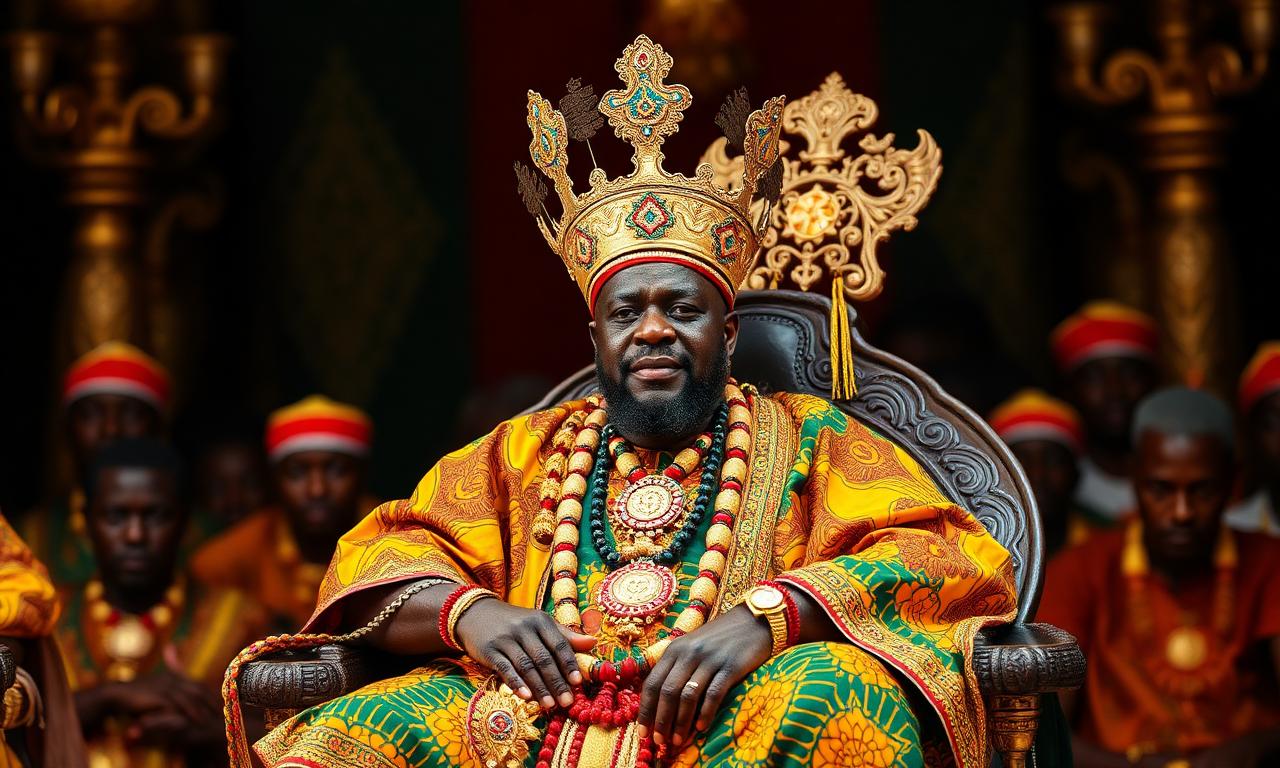
The Ancient Ghana Empire was built by the Soninke people, who spoke a language related to today's Mandinka and Bambara. Their king was called the Ghana, which means 'warrior king', and over time the word became the name of the whole empire.
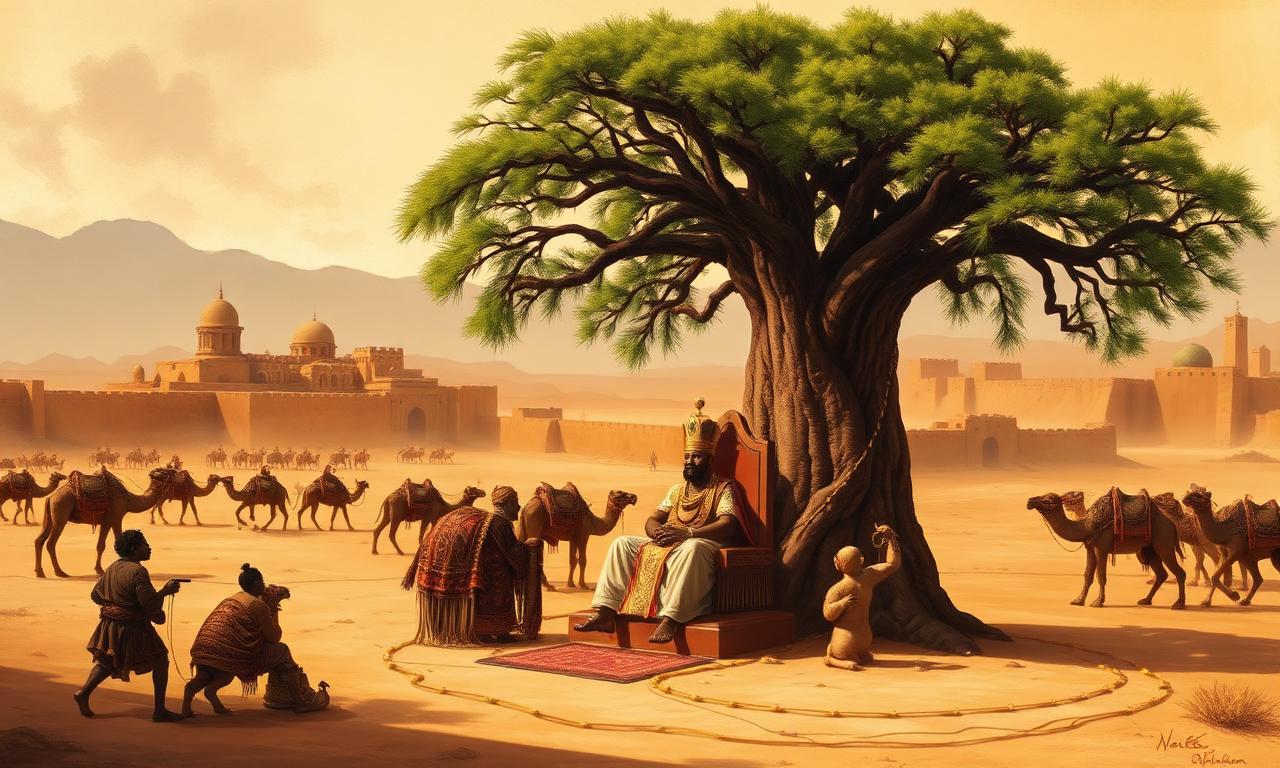
Wagadu lay in the Sahel — the dry grassland just south of the Sahara Desert. This location gave it a huge advantage: it sat between the gold mines of the south (around Bambuk and Bure) and the salt mines of the north (Taghaza in the Sahara). The empire controlled the trade routes that linked the two.
At its height, around AD 1000, Wagadu had a population of hundreds of thousands. Its capital, Koumbi Saleh, was the largest city in West Africa, with two parts: one for the Muslim merchants from North Africa and another for the king and his people.
Main Events Explained Clearly
c. AD 300 — Soninke farmers and traders settled in the Sahel and slowly built villages that grew into towns.
c. AD 700 — Wagadu became powerful enough to be called an empire. Its kings collected taxes on every load of salt going south and every load of gold going north.
AD 800–1050 — Arab geographers like Al-Bakri (writing in 1067) described Wagadu as a rich, well-organised kingdom with an army of 200,000 soldiers, including 40,000 archers.
AD 1076 — The Almoravids, a group of Muslim Berbers from North Africa, attacked and captured Koumbi Saleh. Although the empire later recovered, it was greatly weakened.
AD 1200 — The empire collapsed completely. Its place was taken by the new Mali Empire of Sundiata Keita, which rose to dominate the same region.
Important People Involved
The Ghana (the king) — ruled as both political head and spiritual leader. He was believed to be semi-divine and was buried with great wealth in a secret tomb in the forest.
Tunka Manin — one of the most famous kings, ruling around AD 1063, described in detail by the Arab scholar Al-Bakri.
Al-Bakri — an Arab geographer from Spain who wrote the most important description of the empire in 1067 even though he never visited it.
The Almoravid leader Abu Bakr ibn Umar — whose forces captured the capital in 1076 and forced many Soninke to convert to Islam.
Dr. J.B. Danquah — though he lived more than 700 years later, he is included here because he gave the name of this ancient empire to modern Ghana in 1957.
Advertisement
Causes and Effects
Causes of its rise: control of the gold-salt trade across the Sahara, strong leadership by the kings, a large army, a clever system of taxation, and the use of iron tools and weapons.
Causes of its fall: the Almoravid invasion of 1076, the drying up of the Sahel (which reduced farmland and water), internal disputes among the Soninke states, and the rise of the new Mali Empire.
Effects on West Africa: spread of Islam through trade, growth of cities such as Timbuktu and Djenne, mixing of African and Arab cultures, and the model of a strong centralised African state that later empires copied.
Simple Real-Life Explanation
Think of a busy roundabout in the middle of the road between Kumasi and Tamale. Whoever controls that roundabout can charge every trader who passes through. They will quickly become very rich.
Wagadu was such a 'roundabout' between the gold of the south and the salt of the north. By charging traders a tax on every camel-load, the kings of Ghana became some of the wealthiest rulers in the world of their time.
Understanding the background
History of the Ancient Ghana Empire (Wagadu) is an important topic because it helps learners connect names, dates, places and decisions to the wider story of Ghana. The subject belongs to kingdoms & empires, but it also links with citizenship, geography, culture and moral education. When students read about History of the Ancient Ghana Empire (Wagadu), they are not only memorising facts; they are learning how people solved problems, protected communities, built institutions and passed lessons from one generation to another.
A useful way to study this topic is to begin with the main evidence. One important fact is: Key lesson 1: A country's location can be one of its greatest natural resources.. Another point to remember is: Key lesson 2: Strong government, fair taxation and a good army are needed to keep an empire together.. These details give the article a clear anchor. They help learners explain what happened, where it happened, who was involved and why the event or place remains important in Ghanaian life today.
The story should also be read with empathy. History is about real people: leaders making hard choices, ordinary families facing change, traders moving goods, chiefs protecting their people, students demanding a better future, and communities keeping traditions alive. Some parts of Ghana's past are joyful and proud, while others are painful. A good reader respects both sides and tries to understand the human experience behind the facts.
For long reading, pause after each section and ask three simple questions: What is the main idea? Which details support it? How does it connect to Ghana today? This method makes History of the Ancient Ghana Empire (Wagadu) easier to remember and easier to discuss in class. It also helps learners write stronger essays because every paragraph can be connected to a clear point, a clear example and a clear explanation.
This topic is also useful for national identity. Ghana is made up of many regions, languages, ethnic groups, faiths and occupations, yet the history of the country shows repeated efforts to build unity. Whether the topic is a president, a castle, a kingdom, a region, a festival or a national event, the lesson is that Ghana's story was built by many hands. Understanding History of the Ancient Ghana Empire (Wagadu) helps learners appreciate that shared responsibility.
When preparing for quizzes or examinations, learners should create a short timeline, write down key names, mark important places on a map and explain the meaning of each fact in their own words. Copying sentences is less helpful than retelling the story clearly. If a learner can explain History of the Ancient Ghana Empire (Wagadu) to a younger pupil in simple English, then the learner has truly understood the topic.
People, places and decisions
History of the Ancient Ghana Empire (Wagadu) is an important topic because it helps learners connect names, dates, places and decisions to the wider story of Ghana. The subject belongs to kingdoms & empires, but it also links with citizenship, geography, culture and moral education. When students read about History of the Ancient Ghana Empire (Wagadu), they are not only memorising facts; they are learning how people solved problems, protected communities, built institutions and passed lessons from one generation to another.
A useful way to study this topic is to begin with the main evidence. One important fact is: Key lesson 2: Strong government, fair taxation and a good army are needed to keep an empire together.. Another point to remember is: Key lesson 3: No empire lasts forever — environmental change and invasion can end even the richest kingdom.. These details give the article a clear anchor. They help learners explain what happened, where it happened, who was involved and why the event or place remains important in Ghanaian life today.
The story should also be read with empathy. History is about real people: leaders making hard choices, ordinary families facing change, traders moving goods, chiefs protecting their people, students demanding a better future, and communities keeping traditions alive. Some parts of Ghana's past are joyful and proud, while others are painful. A good reader respects both sides and tries to understand the human experience behind the facts.
For long reading, pause after each section and ask three simple questions: What is the main idea? Which details support it? How does it connect to Ghana today? This method makes History of the Ancient Ghana Empire (Wagadu) easier to remember and easier to discuss in class. It also helps learners write stronger essays because every paragraph can be connected to a clear point, a clear example and a clear explanation.
This topic is also useful for national identity. Ghana is made up of many regions, languages, ethnic groups, faiths and occupations, yet the history of the country shows repeated efforts to build unity. Whether the topic is a president, a castle, a kingdom, a region, a festival or a national event, the lesson is that Ghana's story was built by many hands. Understanding History of the Ancient Ghana Empire (Wagadu) helps learners appreciate that shared responsibility.
When preparing for quizzes or examinations, learners should create a short timeline, write down key names, mark important places on a map and explain the meaning of each fact in their own words. Copying sentences is less helpful than retelling the story clearly. If a learner can explain History of the Ancient Ghana Empire (Wagadu) to a younger pupil in simple English, then the learner has truly understood the topic.
Cause and effect
History of the Ancient Ghana Empire (Wagadu) is an important topic because it helps learners connect names, dates, places and decisions to the wider story of Ghana. The subject belongs to kingdoms & empires, but it also links with citizenship, geography, culture and moral education. When students read about History of the Ancient Ghana Empire (Wagadu), they are not only memorising facts; they are learning how people solved problems, protected communities, built institutions and passed lessons from one generation to another.
A useful way to study this topic is to begin with the main evidence. One important fact is: Key lesson 3: No empire lasts forever — environmental change and invasion can end even the richest kingdom.. Another point to remember is: Key lesson 4: Trade brings not only wealth but also new ideas and religions.. These details give the article a clear anchor. They help learners explain what happened, where it happened, who was involved and why the event or place remains important in Ghanaian life today.
The story should also be read with empathy. History is about real people: leaders making hard choices, ordinary families facing change, traders moving goods, chiefs protecting their people, students demanding a better future, and communities keeping traditions alive. Some parts of Ghana's past are joyful and proud, while others are painful. A good reader respects both sides and tries to understand the human experience behind the facts.
For long reading, pause after each section and ask three simple questions: What is the main idea? Which details support it? How does it connect to Ghana today? This method makes History of the Ancient Ghana Empire (Wagadu) easier to remember and easier to discuss in class. It also helps learners write stronger essays because every paragraph can be connected to a clear point, a clear example and a clear explanation.
This topic is also useful for national identity. Ghana is made up of many regions, languages, ethnic groups, faiths and occupations, yet the history of the country shows repeated efforts to build unity. Whether the topic is a president, a castle, a kingdom, a region, a festival or a national event, the lesson is that Ghana's story was built by many hands. Understanding History of the Ancient Ghana Empire (Wagadu) helps learners appreciate that shared responsibility.
When preparing for quizzes or examinations, learners should create a short timeline, write down key names, mark important places on a map and explain the meaning of each fact in their own words. Copying sentences is less helpful than retelling the story clearly. If a learner can explain History of the Ancient Ghana Empire (Wagadu) to a younger pupil in simple English, then the learner has truly understood the topic.
Life in Ghana at the time
History of the Ancient Ghana Empire (Wagadu) is an important topic because it helps learners connect names, dates, places and decisions to the wider story of Ghana. The subject belongs to kingdoms & empires, but it also links with citizenship, geography, culture and moral education. When students read about History of the Ancient Ghana Empire (Wagadu), they are not only memorising facts; they are learning how people solved problems, protected communities, built institutions and passed lessons from one generation to another.
A useful way to study this topic is to begin with the main evidence. One important fact is: Key lesson 4: Trade brings not only wealth but also new ideas and religions.. Another point to remember is: Key lesson 5: African civilisations were great long before Europeans arrived; their story deserves to be remembered.. These details give the article a clear anchor. They help learners explain what happened, where it happened, who was involved and why the event or place remains important in Ghanaian life today.
The story should also be read with empathy. History is about real people: leaders making hard choices, ordinary families facing change, traders moving goods, chiefs protecting their people, students demanding a better future, and communities keeping traditions alive. Some parts of Ghana's past are joyful and proud, while others are painful. A good reader respects both sides and tries to understand the human experience behind the facts.
For long reading, pause after each section and ask three simple questions: What is the main idea? Which details support it? How does it connect to Ghana today? This method makes History of the Ancient Ghana Empire (Wagadu) easier to remember and easier to discuss in class. It also helps learners write stronger essays because every paragraph can be connected to a clear point, a clear example and a clear explanation.
This topic is also useful for national identity. Ghana is made up of many regions, languages, ethnic groups, faiths and occupations, yet the history of the country shows repeated efforts to build unity. Whether the topic is a president, a castle, a kingdom, a region, a festival or a national event, the lesson is that Ghana's story was built by many hands. Understanding History of the Ancient Ghana Empire (Wagadu) helps learners appreciate that shared responsibility.
When preparing for quizzes or examinations, learners should create a short timeline, write down key names, mark important places on a map and explain the meaning of each fact in their own words. Copying sentences is less helpful than retelling the story clearly. If a learner can explain History of the Ancient Ghana Empire (Wagadu) to a younger pupil in simple English, then the learner has truly understood the topic.
Why the topic matters today
History of the Ancient Ghana Empire (Wagadu) is an important topic because it helps learners connect names, dates, places and decisions to the wider story of Ghana. The subject belongs to kingdoms & empires, but it also links with citizenship, geography, culture and moral education. When students read about History of the Ancient Ghana Empire (Wagadu), they are not only memorising facts; they are learning how people solved problems, protected communities, built institutions and passed lessons from one generation to another.
A useful way to study this topic is to begin with the main evidence. One important fact is: Key lesson 5: African civilisations were great long before Europeans arrived; their story deserves to be remembered.. Another point to remember is: Key lesson 1: A country's location can be one of its greatest natural resources.. These details give the article a clear anchor. They help learners explain what happened, where it happened, who was involved and why the event or place remains important in Ghanaian life today.
The story should also be read with empathy. History is about real people: leaders making hard choices, ordinary families facing change, traders moving goods, chiefs protecting their people, students demanding a better future, and communities keeping traditions alive. Some parts of Ghana's past are joyful and proud, while others are painful. A good reader respects both sides and tries to understand the human experience behind the facts.
For long reading, pause after each section and ask three simple questions: What is the main idea? Which details support it? How does it connect to Ghana today? This method makes History of the Ancient Ghana Empire (Wagadu) easier to remember and easier to discuss in class. It also helps learners write stronger essays because every paragraph can be connected to a clear point, a clear example and a clear explanation.
This topic is also useful for national identity. Ghana is made up of many regions, languages, ethnic groups, faiths and occupations, yet the history of the country shows repeated efforts to build unity. Whether the topic is a president, a castle, a kingdom, a region, a festival or a national event, the lesson is that Ghana's story was built by many hands. Understanding History of the Ancient Ghana Empire (Wagadu) helps learners appreciate that shared responsibility.
When preparing for quizzes or examinations, learners should create a short timeline, write down key names, mark important places on a map and explain the meaning of each fact in their own words. Copying sentences is less helpful than retelling the story clearly. If a learner can explain History of the Ancient Ghana Empire (Wagadu) to a younger pupil in simple English, then the learner has truly understood the topic.
Common misunderstandings
History of the Ancient Ghana Empire (Wagadu) is an important topic because it helps learners connect names, dates, places and decisions to the wider story of Ghana. The subject belongs to kingdoms & empires, but it also links with citizenship, geography, culture and moral education. When students read about History of the Ancient Ghana Empire (Wagadu), they are not only memorising facts; they are learning how people solved problems, protected communities, built institutions and passed lessons from one generation to another.
A useful way to study this topic is to begin with the main evidence. One important fact is: Key lesson 1: A country's location can be one of its greatest natural resources.. Another point to remember is: Key lesson 2: Strong government, fair taxation and a good army are needed to keep an empire together.. These details give the article a clear anchor. They help learners explain what happened, where it happened, who was involved and why the event or place remains important in Ghanaian life today.
The story should also be read with empathy. History is about real people: leaders making hard choices, ordinary families facing change, traders moving goods, chiefs protecting their people, students demanding a better future, and communities keeping traditions alive. Some parts of Ghana's past are joyful and proud, while others are painful. A good reader respects both sides and tries to understand the human experience behind the facts.
For long reading, pause after each section and ask three simple questions: What is the main idea? Which details support it? How does it connect to Ghana today? This method makes History of the Ancient Ghana Empire (Wagadu) easier to remember and easier to discuss in class. It also helps learners write stronger essays because every paragraph can be connected to a clear point, a clear example and a clear explanation.
This topic is also useful for national identity. Ghana is made up of many regions, languages, ethnic groups, faiths and occupations, yet the history of the country shows repeated efforts to build unity. Whether the topic is a president, a castle, a kingdom, a region, a festival or a national event, the lesson is that Ghana's story was built by many hands. Understanding History of the Ancient Ghana Empire (Wagadu) helps learners appreciate that shared responsibility.
When preparing for quizzes or examinations, learners should create a short timeline, write down key names, mark important places on a map and explain the meaning of each fact in their own words. Copying sentences is less helpful than retelling the story clearly. If a learner can explain History of the Ancient Ghana Empire (Wagadu) to a younger pupil in simple English, then the learner has truly understood the topic.
Classroom study notes
History of the Ancient Ghana Empire (Wagadu) is an important topic because it helps learners connect names, dates, places and decisions to the wider story of Ghana. The subject belongs to kingdoms & empires, but it also links with citizenship, geography, culture and moral education. When students read about History of the Ancient Ghana Empire (Wagadu), they are not only memorising facts; they are learning how people solved problems, protected communities, built institutions and passed lessons from one generation to another.
A useful way to study this topic is to begin with the main evidence. One important fact is: Key lesson 2: Strong government, fair taxation and a good army are needed to keep an empire together.. Another point to remember is: Key lesson 3: No empire lasts forever — environmental change and invasion can end even the richest kingdom.. These details give the article a clear anchor. They help learners explain what happened, where it happened, who was involved and why the event or place remains important in Ghanaian life today.
The story should also be read with empathy. History is about real people: leaders making hard choices, ordinary families facing change, traders moving goods, chiefs protecting their people, students demanding a better future, and communities keeping traditions alive. Some parts of Ghana's past are joyful and proud, while others are painful. A good reader respects both sides and tries to understand the human experience behind the facts.
For long reading, pause after each section and ask three simple questions: What is the main idea? Which details support it? How does it connect to Ghana today? This method makes History of the Ancient Ghana Empire (Wagadu) easier to remember and easier to discuss in class. It also helps learners write stronger essays because every paragraph can be connected to a clear point, a clear example and a clear explanation.
This topic is also useful for national identity. Ghana is made up of many regions, languages, ethnic groups, faiths and occupations, yet the history of the country shows repeated efforts to build unity. Whether the topic is a president, a castle, a kingdom, a region, a festival or a national event, the lesson is that Ghana's story was built by many hands. Understanding History of the Ancient Ghana Empire (Wagadu) helps learners appreciate that shared responsibility.
When preparing for quizzes or examinations, learners should create a short timeline, write down key names, mark important places on a map and explain the meaning of each fact in their own words. Copying sentences is less helpful than retelling the story clearly. If a learner can explain History of the Ancient Ghana Empire (Wagadu) to a younger pupil in simple English, then the learner has truly understood the topic.
How to remember the lesson
History of the Ancient Ghana Empire (Wagadu) is an important topic because it helps learners connect names, dates, places and decisions to the wider story of Ghana. The subject belongs to kingdoms & empires, but it also links with citizenship, geography, culture and moral education. When students read about History of the Ancient Ghana Empire (Wagadu), they are not only memorising facts; they are learning how people solved problems, protected communities, built institutions and passed lessons from one generation to another.
A useful way to study this topic is to begin with the main evidence. One important fact is: Key lesson 3: No empire lasts forever — environmental change and invasion can end even the richest kingdom.. Another point to remember is: Key lesson 4: Trade brings not only wealth but also new ideas and religions.. These details give the article a clear anchor. They help learners explain what happened, where it happened, who was involved and why the event or place remains important in Ghanaian life today.
The story should also be read with empathy. History is about real people: leaders making hard choices, ordinary families facing change, traders moving goods, chiefs protecting their people, students demanding a better future, and communities keeping traditions alive. Some parts of Ghana's past are joyful and proud, while others are painful. A good reader respects both sides and tries to understand the human experience behind the facts.
For long reading, pause after each section and ask three simple questions: What is the main idea? Which details support it? How does it connect to Ghana today? This method makes History of the Ancient Ghana Empire (Wagadu) easier to remember and easier to discuss in class. It also helps learners write stronger essays because every paragraph can be connected to a clear point, a clear example and a clear explanation.
This topic is also useful for national identity. Ghana is made up of many regions, languages, ethnic groups, faiths and occupations, yet the history of the country shows repeated efforts to build unity. Whether the topic is a president, a castle, a kingdom, a region, a festival or a national event, the lesson is that Ghana's story was built by many hands. Understanding History of the Ancient Ghana Empire (Wagadu) helps learners appreciate that shared responsibility.
When preparing for quizzes or examinations, learners should create a short timeline, write down key names, mark important places on a map and explain the meaning of each fact in their own words. Copying sentences is less helpful than retelling the story clearly. If a learner can explain History of the Ancient Ghana Empire (Wagadu) to a younger pupil in simple English, then the learner has truly understood the topic.
Summary
The Ancient Ghana Empire of Wagadu was one of the greatest African states of the medieval world. Its wealth came from the trans-Saharan trade in gold and salt, its strength from a well-organised army, and its fame from the writings of Arab travellers. Although it fell more than 800 years ago, its name lives on in modern Ghana — a proud reminder of African glory before colonialism.
Frequently Asked Questions
Q:Was the Ancient Ghana Empire located in modern Ghana?
No. It was in present-day Mauritania, Mali and Senegal. Modern Ghana took the name to honour it in 1957.
Q:What were the empire's main trade goods?
Gold from the south and salt from the Sahara, plus ivory, cloth, kola nuts and copper.
Q:Who finally destroyed the empire?
The Almoravid Berbers captured the capital in 1076; the empire fully collapsed by about 1200 and was replaced by the Mali Empire.