
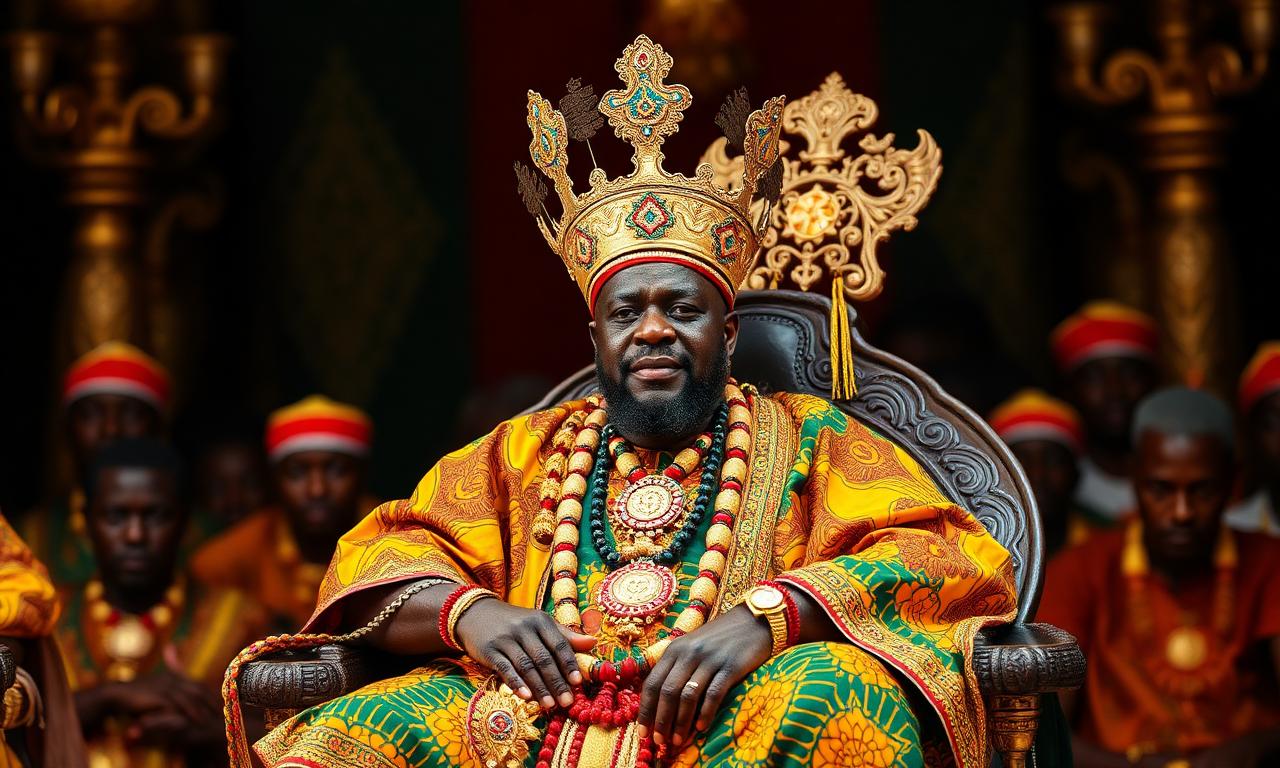
Ghana's history did not begin with colonial rule. Long before Europeans controlled the coast, powerful kingdoms and states governed towns, protected trade routes, built armies and created rich cultures.
Some kingdoms were in the forest, some were in the savannah, and some grew along the coast. Together, they show that Ghanaian societies had law, diplomacy, religion, art, military strategy and trade long before modern government.
Ancient Ghana or Wagadu
The ancient Ghana Empire, also called Wagadu, was located in present-day Mali and Mauritania, not modern Ghana. Modern Ghana chose the name in 1957 to honour this great African empire.
Wagadu became wealthy by controlling gold and salt trade across the Sahara. It reminds learners that West Africa had powerful states and long-distance trade networks many centuries ago.
The Asante Empire
The Asante Empire grew around Kumasi under Osei Tutu I and Okomfo Anokye. Its sacred symbol, the Golden Stool, represented the soul and unity of the Asante people.
Asante power came from gold, strong government, skilled military organisation and control of trade routes. The empire fought several wars against the British and remains culturally powerful today.
Dagbon and the northern states
Dagbon is one of Ghana's oldest kingdoms. Its king, the Ya-Na, rules from Yendi. Dagbon history is connected with oral tradition, cavalry, Islam, drumming and the Damba festival.
Other northern states such as Mamprugu, Nanung, Gonja and Wa also shaped trade and politics in the savannah. They linked Ghana's north to wider West African routes and cultures.
Advertisement
Akwamu, Denkyira and Fante states
Akwamu was a powerful state that controlled important routes and even captured Christiansborg Castle for a time in the seventeenth century. Denkyira was another strong Akan kingdom before Asante defeated it at Feyiase in 1701.
Along the coast, Fante states formed alliances and controlled trade with Europeans. Their towns became important centres of education, politics, religion and commerce during the colonial period.
Why these kingdoms matter
These kingdoms matter because they challenge the false idea that Africa had no history before Europeans arrived. They had systems of authority, courts, armies, markets, festivals, craftsmen and diplomats.
Learning about them helps students understand Ghana as a place of many histories. Modern Ghana is stronger when its citizens respect the deep traditions of every region and people.
Understanding the background
Ghanaian Kingdoms and Empires is an important topic because it helps learners connect names, dates, places and decisions to the wider story of Ghana. The subject belongs to kingdoms & empires, but it also links with citizenship, geography, culture and moral education. When students read about Ghanaian Kingdoms and Empires, they are not only memorising facts; they are learning how people solved problems, protected communities, built institutions and passed lessons from one generation to another.
A useful way to study this topic is to begin with the main evidence. One important fact is: Asante capital: Kumasi. Another point to remember is: Dagbon traditional capital: Yendi. These details give the article a clear anchor. They help learners explain what happened, where it happened, who was involved and why the event or place remains important in Ghanaian life today.
The story should also be read with empathy. History is about real people: leaders making hard choices, ordinary families facing change, traders moving goods, chiefs protecting their people, students demanding a better future, and communities keeping traditions alive. Some parts of Ghana's past are joyful and proud, while others are painful. A good reader respects both sides and tries to understand the human experience behind the facts.
For long reading, pause after each section and ask three simple questions: What is the main idea? Which details support it? How does it connect to Ghana today? This method makes Ghanaian Kingdoms and Empires easier to remember and easier to discuss in class. It also helps learners write stronger essays because every paragraph can be connected to a clear point, a clear example and a clear explanation.
This topic is also useful for national identity. Ghana is made up of many regions, languages, ethnic groups, faiths and occupations, yet the history of the country shows repeated efforts to build unity. Whether the topic is a president, a castle, a kingdom, a region, a festival or a national event, the lesson is that Ghana's story was built by many hands. Understanding Ghanaian Kingdoms and Empires helps learners appreciate that shared responsibility.
When preparing for quizzes or examinations, learners should create a short timeline, write down key names, mark important places on a map and explain the meaning of each fact in their own words. Copying sentences is less helpful than retelling the story clearly. If a learner can explain Ghanaian Kingdoms and Empires to a younger pupil in simple English, then the learner has truly understood the topic.
People, places and decisions
Ghanaian Kingdoms and Empires is an important topic because it helps learners connect names, dates, places and decisions to the wider story of Ghana. The subject belongs to kingdoms & empires, but it also links with citizenship, geography, culture and moral education. When students read about Ghanaian Kingdoms and Empires, they are not only memorising facts; they are learning how people solved problems, protected communities, built institutions and passed lessons from one generation to another.
A useful way to study this topic is to begin with the main evidence. One important fact is: Dagbon traditional capital: Yendi. Another point to remember is: Asante symbol: Golden Stool. These details give the article a clear anchor. They help learners explain what happened, where it happened, who was involved and why the event or place remains important in Ghanaian life today.
The story should also be read with empathy. History is about real people: leaders making hard choices, ordinary families facing change, traders moving goods, chiefs protecting their people, students demanding a better future, and communities keeping traditions alive. Some parts of Ghana's past are joyful and proud, while others are painful. A good reader respects both sides and tries to understand the human experience behind the facts.
For long reading, pause after each section and ask three simple questions: What is the main idea? Which details support it? How does it connect to Ghana today? This method makes Ghanaian Kingdoms and Empires easier to remember and easier to discuss in class. It also helps learners write stronger essays because every paragraph can be connected to a clear point, a clear example and a clear explanation.
This topic is also useful for national identity. Ghana is made up of many regions, languages, ethnic groups, faiths and occupations, yet the history of the country shows repeated efforts to build unity. Whether the topic is a president, a castle, a kingdom, a region, a festival or a national event, the lesson is that Ghana's story was built by many hands. Understanding Ghanaian Kingdoms and Empires helps learners appreciate that shared responsibility.
When preparing for quizzes or examinations, learners should create a short timeline, write down key names, mark important places on a map and explain the meaning of each fact in their own words. Copying sentences is less helpful than retelling the story clearly. If a learner can explain Ghanaian Kingdoms and Empires to a younger pupil in simple English, then the learner has truly understood the topic.
Cause and effect
Ghanaian Kingdoms and Empires is an important topic because it helps learners connect names, dates, places and decisions to the wider story of Ghana. The subject belongs to kingdoms & empires, but it also links with citizenship, geography, culture and moral education. When students read about Ghanaian Kingdoms and Empires, they are not only memorising facts; they are learning how people solved problems, protected communities, built institutions and passed lessons from one generation to another.
A useful way to study this topic is to begin with the main evidence. One important fact is: Asante symbol: Golden Stool. Another point to remember is: Denkyira was defeated by Asante at Feyiase in 1701. These details give the article a clear anchor. They help learners explain what happened, where it happened, who was involved and why the event or place remains important in Ghanaian life today.
The story should also be read with empathy. History is about real people: leaders making hard choices, ordinary families facing change, traders moving goods, chiefs protecting their people, students demanding a better future, and communities keeping traditions alive. Some parts of Ghana's past are joyful and proud, while others are painful. A good reader respects both sides and tries to understand the human experience behind the facts.
For long reading, pause after each section and ask three simple questions: What is the main idea? Which details support it? How does it connect to Ghana today? This method makes Ghanaian Kingdoms and Empires easier to remember and easier to discuss in class. It also helps learners write stronger essays because every paragraph can be connected to a clear point, a clear example and a clear explanation.
This topic is also useful for national identity. Ghana is made up of many regions, languages, ethnic groups, faiths and occupations, yet the history of the country shows repeated efforts to build unity. Whether the topic is a president, a castle, a kingdom, a region, a festival or a national event, the lesson is that Ghana's story was built by many hands. Understanding Ghanaian Kingdoms and Empires helps learners appreciate that shared responsibility.
When preparing for quizzes or examinations, learners should create a short timeline, write down key names, mark important places on a map and explain the meaning of each fact in their own words. Copying sentences is less helpful than retelling the story clearly. If a learner can explain Ghanaian Kingdoms and Empires to a younger pupil in simple English, then the learner has truly understood the topic.
Life in Ghana at the time
Ghanaian Kingdoms and Empires is an important topic because it helps learners connect names, dates, places and decisions to the wider story of Ghana. The subject belongs to kingdoms & empires, but it also links with citizenship, geography, culture and moral education. When students read about Ghanaian Kingdoms and Empires, they are not only memorising facts; they are learning how people solved problems, protected communities, built institutions and passed lessons from one generation to another.
A useful way to study this topic is to begin with the main evidence. One important fact is: Denkyira was defeated by Asante at Feyiase in 1701. Another point to remember is: Modern Ghana took its name from ancient Wagadu/Ghana in 1957. These details give the article a clear anchor. They help learners explain what happened, where it happened, who was involved and why the event or place remains important in Ghanaian life today.
The story should also be read with empathy. History is about real people: leaders making hard choices, ordinary families facing change, traders moving goods, chiefs protecting their people, students demanding a better future, and communities keeping traditions alive. Some parts of Ghana's past are joyful and proud, while others are painful. A good reader respects both sides and tries to understand the human experience behind the facts.
For long reading, pause after each section and ask three simple questions: What is the main idea? Which details support it? How does it connect to Ghana today? This method makes Ghanaian Kingdoms and Empires easier to remember and easier to discuss in class. It also helps learners write stronger essays because every paragraph can be connected to a clear point, a clear example and a clear explanation.
This topic is also useful for national identity. Ghana is made up of many regions, languages, ethnic groups, faiths and occupations, yet the history of the country shows repeated efforts to build unity. Whether the topic is a president, a castle, a kingdom, a region, a festival or a national event, the lesson is that Ghana's story was built by many hands. Understanding Ghanaian Kingdoms and Empires helps learners appreciate that shared responsibility.
When preparing for quizzes or examinations, learners should create a short timeline, write down key names, mark important places on a map and explain the meaning of each fact in their own words. Copying sentences is less helpful than retelling the story clearly. If a learner can explain Ghanaian Kingdoms and Empires to a younger pupil in simple English, then the learner has truly understood the topic.
Why the topic matters today
Ghanaian Kingdoms and Empires is an important topic because it helps learners connect names, dates, places and decisions to the wider story of Ghana. The subject belongs to kingdoms & empires, but it also links with citizenship, geography, culture and moral education. When students read about Ghanaian Kingdoms and Empires, they are not only memorising facts; they are learning how people solved problems, protected communities, built institutions and passed lessons from one generation to another.
A useful way to study this topic is to begin with the main evidence. One important fact is: Modern Ghana took its name from ancient Wagadu/Ghana in 1957. Another point to remember is: Asante capital: Kumasi. These details give the article a clear anchor. They help learners explain what happened, where it happened, who was involved and why the event or place remains important in Ghanaian life today.
The story should also be read with empathy. History is about real people: leaders making hard choices, ordinary families facing change, traders moving goods, chiefs protecting their people, students demanding a better future, and communities keeping traditions alive. Some parts of Ghana's past are joyful and proud, while others are painful. A good reader respects both sides and tries to understand the human experience behind the facts.
For long reading, pause after each section and ask three simple questions: What is the main idea? Which details support it? How does it connect to Ghana today? This method makes Ghanaian Kingdoms and Empires easier to remember and easier to discuss in class. It also helps learners write stronger essays because every paragraph can be connected to a clear point, a clear example and a clear explanation.
This topic is also useful for national identity. Ghana is made up of many regions, languages, ethnic groups, faiths and occupations, yet the history of the country shows repeated efforts to build unity. Whether the topic is a president, a castle, a kingdom, a region, a festival or a national event, the lesson is that Ghana's story was built by many hands. Understanding Ghanaian Kingdoms and Empires helps learners appreciate that shared responsibility.
When preparing for quizzes or examinations, learners should create a short timeline, write down key names, mark important places on a map and explain the meaning of each fact in their own words. Copying sentences is less helpful than retelling the story clearly. If a learner can explain Ghanaian Kingdoms and Empires to a younger pupil in simple English, then the learner has truly understood the topic.
Common misunderstandings
Ghanaian Kingdoms and Empires is an important topic because it helps learners connect names, dates, places and decisions to the wider story of Ghana. The subject belongs to kingdoms & empires, but it also links with citizenship, geography, culture and moral education. When students read about Ghanaian Kingdoms and Empires, they are not only memorising facts; they are learning how people solved problems, protected communities, built institutions and passed lessons from one generation to another.
A useful way to study this topic is to begin with the main evidence. One important fact is: Asante capital: Kumasi. Another point to remember is: Dagbon traditional capital: Yendi. These details give the article a clear anchor. They help learners explain what happened, where it happened, who was involved and why the event or place remains important in Ghanaian life today.
The story should also be read with empathy. History is about real people: leaders making hard choices, ordinary families facing change, traders moving goods, chiefs protecting their people, students demanding a better future, and communities keeping traditions alive. Some parts of Ghana's past are joyful and proud, while others are painful. A good reader respects both sides and tries to understand the human experience behind the facts.
For long reading, pause after each section and ask three simple questions: What is the main idea? Which details support it? How does it connect to Ghana today? This method makes Ghanaian Kingdoms and Empires easier to remember and easier to discuss in class. It also helps learners write stronger essays because every paragraph can be connected to a clear point, a clear example and a clear explanation.
This topic is also useful for national identity. Ghana is made up of many regions, languages, ethnic groups, faiths and occupations, yet the history of the country shows repeated efforts to build unity. Whether the topic is a president, a castle, a kingdom, a region, a festival or a national event, the lesson is that Ghana's story was built by many hands. Understanding Ghanaian Kingdoms and Empires helps learners appreciate that shared responsibility.
When preparing for quizzes or examinations, learners should create a short timeline, write down key names, mark important places on a map and explain the meaning of each fact in their own words. Copying sentences is less helpful than retelling the story clearly. If a learner can explain Ghanaian Kingdoms and Empires to a younger pupil in simple English, then the learner has truly understood the topic.
Classroom study notes
Ghanaian Kingdoms and Empires is an important topic because it helps learners connect names, dates, places and decisions to the wider story of Ghana. The subject belongs to kingdoms & empires, but it also links with citizenship, geography, culture and moral education. When students read about Ghanaian Kingdoms and Empires, they are not only memorising facts; they are learning how people solved problems, protected communities, built institutions and passed lessons from one generation to another.
A useful way to study this topic is to begin with the main evidence. One important fact is: Dagbon traditional capital: Yendi. Another point to remember is: Asante symbol: Golden Stool. These details give the article a clear anchor. They help learners explain what happened, where it happened, who was involved and why the event or place remains important in Ghanaian life today.
The story should also be read with empathy. History is about real people: leaders making hard choices, ordinary families facing change, traders moving goods, chiefs protecting their people, students demanding a better future, and communities keeping traditions alive. Some parts of Ghana's past are joyful and proud, while others are painful. A good reader respects both sides and tries to understand the human experience behind the facts.
For long reading, pause after each section and ask three simple questions: What is the main idea? Which details support it? How does it connect to Ghana today? This method makes Ghanaian Kingdoms and Empires easier to remember and easier to discuss in class. It also helps learners write stronger essays because every paragraph can be connected to a clear point, a clear example and a clear explanation.
This topic is also useful for national identity. Ghana is made up of many regions, languages, ethnic groups, faiths and occupations, yet the history of the country shows repeated efforts to build unity. Whether the topic is a president, a castle, a kingdom, a region, a festival or a national event, the lesson is that Ghana's story was built by many hands. Understanding Ghanaian Kingdoms and Empires helps learners appreciate that shared responsibility.
When preparing for quizzes or examinations, learners should create a short timeline, write down key names, mark important places on a map and explain the meaning of each fact in their own words. Copying sentences is less helpful than retelling the story clearly. If a learner can explain Ghanaian Kingdoms and Empires to a younger pupil in simple English, then the learner has truly understood the topic.
How to remember the lesson
Ghanaian Kingdoms and Empires is an important topic because it helps learners connect names, dates, places and decisions to the wider story of Ghana. The subject belongs to kingdoms & empires, but it also links with citizenship, geography, culture and moral education. When students read about Ghanaian Kingdoms and Empires, they are not only memorising facts; they are learning how people solved problems, protected communities, built institutions and passed lessons from one generation to another.
A useful way to study this topic is to begin with the main evidence. One important fact is: Asante symbol: Golden Stool. Another point to remember is: Denkyira was defeated by Asante at Feyiase in 1701. These details give the article a clear anchor. They help learners explain what happened, where it happened, who was involved and why the event or place remains important in Ghanaian life today.
The story should also be read with empathy. History is about real people: leaders making hard choices, ordinary families facing change, traders moving goods, chiefs protecting their people, students demanding a better future, and communities keeping traditions alive. Some parts of Ghana's past are joyful and proud, while others are painful. A good reader respects both sides and tries to understand the human experience behind the facts.
For long reading, pause after each section and ask three simple questions: What is the main idea? Which details support it? How does it connect to Ghana today? This method makes Ghanaian Kingdoms and Empires easier to remember and easier to discuss in class. It also helps learners write stronger essays because every paragraph can be connected to a clear point, a clear example and a clear explanation.
This topic is also useful for national identity. Ghana is made up of many regions, languages, ethnic groups, faiths and occupations, yet the history of the country shows repeated efforts to build unity. Whether the topic is a president, a castle, a kingdom, a region, a festival or a national event, the lesson is that Ghana's story was built by many hands. Understanding Ghanaian Kingdoms and Empires helps learners appreciate that shared responsibility.
When preparing for quizzes or examinations, learners should create a short timeline, write down key names, mark important places on a map and explain the meaning of each fact in their own words. Copying sentences is less helpful than retelling the story clearly. If a learner can explain Ghanaian Kingdoms and Empires to a younger pupil in simple English, then the learner has truly understood the topic.
Questions for deeper thinking
Ghanaian Kingdoms and Empires is an important topic because it helps learners connect names, dates, places and decisions to the wider story of Ghana. The subject belongs to kingdoms & empires, but it also links with citizenship, geography, culture and moral education. When students read about Ghanaian Kingdoms and Empires, they are not only memorising facts; they are learning how people solved problems, protected communities, built institutions and passed lessons from one generation to another.
A useful way to study this topic is to begin with the main evidence. One important fact is: Denkyira was defeated by Asante at Feyiase in 1701. Another point to remember is: Modern Ghana took its name from ancient Wagadu/Ghana in 1957. These details give the article a clear anchor. They help learners explain what happened, where it happened, who was involved and why the event or place remains important in Ghanaian life today.
The story should also be read with empathy. History is about real people: leaders making hard choices, ordinary families facing change, traders moving goods, chiefs protecting their people, students demanding a better future, and communities keeping traditions alive. Some parts of Ghana's past are joyful and proud, while others are painful. A good reader respects both sides and tries to understand the human experience behind the facts.
For long reading, pause after each section and ask three simple questions: What is the main idea? Which details support it? How does it connect to Ghana today? This method makes Ghanaian Kingdoms and Empires easier to remember and easier to discuss in class. It also helps learners write stronger essays because every paragraph can be connected to a clear point, a clear example and a clear explanation.
This topic is also useful for national identity. Ghana is made up of many regions, languages, ethnic groups, faiths and occupations, yet the history of the country shows repeated efforts to build unity. Whether the topic is a president, a castle, a kingdom, a region, a festival or a national event, the lesson is that Ghana's story was built by many hands. Understanding Ghanaian Kingdoms and Empires helps learners appreciate that shared responsibility.
When preparing for quizzes or examinations, learners should create a short timeline, write down key names, mark important places on a map and explain the meaning of each fact in their own words. Copying sentences is less helpful than retelling the story clearly. If a learner can explain Ghanaian Kingdoms and Empires to a younger pupil in simple English, then the learner has truly understood the topic.
Summary
Ghanaian kingdoms and empires prove that Ghana's past is deep, organised and creative. They built systems of leadership, trade, culture and identity that still influence the country today.
Frequently Asked Questions
Q:Did Ghana have kingdoms before colonial rule?
Yes. Asante, Dagbon, Denkyira, Akwamu, Fante states and many others existed before or during early European contact.
Q:Is ancient Ghana the same place as modern Ghana?
No. Modern Ghana adopted the name to honour a famous West African empire.
Q:Which kingdom is linked to the Golden Stool?
The Asante kingdom.