
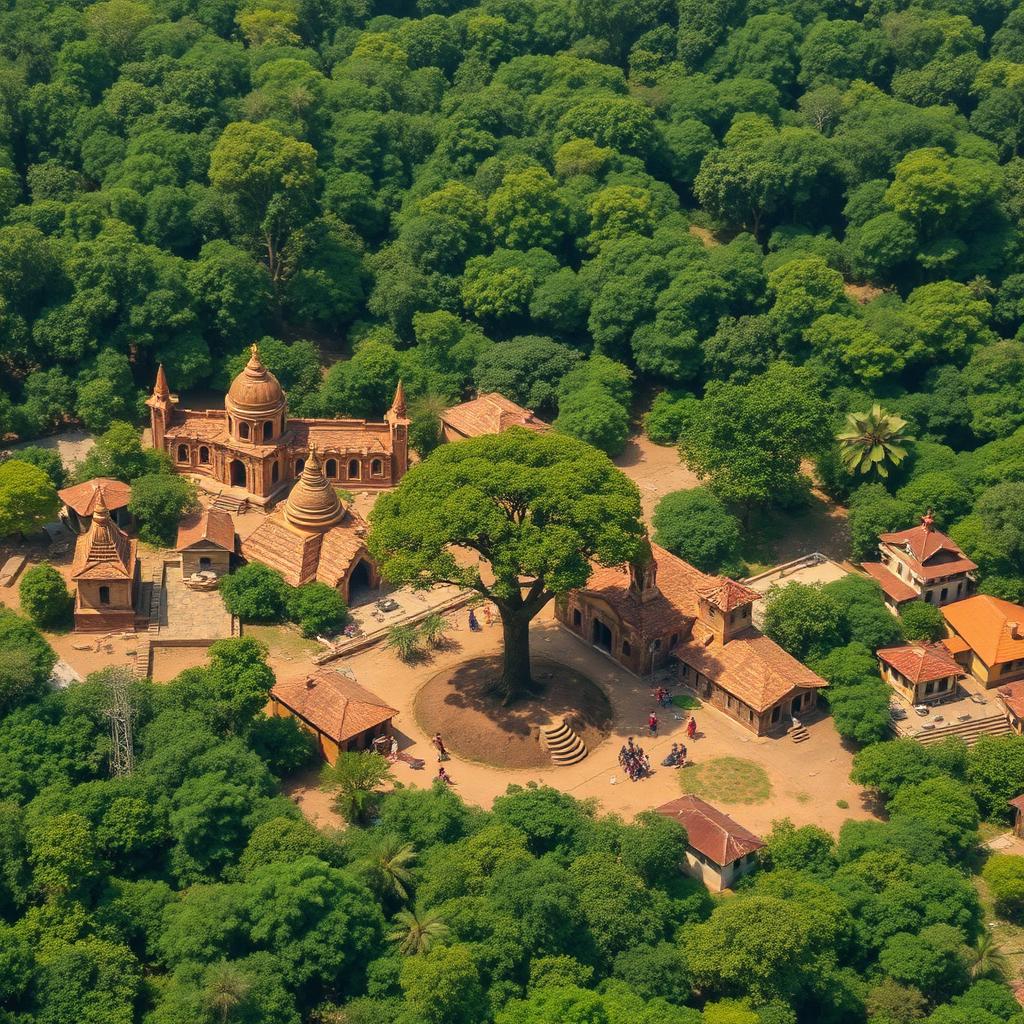
Kumasi is today the second-largest city in Ghana and the proud capital of the Ashanti Region. But how did this great city begin? The answer lies in a beautiful legend about two men — King Osei Tutu I and the priest Okomfo Anokye — and a tree called kum.
This article tells the story of how Kumasi was founded around the year 1680.
Before Kumasi
Before Kumasi existed, the Akan people of the forest belt lived in small towns and villages such as Asantemanso, Kokofu, Juaben, Bekwai, Mampong, Nsuta and Kumawu. They paid tribute to the powerful Denkyira kingdom further south.
A wise and ambitious prince called Osei Tutu was being trained at the courts of Denkyira and later at Akwamu. There he met a brilliant priest from Awukugua-Akuapem called Komfo Anokye (Okomfo Anokye).
The Three Kum Trees
When Osei Tutu came home to rule his people, Okomfo Anokye advised him that the Akan towns must unite into one strong kingdom to throw off Denkyira's rule. To choose the capital, Anokye planted three kum seedlings in three different places: at Kwaaman, at Apemso-Bankofo and at a place near present-day Kumasi.
According to tradition, two of the trees died, but the kum tree at the third spot grew tall and strong. That place was chosen as the capital and was named Kum-ase, meaning 'under the kum tree'. Over time the name became Kumasi.
The Golden Stool Comes Down
To bind all the Akan chiefs together, Okomfo Anokye is said to have called down the Sika Dwa Kofi — the Golden Stool — from the sky one Friday at a great gathering in Kumasi. The stool landed on the lap of Osei Tutu I and the priest declared that it contained the soul of the new Ashanti nation.
From that day, no chief could remove the stool, and no king could sit on it. The Ashanti Union was born, and Kumasi became its capital and spiritual centre.
Advertisement
Growth into a Great City
Under Osei Tutu I and later kings like Opoku Ware I, Kumasi grew rapidly. It became a planned city with wide streets, a royal palace at Manhyia, busy markets and shrines. European visitors in the 19th century described it as one of the cleanest and best-organised cities in West Africa.
Today Kumasi is the centre of Ashanti culture, the seat of the Asantehene at Manhyia Palace, the home of Kejetia — one of the largest open-air markets in Africa — and a fast-growing modern city of over two million people.
Understanding the background
How Kumasi Was Established: The Story of the Kum Tree is an important topic because it helps learners connect names, dates, places and decisions to the wider story of Ghana. The subject belongs to kingdoms & empires, but it also links with citizenship, geography, culture and moral education. When students read about How Kumasi Was Established: The Story of the Kum Tree, they are not only memorising facts; they are learning how people solved problems, protected communities, built institutions and passed lessons from one generation to another.
A useful way to study this topic is to begin with the main evidence. One important fact is: Founded: around 1680. Another point to remember is: Founders: Osei Tutu I (king) and Okomfo Anokye (priest). These details give the article a clear anchor. They help learners explain what happened, where it happened, who was involved and why the event or place remains important in Ghanaian life today.
The story should also be read with empathy. History is about real people: leaders making hard choices, ordinary families facing change, traders moving goods, chiefs protecting their people, students demanding a better future, and communities keeping traditions alive. Some parts of Ghana's past are joyful and proud, while others are painful. A good reader respects both sides and tries to understand the human experience behind the facts.
For long reading, pause after each section and ask three simple questions: What is the main idea? Which details support it? How does it connect to Ghana today? This method makes How Kumasi Was Established: The Story of the Kum Tree easier to remember and easier to discuss in class. It also helps learners write stronger essays because every paragraph can be connected to a clear point, a clear example and a clear explanation.
This topic is also useful for national identity. Ghana is made up of many regions, languages, ethnic groups, faiths and occupations, yet the history of the country shows repeated efforts to build unity. Whether the topic is a president, a castle, a kingdom, a region, a festival or a national event, the lesson is that Ghana's story was built by many hands. Understanding How Kumasi Was Established: The Story of the Kum Tree helps learners appreciate that shared responsibility.
When preparing for quizzes or examinations, learners should create a short timeline, write down key names, mark important places on a map and explain the meaning of each fact in their own words. Copying sentences is less helpful than retelling the story clearly. If a learner can explain How Kumasi Was Established: The Story of the Kum Tree to a younger pupil in simple English, then the learner has truly understood the topic.
People, places and decisions
How Kumasi Was Established: The Story of the Kum Tree is an important topic because it helps learners connect names, dates, places and decisions to the wider story of Ghana. The subject belongs to kingdoms & empires, but it also links with citizenship, geography, culture and moral education. When students read about How Kumasi Was Established: The Story of the Kum Tree, they are not only memorising facts; they are learning how people solved problems, protected communities, built institutions and passed lessons from one generation to another.
A useful way to study this topic is to begin with the main evidence. One important fact is: Founders: Osei Tutu I (king) and Okomfo Anokye (priest). Another point to remember is: Name meaning: Kum-ase = 'under the kum tree'. These details give the article a clear anchor. They help learners explain what happened, where it happened, who was involved and why the event or place remains important in Ghanaian life today.
The story should also be read with empathy. History is about real people: leaders making hard choices, ordinary families facing change, traders moving goods, chiefs protecting their people, students demanding a better future, and communities keeping traditions alive. Some parts of Ghana's past are joyful and proud, while others are painful. A good reader respects both sides and tries to understand the human experience behind the facts.
For long reading, pause after each section and ask three simple questions: What is the main idea? Which details support it? How does it connect to Ghana today? This method makes How Kumasi Was Established: The Story of the Kum Tree easier to remember and easier to discuss in class. It also helps learners write stronger essays because every paragraph can be connected to a clear point, a clear example and a clear explanation.
This topic is also useful for national identity. Ghana is made up of many regions, languages, ethnic groups, faiths and occupations, yet the history of the country shows repeated efforts to build unity. Whether the topic is a president, a castle, a kingdom, a region, a festival or a national event, the lesson is that Ghana's story was built by many hands. Understanding How Kumasi Was Established: The Story of the Kum Tree helps learners appreciate that shared responsibility.
When preparing for quizzes or examinations, learners should create a short timeline, write down key names, mark important places on a map and explain the meaning of each fact in their own words. Copying sentences is less helpful than retelling the story clearly. If a learner can explain How Kumasi Was Established: The Story of the Kum Tree to a younger pupil in simple English, then the learner has truly understood the topic.
Cause and effect
How Kumasi Was Established: The Story of the Kum Tree is an important topic because it helps learners connect names, dates, places and decisions to the wider story of Ghana. The subject belongs to kingdoms & empires, but it also links with citizenship, geography, culture and moral education. When students read about How Kumasi Was Established: The Story of the Kum Tree, they are not only memorising facts; they are learning how people solved problems, protected communities, built institutions and passed lessons from one generation to another.
A useful way to study this topic is to begin with the main evidence. One important fact is: Name meaning: Kum-ase = 'under the kum tree'. Another point to remember is: Capital of the Ashanti Empire and modern Ashanti Region. These details give the article a clear anchor. They help learners explain what happened, where it happened, who was involved and why the event or place remains important in Ghanaian life today.
The story should also be read with empathy. History is about real people: leaders making hard choices, ordinary families facing change, traders moving goods, chiefs protecting their people, students demanding a better future, and communities keeping traditions alive. Some parts of Ghana's past are joyful and proud, while others are painful. A good reader respects both sides and tries to understand the human experience behind the facts.
For long reading, pause after each section and ask three simple questions: What is the main idea? Which details support it? How does it connect to Ghana today? This method makes How Kumasi Was Established: The Story of the Kum Tree easier to remember and easier to discuss in class. It also helps learners write stronger essays because every paragraph can be connected to a clear point, a clear example and a clear explanation.
This topic is also useful for national identity. Ghana is made up of many regions, languages, ethnic groups, faiths and occupations, yet the history of the country shows repeated efforts to build unity. Whether the topic is a president, a castle, a kingdom, a region, a festival or a national event, the lesson is that Ghana's story was built by many hands. Understanding How Kumasi Was Established: The Story of the Kum Tree helps learners appreciate that shared responsibility.
When preparing for quizzes or examinations, learners should create a short timeline, write down key names, mark important places on a map and explain the meaning of each fact in their own words. Copying sentences is less helpful than retelling the story clearly. If a learner can explain How Kumasi Was Established: The Story of the Kum Tree to a younger pupil in simple English, then the learner has truly understood the topic.
Life in Ghana at the time
How Kumasi Was Established: The Story of the Kum Tree is an important topic because it helps learners connect names, dates, places and decisions to the wider story of Ghana. The subject belongs to kingdoms & empires, but it also links with citizenship, geography, culture and moral education. When students read about How Kumasi Was Established: The Story of the Kum Tree, they are not only memorising facts; they are learning how people solved problems, protected communities, built institutions and passed lessons from one generation to another.
A useful way to study this topic is to begin with the main evidence. One important fact is: Capital of the Ashanti Empire and modern Ashanti Region. Another point to remember is: Home of the Golden Stool and Manhyia Palace. These details give the article a clear anchor. They help learners explain what happened, where it happened, who was involved and why the event or place remains important in Ghanaian life today.
The story should also be read with empathy. History is about real people: leaders making hard choices, ordinary families facing change, traders moving goods, chiefs protecting their people, students demanding a better future, and communities keeping traditions alive. Some parts of Ghana's past are joyful and proud, while others are painful. A good reader respects both sides and tries to understand the human experience behind the facts.
For long reading, pause after each section and ask three simple questions: What is the main idea? Which details support it? How does it connect to Ghana today? This method makes How Kumasi Was Established: The Story of the Kum Tree easier to remember and easier to discuss in class. It also helps learners write stronger essays because every paragraph can be connected to a clear point, a clear example and a clear explanation.
This topic is also useful for national identity. Ghana is made up of many regions, languages, ethnic groups, faiths and occupations, yet the history of the country shows repeated efforts to build unity. Whether the topic is a president, a castle, a kingdom, a region, a festival or a national event, the lesson is that Ghana's story was built by many hands. Understanding How Kumasi Was Established: The Story of the Kum Tree helps learners appreciate that shared responsibility.
When preparing for quizzes or examinations, learners should create a short timeline, write down key names, mark important places on a map and explain the meaning of each fact in their own words. Copying sentences is less helpful than retelling the story clearly. If a learner can explain How Kumasi Was Established: The Story of the Kum Tree to a younger pupil in simple English, then the learner has truly understood the topic.
Why the topic matters today
How Kumasi Was Established: The Story of the Kum Tree is an important topic because it helps learners connect names, dates, places and decisions to the wider story of Ghana. The subject belongs to kingdoms & empires, but it also links with citizenship, geography, culture and moral education. When students read about How Kumasi Was Established: The Story of the Kum Tree, they are not only memorising facts; they are learning how people solved problems, protected communities, built institutions and passed lessons from one generation to another.
A useful way to study this topic is to begin with the main evidence. One important fact is: Home of the Golden Stool and Manhyia Palace. Another point to remember is: Founded: around 1680. These details give the article a clear anchor. They help learners explain what happened, where it happened, who was involved and why the event or place remains important in Ghanaian life today.
The story should also be read with empathy. History is about real people: leaders making hard choices, ordinary families facing change, traders moving goods, chiefs protecting their people, students demanding a better future, and communities keeping traditions alive. Some parts of Ghana's past are joyful and proud, while others are painful. A good reader respects both sides and tries to understand the human experience behind the facts.
For long reading, pause after each section and ask three simple questions: What is the main idea? Which details support it? How does it connect to Ghana today? This method makes How Kumasi Was Established: The Story of the Kum Tree easier to remember and easier to discuss in class. It also helps learners write stronger essays because every paragraph can be connected to a clear point, a clear example and a clear explanation.
This topic is also useful for national identity. Ghana is made up of many regions, languages, ethnic groups, faiths and occupations, yet the history of the country shows repeated efforts to build unity. Whether the topic is a president, a castle, a kingdom, a region, a festival or a national event, the lesson is that Ghana's story was built by many hands. Understanding How Kumasi Was Established: The Story of the Kum Tree helps learners appreciate that shared responsibility.
When preparing for quizzes or examinations, learners should create a short timeline, write down key names, mark important places on a map and explain the meaning of each fact in their own words. Copying sentences is less helpful than retelling the story clearly. If a learner can explain How Kumasi Was Established: The Story of the Kum Tree to a younger pupil in simple English, then the learner has truly understood the topic.
Common misunderstandings
How Kumasi Was Established: The Story of the Kum Tree is an important topic because it helps learners connect names, dates, places and decisions to the wider story of Ghana. The subject belongs to kingdoms & empires, but it also links with citizenship, geography, culture and moral education. When students read about How Kumasi Was Established: The Story of the Kum Tree, they are not only memorising facts; they are learning how people solved problems, protected communities, built institutions and passed lessons from one generation to another.
A useful way to study this topic is to begin with the main evidence. One important fact is: Founded: around 1680. Another point to remember is: Founders: Osei Tutu I (king) and Okomfo Anokye (priest). These details give the article a clear anchor. They help learners explain what happened, where it happened, who was involved and why the event or place remains important in Ghanaian life today.
The story should also be read with empathy. History is about real people: leaders making hard choices, ordinary families facing change, traders moving goods, chiefs protecting their people, students demanding a better future, and communities keeping traditions alive. Some parts of Ghana's past are joyful and proud, while others are painful. A good reader respects both sides and tries to understand the human experience behind the facts.
For long reading, pause after each section and ask three simple questions: What is the main idea? Which details support it? How does it connect to Ghana today? This method makes How Kumasi Was Established: The Story of the Kum Tree easier to remember and easier to discuss in class. It also helps learners write stronger essays because every paragraph can be connected to a clear point, a clear example and a clear explanation.
This topic is also useful for national identity. Ghana is made up of many regions, languages, ethnic groups, faiths and occupations, yet the history of the country shows repeated efforts to build unity. Whether the topic is a president, a castle, a kingdom, a region, a festival or a national event, the lesson is that Ghana's story was built by many hands. Understanding How Kumasi Was Established: The Story of the Kum Tree helps learners appreciate that shared responsibility.
When preparing for quizzes or examinations, learners should create a short timeline, write down key names, mark important places on a map and explain the meaning of each fact in their own words. Copying sentences is less helpful than retelling the story clearly. If a learner can explain How Kumasi Was Established: The Story of the Kum Tree to a younger pupil in simple English, then the learner has truly understood the topic.
Classroom study notes
How Kumasi Was Established: The Story of the Kum Tree is an important topic because it helps learners connect names, dates, places and decisions to the wider story of Ghana. The subject belongs to kingdoms & empires, but it also links with citizenship, geography, culture and moral education. When students read about How Kumasi Was Established: The Story of the Kum Tree, they are not only memorising facts; they are learning how people solved problems, protected communities, built institutions and passed lessons from one generation to another.
A useful way to study this topic is to begin with the main evidence. One important fact is: Founders: Osei Tutu I (king) and Okomfo Anokye (priest). Another point to remember is: Name meaning: Kum-ase = 'under the kum tree'. These details give the article a clear anchor. They help learners explain what happened, where it happened, who was involved and why the event or place remains important in Ghanaian life today.
The story should also be read with empathy. History is about real people: leaders making hard choices, ordinary families facing change, traders moving goods, chiefs protecting their people, students demanding a better future, and communities keeping traditions alive. Some parts of Ghana's past are joyful and proud, while others are painful. A good reader respects both sides and tries to understand the human experience behind the facts.
For long reading, pause after each section and ask three simple questions: What is the main idea? Which details support it? How does it connect to Ghana today? This method makes How Kumasi Was Established: The Story of the Kum Tree easier to remember and easier to discuss in class. It also helps learners write stronger essays because every paragraph can be connected to a clear point, a clear example and a clear explanation.
This topic is also useful for national identity. Ghana is made up of many regions, languages, ethnic groups, faiths and occupations, yet the history of the country shows repeated efforts to build unity. Whether the topic is a president, a castle, a kingdom, a region, a festival or a national event, the lesson is that Ghana's story was built by many hands. Understanding How Kumasi Was Established: The Story of the Kum Tree helps learners appreciate that shared responsibility.
When preparing for quizzes or examinations, learners should create a short timeline, write down key names, mark important places on a map and explain the meaning of each fact in their own words. Copying sentences is less helpful than retelling the story clearly. If a learner can explain How Kumasi Was Established: The Story of the Kum Tree to a younger pupil in simple English, then the learner has truly understood the topic.
How to remember the lesson
How Kumasi Was Established: The Story of the Kum Tree is an important topic because it helps learners connect names, dates, places and decisions to the wider story of Ghana. The subject belongs to kingdoms & empires, but it also links with citizenship, geography, culture and moral education. When students read about How Kumasi Was Established: The Story of the Kum Tree, they are not only memorising facts; they are learning how people solved problems, protected communities, built institutions and passed lessons from one generation to another.
A useful way to study this topic is to begin with the main evidence. One important fact is: Name meaning: Kum-ase = 'under the kum tree'. Another point to remember is: Capital of the Ashanti Empire and modern Ashanti Region. These details give the article a clear anchor. They help learners explain what happened, where it happened, who was involved and why the event or place remains important in Ghanaian life today.
The story should also be read with empathy. History is about real people: leaders making hard choices, ordinary families facing change, traders moving goods, chiefs protecting their people, students demanding a better future, and communities keeping traditions alive. Some parts of Ghana's past are joyful and proud, while others are painful. A good reader respects both sides and tries to understand the human experience behind the facts.
For long reading, pause after each section and ask three simple questions: What is the main idea? Which details support it? How does it connect to Ghana today? This method makes How Kumasi Was Established: The Story of the Kum Tree easier to remember and easier to discuss in class. It also helps learners write stronger essays because every paragraph can be connected to a clear point, a clear example and a clear explanation.
This topic is also useful for national identity. Ghana is made up of many regions, languages, ethnic groups, faiths and occupations, yet the history of the country shows repeated efforts to build unity. Whether the topic is a president, a castle, a kingdom, a region, a festival or a national event, the lesson is that Ghana's story was built by many hands. Understanding How Kumasi Was Established: The Story of the Kum Tree helps learners appreciate that shared responsibility.
When preparing for quizzes or examinations, learners should create a short timeline, write down key names, mark important places on a map and explain the meaning of each fact in their own words. Copying sentences is less helpful than retelling the story clearly. If a learner can explain How Kumasi Was Established: The Story of the Kum Tree to a younger pupil in simple English, then the learner has truly understood the topic.
Summary
Kumasi grew from a forest clearing under a single kum tree into the proud heart of the Ashanti nation and one of the great cities of West Africa.
Frequently Asked Questions
Q:Does the original kum tree still exist?
No. The tree died long ago, but the site is still remembered in oral tradition.
Q:Who rules Kumasi today?
The Asantehene, Otumfuo Osei Tutu II, from Manhyia Palace.