The Sagrenti War, fought between 1873 and 1874, was one of the most important wars in the history of the Gold Coast. It was named after the British commander Sir Garnet Wolseley, whose name the Ashanti pronounced as 'Sagrenti'.
It was the war that brought the British army deep into the Ashanti heartland for the first time, leading to the burning of Kumasi and the signing of the Treaty of Fomena.
Causes of the War
By 1873 the Ashanti Empire and the British on the coast had clashed many times. The British were worried about Ashanti control over coastal peoples like the Fante. The Dutch had also just handed over Elmina Castle to the British in 1872, which the Ashanti felt was their right.
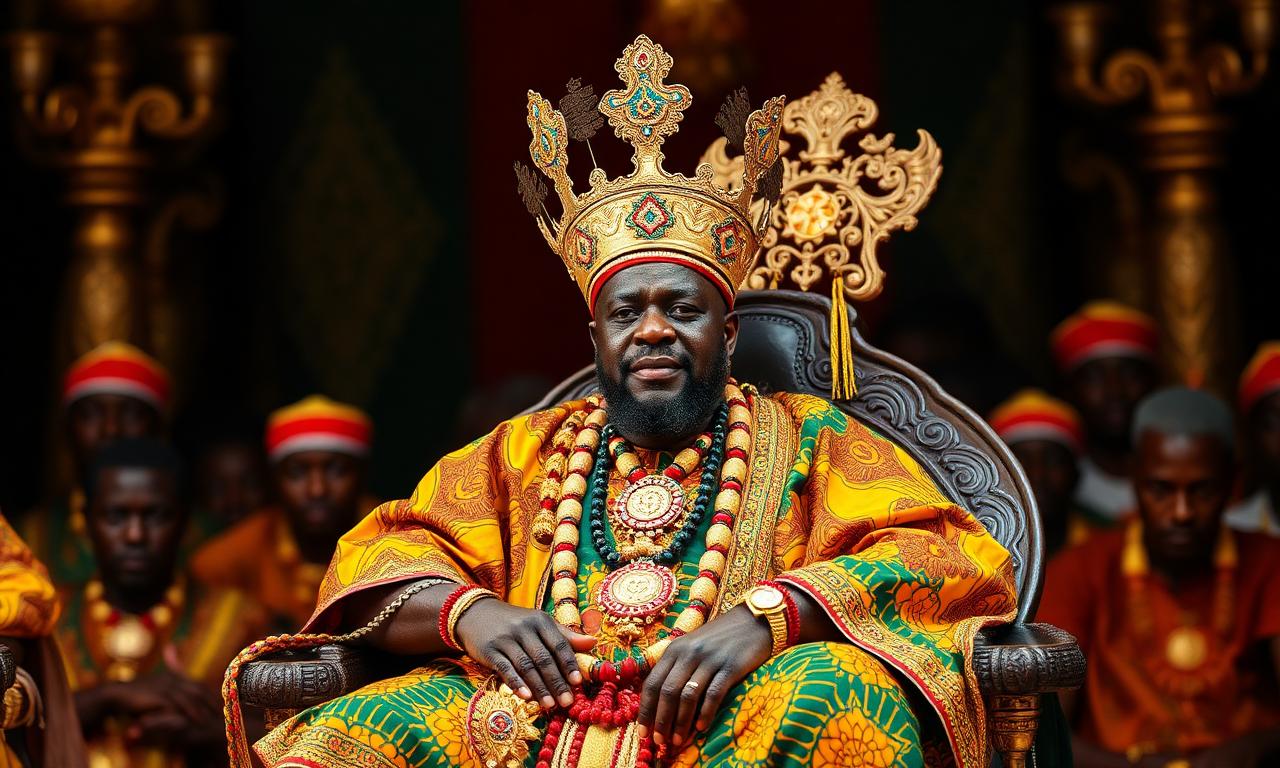
Asantehene Kofi Karikari sent a large army across the Pra River into Fante territory. The British government decided to send a full military expedition to teach the Ashanti a lesson and to protect British trade.
Sir Garnet Wolseley's March
In late 1873 Sir Garnet Wolseley arrived in Cape Coast with a force of British regulars, West Indian soldiers and African allies including the Fante and Hausa. He built a road from the coast through the forest, set up supply stations and trained his troops to cope with the climate.
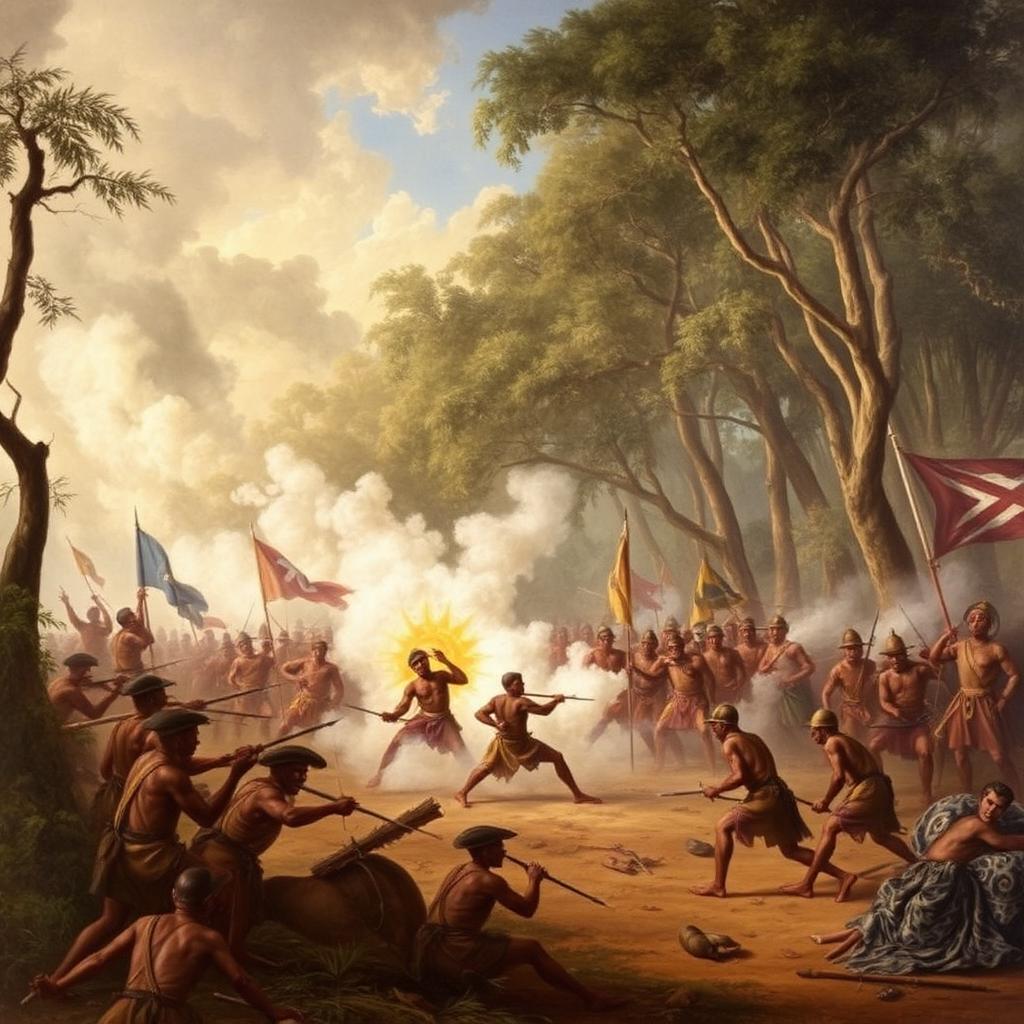
In January 1874 the British column crossed the Pra River. They defeated the Ashanti at the bloody Battle of Amoaful on 31 January and the Battle of Ordashu on 4 February. On 4 February 1874 they entered Kumasi.
The Burning of Kumasi
Wolseley waited for the Asantehene to come and sign a peace treaty, but Kofi Karikari refused. After a few days the British looted the royal palace of its gold and treasures and set Kumasi on fire. The destruction was enormous and is still remembered in Ashanti oral history with sadness.
The Treaty of Fomena, signed on 14 March 1874, forced the Ashanti to pay a huge indemnity in gold, give up claims to coastal peoples and keep the trade routes open. Kofi Karikari was later deposed by his own chiefs for losing the war.
Advertisement
Why the War Still Matters
The Sagrenti War was the beginning of the end of Ashanti independence. It showed that the Ashanti army, brave as it was, could not stand against modern European weapons and tactics in open battle.
Yet the war also produced heroes whose names are still honoured in Ashanti today, and it sowed the seed of the later resistance led by Nana Yaa Asantewaa in 1900.
Understanding the background
The Sagrenti War of 1873–1874 is an important topic because it helps learners connect names, dates, places and decisions to the wider story of Ghana. The subject belongs to historical events, but it also links with citizenship, geography, culture and moral education. When students read about The Sagrenti War of 1873–1874, they are not only memorising facts; they are learning how people solved problems, protected communities, built institutions and passed lessons from one generation to another.
A useful way to study this topic is to begin with the main evidence. One important fact is: Dates: 1873–1874. Another point to remember is: British commander: Sir Garnet Wolseley ('Sagrenti'). These details give the article a clear anchor. They help learners explain what happened, where it happened, who was involved and why the event or place remains important in Ghanaian life today.
The story should also be read with empathy. History is about real people: leaders making hard choices, ordinary families facing change, traders moving goods, chiefs protecting their people, students demanding a better future, and communities keeping traditions alive. Some parts of Ghana's past are joyful and proud, while others are painful. A good reader respects both sides and tries to understand the human experience behind the facts.
For long reading, pause after each section and ask three simple questions: What is the main idea? Which details support it? How does it connect to Ghana today? This method makes The Sagrenti War of 1873–1874 easier to remember and easier to discuss in class. It also helps learners write stronger essays because every paragraph can be connected to a clear point, a clear example and a clear explanation.
This topic is also useful for national identity. Ghana is made up of many regions, languages, ethnic groups, faiths and occupations, yet the history of the country shows repeated efforts to build unity. Whether the topic is a president, a castle, a kingdom, a region, a festival or a national event, the lesson is that Ghana's story was built by many hands. Understanding The Sagrenti War of 1873–1874 helps learners appreciate that shared responsibility.
When preparing for quizzes or examinations, learners should create a short timeline, write down key names, mark important places on a map and explain the meaning of each fact in their own words. Copying sentences is less helpful than retelling the story clearly. If a learner can explain The Sagrenti War of 1873–1874 to a younger pupil in simple English, then the learner has truly understood the topic.
People, places and decisions
The Sagrenti War of 1873–1874 is an important topic because it helps learners connect names, dates, places and decisions to the wider story of Ghana. The subject belongs to historical events, but it also links with citizenship, geography, culture and moral education. When students read about The Sagrenti War of 1873–1874, they are not only memorising facts; they are learning how people solved problems, protected communities, built institutions and passed lessons from one generation to another.
A useful way to study this topic is to begin with the main evidence. One important fact is: British commander: Sir Garnet Wolseley ('Sagrenti'). Another point to remember is: Asantehene: Kofi Karikari. These details give the article a clear anchor. They help learners explain what happened, where it happened, who was involved and why the event or place remains important in Ghanaian life today.
The story should also be read with empathy. History is about real people: leaders making hard choices, ordinary families facing change, traders moving goods, chiefs protecting their people, students demanding a better future, and communities keeping traditions alive. Some parts of Ghana's past are joyful and proud, while others are painful. A good reader respects both sides and tries to understand the human experience behind the facts.
For long reading, pause after each section and ask three simple questions: What is the main idea? Which details support it? How does it connect to Ghana today? This method makes The Sagrenti War of 1873–1874 easier to remember and easier to discuss in class. It also helps learners write stronger essays because every paragraph can be connected to a clear point, a clear example and a clear explanation.
This topic is also useful for national identity. Ghana is made up of many regions, languages, ethnic groups, faiths and occupations, yet the history of the country shows repeated efforts to build unity. Whether the topic is a president, a castle, a kingdom, a region, a festival or a national event, the lesson is that Ghana's story was built by many hands. Understanding The Sagrenti War of 1873–1874 helps learners appreciate that shared responsibility.
When preparing for quizzes or examinations, learners should create a short timeline, write down key names, mark important places on a map and explain the meaning of each fact in their own words. Copying sentences is less helpful than retelling the story clearly. If a learner can explain The Sagrenti War of 1873–1874 to a younger pupil in simple English, then the learner has truly understood the topic.
Cause and effect
The Sagrenti War of 1873–1874 is an important topic because it helps learners connect names, dates, places and decisions to the wider story of Ghana. The subject belongs to historical events, but it also links with citizenship, geography, culture and moral education. When students read about The Sagrenti War of 1873–1874, they are not only memorising facts; they are learning how people solved problems, protected communities, built institutions and passed lessons from one generation to another.
A useful way to study this topic is to begin with the main evidence. One important fact is: Asantehene: Kofi Karikari. Another point to remember is: Major battles: Amoaful (31 Jan 1874), Ordashu (4 Feb 1874). These details give the article a clear anchor. They help learners explain what happened, where it happened, who was involved and why the event or place remains important in Ghanaian life today.
The story should also be read with empathy. History is about real people: leaders making hard choices, ordinary families facing change, traders moving goods, chiefs protecting their people, students demanding a better future, and communities keeping traditions alive. Some parts of Ghana's past are joyful and proud, while others are painful. A good reader respects both sides and tries to understand the human experience behind the facts.
For long reading, pause after each section and ask three simple questions: What is the main idea? Which details support it? How does it connect to Ghana today? This method makes The Sagrenti War of 1873–1874 easier to remember and easier to discuss in class. It also helps learners write stronger essays because every paragraph can be connected to a clear point, a clear example and a clear explanation.
This topic is also useful for national identity. Ghana is made up of many regions, languages, ethnic groups, faiths and occupations, yet the history of the country shows repeated efforts to build unity. Whether the topic is a president, a castle, a kingdom, a region, a festival or a national event, the lesson is that Ghana's story was built by many hands. Understanding The Sagrenti War of 1873–1874 helps learners appreciate that shared responsibility.
When preparing for quizzes or examinations, learners should create a short timeline, write down key names, mark important places on a map and explain the meaning of each fact in their own words. Copying sentences is less helpful than retelling the story clearly. If a learner can explain The Sagrenti War of 1873–1874 to a younger pupil in simple English, then the learner has truly understood the topic.
Life in Ghana at the time
The Sagrenti War of 1873–1874 is an important topic because it helps learners connect names, dates, places and decisions to the wider story of Ghana. The subject belongs to historical events, but it also links with citizenship, geography, culture and moral education. When students read about The Sagrenti War of 1873–1874, they are not only memorising facts; they are learning how people solved problems, protected communities, built institutions and passed lessons from one generation to another.
A useful way to study this topic is to begin with the main evidence. One important fact is: Major battles: Amoaful (31 Jan 1874), Ordashu (4 Feb 1874). Another point to remember is: Result: Burning of Kumasi; Treaty of Fomena (14 March 1874). These details give the article a clear anchor. They help learners explain what happened, where it happened, who was involved and why the event or place remains important in Ghanaian life today.
The story should also be read with empathy. History is about real people: leaders making hard choices, ordinary families facing change, traders moving goods, chiefs protecting their people, students demanding a better future, and communities keeping traditions alive. Some parts of Ghana's past are joyful and proud, while others are painful. A good reader respects both sides and tries to understand the human experience behind the facts.
For long reading, pause after each section and ask three simple questions: What is the main idea? Which details support it? How does it connect to Ghana today? This method makes The Sagrenti War of 1873–1874 easier to remember and easier to discuss in class. It also helps learners write stronger essays because every paragraph can be connected to a clear point, a clear example and a clear explanation.
This topic is also useful for national identity. Ghana is made up of many regions, languages, ethnic groups, faiths and occupations, yet the history of the country shows repeated efforts to build unity. Whether the topic is a president, a castle, a kingdom, a region, a festival or a national event, the lesson is that Ghana's story was built by many hands. Understanding The Sagrenti War of 1873–1874 helps learners appreciate that shared responsibility.
When preparing for quizzes or examinations, learners should create a short timeline, write down key names, mark important places on a map and explain the meaning of each fact in their own words. Copying sentences is less helpful than retelling the story clearly. If a learner can explain The Sagrenti War of 1873–1874 to a younger pupil in simple English, then the learner has truly understood the topic.
Why the topic matters today
The Sagrenti War of 1873–1874 is an important topic because it helps learners connect names, dates, places and decisions to the wider story of Ghana. The subject belongs to historical events, but it also links with citizenship, geography, culture and moral education. When students read about The Sagrenti War of 1873–1874, they are not only memorising facts; they are learning how people solved problems, protected communities, built institutions and passed lessons from one generation to another.
A useful way to study this topic is to begin with the main evidence. One important fact is: Result: Burning of Kumasi; Treaty of Fomena (14 March 1874). Another point to remember is: Dates: 1873–1874. These details give the article a clear anchor. They help learners explain what happened, where it happened, who was involved and why the event or place remains important in Ghanaian life today.
The story should also be read with empathy. History is about real people: leaders making hard choices, ordinary families facing change, traders moving goods, chiefs protecting their people, students demanding a better future, and communities keeping traditions alive. Some parts of Ghana's past are joyful and proud, while others are painful. A good reader respects both sides and tries to understand the human experience behind the facts.
For long reading, pause after each section and ask three simple questions: What is the main idea? Which details support it? How does it connect to Ghana today? This method makes The Sagrenti War of 1873–1874 easier to remember and easier to discuss in class. It also helps learners write stronger essays because every paragraph can be connected to a clear point, a clear example and a clear explanation.
This topic is also useful for national identity. Ghana is made up of many regions, languages, ethnic groups, faiths and occupations, yet the history of the country shows repeated efforts to build unity. Whether the topic is a president, a castle, a kingdom, a region, a festival or a national event, the lesson is that Ghana's story was built by many hands. Understanding The Sagrenti War of 1873–1874 helps learners appreciate that shared responsibility.
When preparing for quizzes or examinations, learners should create a short timeline, write down key names, mark important places on a map and explain the meaning of each fact in their own words. Copying sentences is less helpful than retelling the story clearly. If a learner can explain The Sagrenti War of 1873–1874 to a younger pupil in simple English, then the learner has truly understood the topic.
Common misunderstandings
The Sagrenti War of 1873–1874 is an important topic because it helps learners connect names, dates, places and decisions to the wider story of Ghana. The subject belongs to historical events, but it also links with citizenship, geography, culture and moral education. When students read about The Sagrenti War of 1873–1874, they are not only memorising facts; they are learning how people solved problems, protected communities, built institutions and passed lessons from one generation to another.
A useful way to study this topic is to begin with the main evidence. One important fact is: Dates: 1873–1874. Another point to remember is: British commander: Sir Garnet Wolseley ('Sagrenti'). These details give the article a clear anchor. They help learners explain what happened, where it happened, who was involved and why the event or place remains important in Ghanaian life today.
The story should also be read with empathy. History is about real people: leaders making hard choices, ordinary families facing change, traders moving goods, chiefs protecting their people, students demanding a better future, and communities keeping traditions alive. Some parts of Ghana's past are joyful and proud, while others are painful. A good reader respects both sides and tries to understand the human experience behind the facts.
For long reading, pause after each section and ask three simple questions: What is the main idea? Which details support it? How does it connect to Ghana today? This method makes The Sagrenti War of 1873–1874 easier to remember and easier to discuss in class. It also helps learners write stronger essays because every paragraph can be connected to a clear point, a clear example and a clear explanation.
This topic is also useful for national identity. Ghana is made up of many regions, languages, ethnic groups, faiths and occupations, yet the history of the country shows repeated efforts to build unity. Whether the topic is a president, a castle, a kingdom, a region, a festival or a national event, the lesson is that Ghana's story was built by many hands. Understanding The Sagrenti War of 1873–1874 helps learners appreciate that shared responsibility.
When preparing for quizzes or examinations, learners should create a short timeline, write down key names, mark important places on a map and explain the meaning of each fact in their own words. Copying sentences is less helpful than retelling the story clearly. If a learner can explain The Sagrenti War of 1873–1874 to a younger pupil in simple English, then the learner has truly understood the topic.
Classroom study notes
The Sagrenti War of 1873–1874 is an important topic because it helps learners connect names, dates, places and decisions to the wider story of Ghana. The subject belongs to historical events, but it also links with citizenship, geography, culture and moral education. When students read about The Sagrenti War of 1873–1874, they are not only memorising facts; they are learning how people solved problems, protected communities, built institutions and passed lessons from one generation to another.
A useful way to study this topic is to begin with the main evidence. One important fact is: British commander: Sir Garnet Wolseley ('Sagrenti'). Another point to remember is: Asantehene: Kofi Karikari. These details give the article a clear anchor. They help learners explain what happened, where it happened, who was involved and why the event or place remains important in Ghanaian life today.
The story should also be read with empathy. History is about real people: leaders making hard choices, ordinary families facing change, traders moving goods, chiefs protecting their people, students demanding a better future, and communities keeping traditions alive. Some parts of Ghana's past are joyful and proud, while others are painful. A good reader respects both sides and tries to understand the human experience behind the facts.
For long reading, pause after each section and ask three simple questions: What is the main idea? Which details support it? How does it connect to Ghana today? This method makes The Sagrenti War of 1873–1874 easier to remember and easier to discuss in class. It also helps learners write stronger essays because every paragraph can be connected to a clear point, a clear example and a clear explanation.
This topic is also useful for national identity. Ghana is made up of many regions, languages, ethnic groups, faiths and occupations, yet the history of the country shows repeated efforts to build unity. Whether the topic is a president, a castle, a kingdom, a region, a festival or a national event, the lesson is that Ghana's story was built by many hands. Understanding The Sagrenti War of 1873–1874 helps learners appreciate that shared responsibility.
When preparing for quizzes or examinations, learners should create a short timeline, write down key names, mark important places on a map and explain the meaning of each fact in their own words. Copying sentences is less helpful than retelling the story clearly. If a learner can explain The Sagrenti War of 1873–1874 to a younger pupil in simple English, then the learner has truly understood the topic.
How to remember the lesson
The Sagrenti War of 1873–1874 is an important topic because it helps learners connect names, dates, places and decisions to the wider story of Ghana. The subject belongs to historical events, but it also links with citizenship, geography, culture and moral education. When students read about The Sagrenti War of 1873–1874, they are not only memorising facts; they are learning how people solved problems, protected communities, built institutions and passed lessons from one generation to another.
A useful way to study this topic is to begin with the main evidence. One important fact is: Asantehene: Kofi Karikari. Another point to remember is: Major battles: Amoaful (31 Jan 1874), Ordashu (4 Feb 1874). These details give the article a clear anchor. They help learners explain what happened, where it happened, who was involved and why the event or place remains important in Ghanaian life today.
The story should also be read with empathy. History is about real people: leaders making hard choices, ordinary families facing change, traders moving goods, chiefs protecting their people, students demanding a better future, and communities keeping traditions alive. Some parts of Ghana's past are joyful and proud, while others are painful. A good reader respects both sides and tries to understand the human experience behind the facts.
For long reading, pause after each section and ask three simple questions: What is the main idea? Which details support it? How does it connect to Ghana today? This method makes The Sagrenti War of 1873–1874 easier to remember and easier to discuss in class. It also helps learners write stronger essays because every paragraph can be connected to a clear point, a clear example and a clear explanation.
This topic is also useful for national identity. Ghana is made up of many regions, languages, ethnic groups, faiths and occupations, yet the history of the country shows repeated efforts to build unity. Whether the topic is a president, a castle, a kingdom, a region, a festival or a national event, the lesson is that Ghana's story was built by many hands. Understanding The Sagrenti War of 1873–1874 helps learners appreciate that shared responsibility.
When preparing for quizzes or examinations, learners should create a short timeline, write down key names, mark important places on a map and explain the meaning of each fact in their own words. Copying sentences is less helpful than retelling the story clearly. If a learner can explain The Sagrenti War of 1873–1874 to a younger pupil in simple English, then the learner has truly understood the topic.
Questions for deeper thinking
The Sagrenti War of 1873–1874 is an important topic because it helps learners connect names, dates, places and decisions to the wider story of Ghana. The subject belongs to historical events, but it also links with citizenship, geography, culture and moral education. When students read about The Sagrenti War of 1873–1874, they are not only memorising facts; they are learning how people solved problems, protected communities, built institutions and passed lessons from one generation to another.
A useful way to study this topic is to begin with the main evidence. One important fact is: Major battles: Amoaful (31 Jan 1874), Ordashu (4 Feb 1874). Another point to remember is: Result: Burning of Kumasi; Treaty of Fomena (14 March 1874). These details give the article a clear anchor. They help learners explain what happened, where it happened, who was involved and why the event or place remains important in Ghanaian life today.
The story should also be read with empathy. History is about real people: leaders making hard choices, ordinary families facing change, traders moving goods, chiefs protecting their people, students demanding a better future, and communities keeping traditions alive. Some parts of Ghana's past are joyful and proud, while others are painful. A good reader respects both sides and tries to understand the human experience behind the facts.
For long reading, pause after each section and ask three simple questions: What is the main idea? Which details support it? How does it connect to Ghana today? This method makes The Sagrenti War of 1873–1874 easier to remember and easier to discuss in class. It also helps learners write stronger essays because every paragraph can be connected to a clear point, a clear example and a clear explanation.
This topic is also useful for national identity. Ghana is made up of many regions, languages, ethnic groups, faiths and occupations, yet the history of the country shows repeated efforts to build unity. Whether the topic is a president, a castle, a kingdom, a region, a festival or a national event, the lesson is that Ghana's story was built by many hands. Understanding The Sagrenti War of 1873–1874 helps learners appreciate that shared responsibility.
When preparing for quizzes or examinations, learners should create a short timeline, write down key names, mark important places on a map and explain the meaning of each fact in their own words. Copying sentences is less helpful than retelling the story clearly. If a learner can explain The Sagrenti War of 1873–1874 to a younger pupil in simple English, then the learner has truly understood the topic.
Summary
The Sagrenti War broke the military power of the Ashanti Empire and marked a turning point in the colonisation of the Gold Coast.
Frequently Asked Questions
Q:Why is it called the Sagrenti War?
Because the Ashanti could not pronounce 'Sir Garnet'; they said 'Sagrenti'.
Q:Did the British capture the Asantehene?
No. He fled before they entered Kumasi and later abdicated.