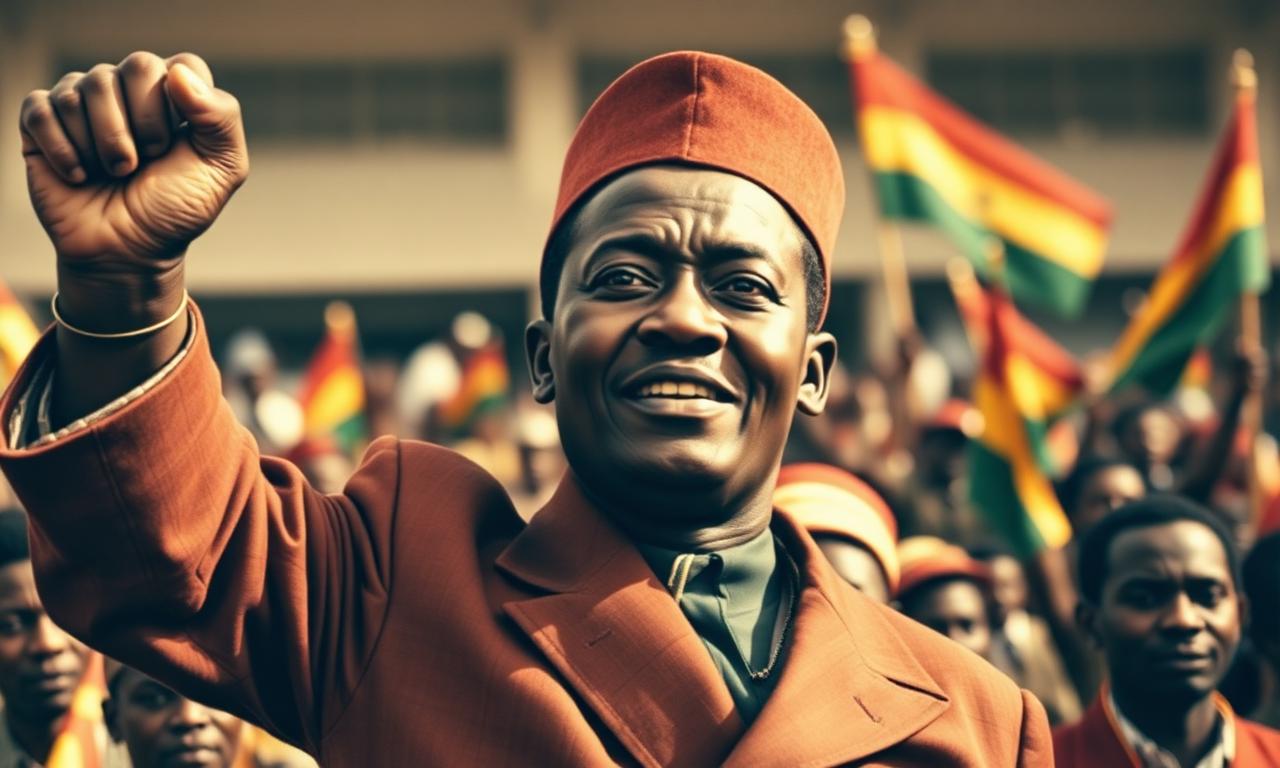
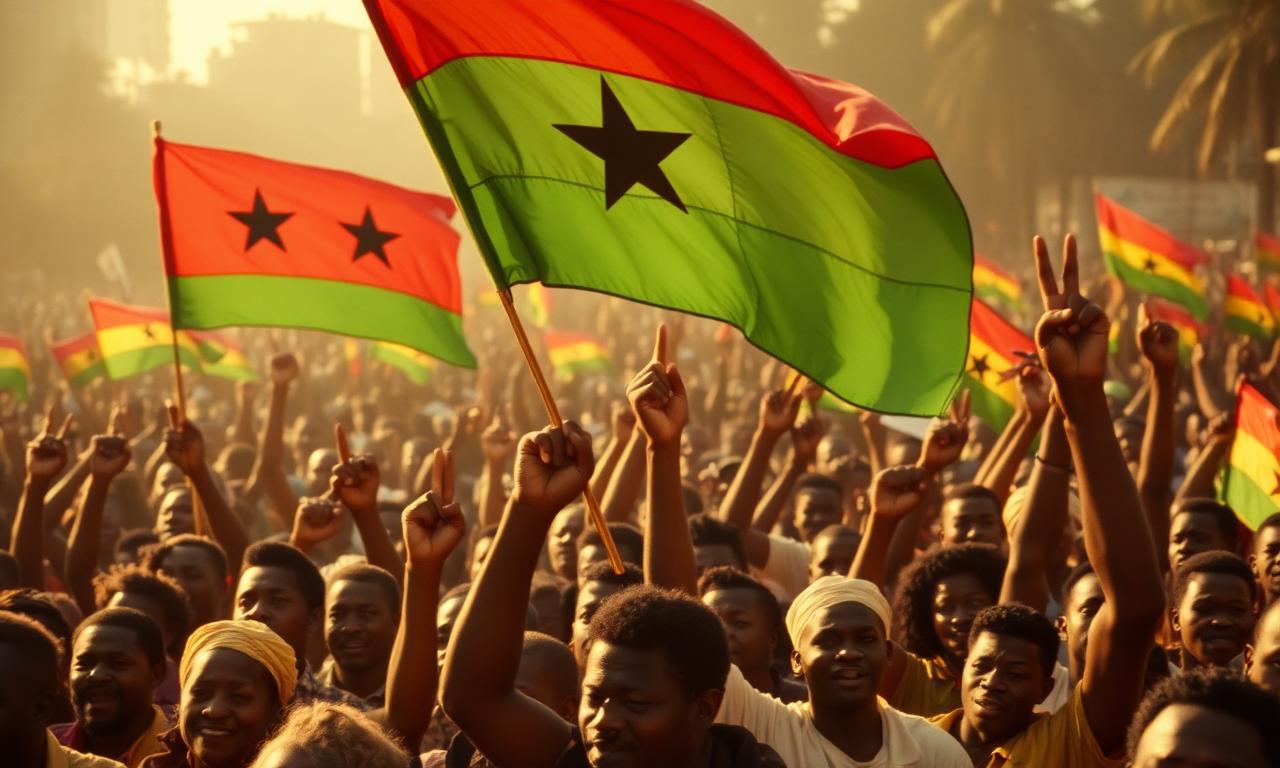
The struggle for independence in Ghana was not a single event but a long journey that lasted more than half a century. It involved chiefs, lawyers, farmers, market women, ex-servicemen, journalists, students and ordinary citizens.
This article tells the full story in simple language — how the people of the Gold Coast moved from accepting colonial rule to demanding 'Self-Government Now' under Dr. Kwame Nkrumah, and how Ghana finally became free on 6 March 1957.
Background and Historical Overview
After Britain made the Gold Coast a Crown Colony in 1874, many Ghanaians realised that important decisions about their land, taxes and chiefs were being taken in faraway London. Educated lawyers, merchants and chiefs began to organise themselves to defend their rights.
In 1897 the Aborigines' Rights Protection Society (ARPS) was formed in Cape Coast to oppose the Crown Lands Bill, which would have given the British government control over all unoccupied land. The Society sent a delegation to London and the bill was withdrawn. This was the first big victory of organised protest in the Gold Coast.
After the First World War (1914–1918) thousands of Gold Coast soldiers returned home expecting better treatment but found nothing had changed. New parties such as the National Congress of British West Africa (NCBWA) in 1920, led by J.E. Casely Hayford, demanded more African representation in government.
Main Events Explained Clearly
1925 Constitution — Governor Guggisberg's new constitution allowed a few elected Africans onto the Legislative Council for the first time. It was a small step, but it taught the people the value of voting.
1947 — Lawyer George Alfred 'Paa' Grant and other businessmen formed the United Gold Coast Convention (UGCC) with J.B. Danquah, and invited Kwame Nkrumah from London to become General Secretary. Their slogan was 'Self-Government in the Shortest Possible Time'.
28 February 1948 — Ex-servicemen led by Sergeant Adjetey marched peacefully to present a petition to the Governor at Christiansborg Castle. The police opened fire and killed Sergeant Adjetey, Corporal Attipoe and Private Lamptey. Riots broke out across Accra, Kumasi and Koforidua.
March 1948 — The Big Six (Nkrumah, Danquah, Ako Adjei, Ofori Atta, Akufo Addo and Obetsebi-Lamptey) were arrested and detained.
1949 — Nkrumah broke away from the UGCC and formed the Convention People's Party (CPP) with the more urgent slogan 'Self-Government Now!'.
January 1950 — Nkrumah launched 'Positive Action', a campaign of non-violent strikes copied from Gandhi's methods in India. He was jailed at James Fort Prison.
1951 — The CPP won 34 of 38 seats in the first general election even though Nkrumah was in prison. The British released him and made him Leader of Government Business, and a year later Prime Minister.
1954 and 1956 — Two more elections were held; the CPP won both. The British finally agreed to grant full independence.
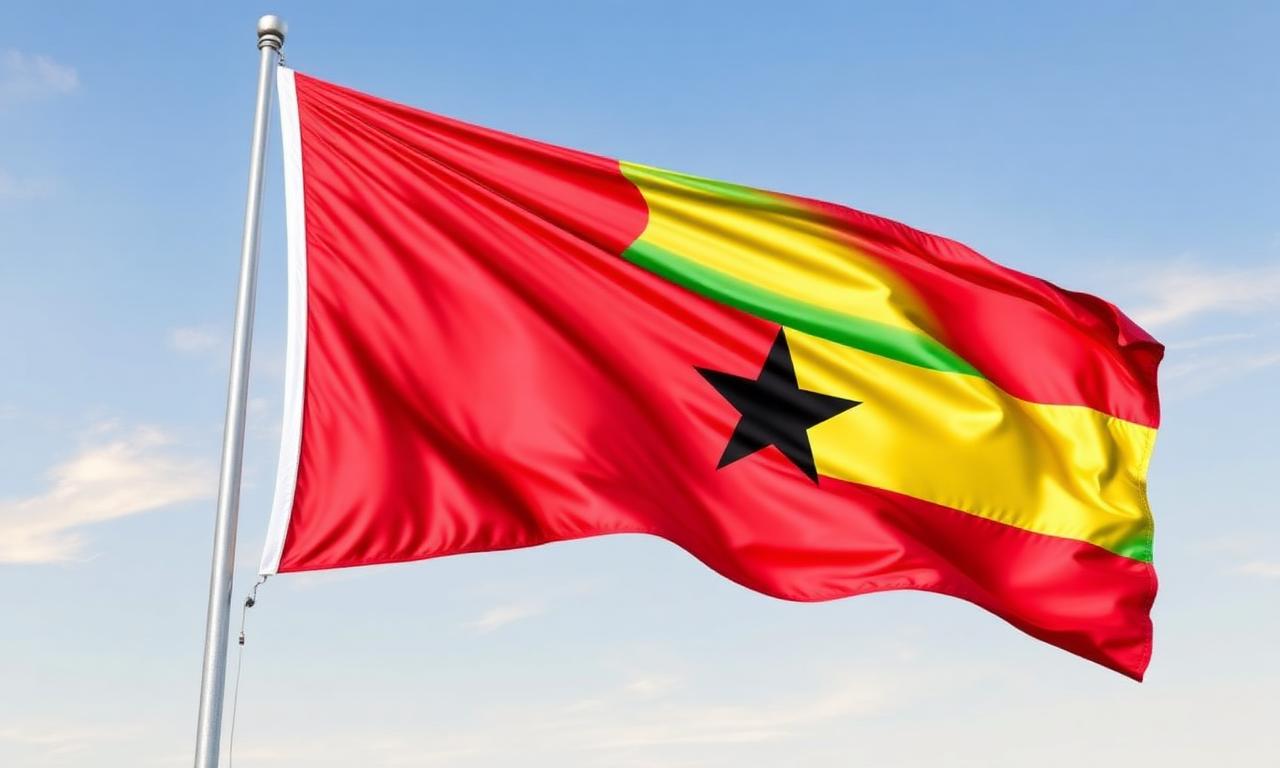
6 March 1957 — At midnight at the Old Polo Grounds in Accra, the Union Jack was lowered and the new red, gold and green flag with the Black Star was raised. Nkrumah declared: 'Ghana, your beloved country, is free forever!'
Important People Involved
Dr. J.B. Danquah — lawyer and founder of the UGCC, often called the 'Doyen of Gold Coast Politics'. He suggested the name 'Ghana' for the country.
Dr. Kwame Nkrumah — leader of the CPP and the man who finally led the country to independence; later first Prime Minister and President.
George Alfred 'Paa' Grant — wealthy businessman who funded the UGCC and brought Nkrumah home from London.
Edward Akufo-Addo, Ako Adjei, William Ofori Atta and Obetsebi-Lamptey — the other members of the Big Six.
Sergeant Adjetey, Corporal Attipoe and Private Lamptey — the three ex-servicemen killed on 28 February 1948 whose deaths sparked the independence movement.
Hannah Kudjoe and the market women — organised the women's wing of the CPP and led many of its boycotts and demonstrations.
Advertisement
Causes and Effects
Causes: harsh colonial taxes, racial discrimination, low cocoa prices paid to local farmers, the influence of returning World War II soldiers, Pan-African ideas from people like Marcus Garvey and W.E.B. Du Bois, the 1948 shooting of ex-servicemen, the spread of education and the radio, and the strong leadership of Nkrumah.
Effects: Ghana became the first sub-Saharan African colony to win independence; this inspired more than 30 other African countries to fight for their own freedom in the 1960s; the new flag, anthem, currency and Black Star became proud symbols; Ghanaians took control of their own education, economy and foreign policy; and the country joined the United Nations and the Commonwealth as a sovereign nation.
Simple Real-Life Explanation
Think of a senior brother who has been doing everything for a junior brother — choosing his clothes, his school, even what he eats. One day the junior says: 'I am now old enough; let me choose for myself.' At first the senior brother refuses, then he agrees to a few small choices, and finally he steps back completely.
That is the way the British and the people of the Gold Coast moved from total colonial control, to partial self-government, and finally to full independence in 1957.
Understanding the background
The Struggle for Independence in Ghana is an important topic because it helps learners connect names, dates, places and decisions to the wider story of Ghana. The subject belongs to independence, but it also links with citizenship, geography, culture and moral education. When students read about The Struggle for Independence in Ghana, they are not only memorising facts; they are learning how people solved problems, protected communities, built institutions and passed lessons from one generation to another.
A useful way to study this topic is to begin with the main evidence. One important fact is: Key lesson 1: Patience and persistence are stronger than violence — many of the biggest gains came from peaceful protest.. Another point to remember is: Key lesson 2: A clear and simple message ('Self-Government Now!') can unite millions of people.. These details give the article a clear anchor. They help learners explain what happened, where it happened, who was involved and why the event or place remains important in Ghanaian life today.
The story should also be read with empathy. History is about real people: leaders making hard choices, ordinary families facing change, traders moving goods, chiefs protecting their people, students demanding a better future, and communities keeping traditions alive. Some parts of Ghana's past are joyful and proud, while others are painful. A good reader respects both sides and tries to understand the human experience behind the facts.
For long reading, pause after each section and ask three simple questions: What is the main idea? Which details support it? How does it connect to Ghana today? This method makes The Struggle for Independence in Ghana easier to remember and easier to discuss in class. It also helps learners write stronger essays because every paragraph can be connected to a clear point, a clear example and a clear explanation.
This topic is also useful for national identity. Ghana is made up of many regions, languages, ethnic groups, faiths and occupations, yet the history of the country shows repeated efforts to build unity. Whether the topic is a president, a castle, a kingdom, a region, a festival or a national event, the lesson is that Ghana's story was built by many hands. Understanding The Struggle for Independence in Ghana helps learners appreciate that shared responsibility.
When preparing for quizzes or examinations, learners should create a short timeline, write down key names, mark important places on a map and explain the meaning of each fact in their own words. Copying sentences is less helpful than retelling the story clearly. If a learner can explain The Struggle for Independence in Ghana to a younger pupil in simple English, then the learner has truly understood the topic.
People, places and decisions
The Struggle for Independence in Ghana is an important topic because it helps learners connect names, dates, places and decisions to the wider story of Ghana. The subject belongs to independence, but it also links with citizenship, geography, culture and moral education. When students read about The Struggle for Independence in Ghana, they are not only memorising facts; they are learning how people solved problems, protected communities, built institutions and passed lessons from one generation to another.
A useful way to study this topic is to begin with the main evidence. One important fact is: Key lesson 2: A clear and simple message ('Self-Government Now!') can unite millions of people.. Another point to remember is: Key lesson 3: Education and a free press were the secret weapons of the independence movement.. These details give the article a clear anchor. They help learners explain what happened, where it happened, who was involved and why the event or place remains important in Ghanaian life today.
The story should also be read with empathy. History is about real people: leaders making hard choices, ordinary families facing change, traders moving goods, chiefs protecting their people, students demanding a better future, and communities keeping traditions alive. Some parts of Ghana's past are joyful and proud, while others are painful. A good reader respects both sides and tries to understand the human experience behind the facts.
For long reading, pause after each section and ask three simple questions: What is the main idea? Which details support it? How does it connect to Ghana today? This method makes The Struggle for Independence in Ghana easier to remember and easier to discuss in class. It also helps learners write stronger essays because every paragraph can be connected to a clear point, a clear example and a clear explanation.
This topic is also useful for national identity. Ghana is made up of many regions, languages, ethnic groups, faiths and occupations, yet the history of the country shows repeated efforts to build unity. Whether the topic is a president, a castle, a kingdom, a region, a festival or a national event, the lesson is that Ghana's story was built by many hands. Understanding The Struggle for Independence in Ghana helps learners appreciate that shared responsibility.
When preparing for quizzes or examinations, learners should create a short timeline, write down key names, mark important places on a map and explain the meaning of each fact in their own words. Copying sentences is less helpful than retelling the story clearly. If a learner can explain The Struggle for Independence in Ghana to a younger pupil in simple English, then the learner has truly understood the topic.
Cause and effect
The Struggle for Independence in Ghana is an important topic because it helps learners connect names, dates, places and decisions to the wider story of Ghana. The subject belongs to independence, but it also links with citizenship, geography, culture and moral education. When students read about The Struggle for Independence in Ghana, they are not only memorising facts; they are learning how people solved problems, protected communities, built institutions and passed lessons from one generation to another.
A useful way to study this topic is to begin with the main evidence. One important fact is: Key lesson 3: Education and a free press were the secret weapons of the independence movement.. Another point to remember is: Key lesson 4: Ordinary people — farmers, market women, ex-servicemen — make history, not only leaders.. These details give the article a clear anchor. They help learners explain what happened, where it happened, who was involved and why the event or place remains important in Ghanaian life today.
The story should also be read with empathy. History is about real people: leaders making hard choices, ordinary families facing change, traders moving goods, chiefs protecting their people, students demanding a better future, and communities keeping traditions alive. Some parts of Ghana's past are joyful and proud, while others are painful. A good reader respects both sides and tries to understand the human experience behind the facts.
For long reading, pause after each section and ask three simple questions: What is the main idea? Which details support it? How does it connect to Ghana today? This method makes The Struggle for Independence in Ghana easier to remember and easier to discuss in class. It also helps learners write stronger essays because every paragraph can be connected to a clear point, a clear example and a clear explanation.
This topic is also useful for national identity. Ghana is made up of many regions, languages, ethnic groups, faiths and occupations, yet the history of the country shows repeated efforts to build unity. Whether the topic is a president, a castle, a kingdom, a region, a festival or a national event, the lesson is that Ghana's story was built by many hands. Understanding The Struggle for Independence in Ghana helps learners appreciate that shared responsibility.
When preparing for quizzes or examinations, learners should create a short timeline, write down key names, mark important places on a map and explain the meaning of each fact in their own words. Copying sentences is less helpful than retelling the story clearly. If a learner can explain The Struggle for Independence in Ghana to a younger pupil in simple English, then the learner has truly understood the topic.
Life in Ghana at the time
The Struggle for Independence in Ghana is an important topic because it helps learners connect names, dates, places and decisions to the wider story of Ghana. The subject belongs to independence, but it also links with citizenship, geography, culture and moral education. When students read about The Struggle for Independence in Ghana, they are not only memorising facts; they are learning how people solved problems, protected communities, built institutions and passed lessons from one generation to another.
A useful way to study this topic is to begin with the main evidence. One important fact is: Key lesson 4: Ordinary people — farmers, market women, ex-servicemen — make history, not only leaders.. Another point to remember is: Key lesson 5: Freedom must be defended every day; it is not won once and forgotten.. These details give the article a clear anchor. They help learners explain what happened, where it happened, who was involved and why the event or place remains important in Ghanaian life today.
The story should also be read with empathy. History is about real people: leaders making hard choices, ordinary families facing change, traders moving goods, chiefs protecting their people, students demanding a better future, and communities keeping traditions alive. Some parts of Ghana's past are joyful and proud, while others are painful. A good reader respects both sides and tries to understand the human experience behind the facts.
For long reading, pause after each section and ask three simple questions: What is the main idea? Which details support it? How does it connect to Ghana today? This method makes The Struggle for Independence in Ghana easier to remember and easier to discuss in class. It also helps learners write stronger essays because every paragraph can be connected to a clear point, a clear example and a clear explanation.
This topic is also useful for national identity. Ghana is made up of many regions, languages, ethnic groups, faiths and occupations, yet the history of the country shows repeated efforts to build unity. Whether the topic is a president, a castle, a kingdom, a region, a festival or a national event, the lesson is that Ghana's story was built by many hands. Understanding The Struggle for Independence in Ghana helps learners appreciate that shared responsibility.
When preparing for quizzes or examinations, learners should create a short timeline, write down key names, mark important places on a map and explain the meaning of each fact in their own words. Copying sentences is less helpful than retelling the story clearly. If a learner can explain The Struggle for Independence in Ghana to a younger pupil in simple English, then the learner has truly understood the topic.
Why the topic matters today
The Struggle for Independence in Ghana is an important topic because it helps learners connect names, dates, places and decisions to the wider story of Ghana. The subject belongs to independence, but it also links with citizenship, geography, culture and moral education. When students read about The Struggle for Independence in Ghana, they are not only memorising facts; they are learning how people solved problems, protected communities, built institutions and passed lessons from one generation to another.
A useful way to study this topic is to begin with the main evidence. One important fact is: Key lesson 5: Freedom must be defended every day; it is not won once and forgotten.. Another point to remember is: Key lesson 1: Patience and persistence are stronger than violence — many of the biggest gains came from peaceful protest.. These details give the article a clear anchor. They help learners explain what happened, where it happened, who was involved and why the event or place remains important in Ghanaian life today.
The story should also be read with empathy. History is about real people: leaders making hard choices, ordinary families facing change, traders moving goods, chiefs protecting their people, students demanding a better future, and communities keeping traditions alive. Some parts of Ghana's past are joyful and proud, while others are painful. A good reader respects both sides and tries to understand the human experience behind the facts.
For long reading, pause after each section and ask three simple questions: What is the main idea? Which details support it? How does it connect to Ghana today? This method makes The Struggle for Independence in Ghana easier to remember and easier to discuss in class. It also helps learners write stronger essays because every paragraph can be connected to a clear point, a clear example and a clear explanation.
This topic is also useful for national identity. Ghana is made up of many regions, languages, ethnic groups, faiths and occupations, yet the history of the country shows repeated efforts to build unity. Whether the topic is a president, a castle, a kingdom, a region, a festival or a national event, the lesson is that Ghana's story was built by many hands. Understanding The Struggle for Independence in Ghana helps learners appreciate that shared responsibility.
When preparing for quizzes or examinations, learners should create a short timeline, write down key names, mark important places on a map and explain the meaning of each fact in their own words. Copying sentences is less helpful than retelling the story clearly. If a learner can explain The Struggle for Independence in Ghana to a younger pupil in simple English, then the learner has truly understood the topic.
Common misunderstandings
The Struggle for Independence in Ghana is an important topic because it helps learners connect names, dates, places and decisions to the wider story of Ghana. The subject belongs to independence, but it also links with citizenship, geography, culture and moral education. When students read about The Struggle for Independence in Ghana, they are not only memorising facts; they are learning how people solved problems, protected communities, built institutions and passed lessons from one generation to another.
A useful way to study this topic is to begin with the main evidence. One important fact is: Key lesson 1: Patience and persistence are stronger than violence — many of the biggest gains came from peaceful protest.. Another point to remember is: Key lesson 2: A clear and simple message ('Self-Government Now!') can unite millions of people.. These details give the article a clear anchor. They help learners explain what happened, where it happened, who was involved and why the event or place remains important in Ghanaian life today.
The story should also be read with empathy. History is about real people: leaders making hard choices, ordinary families facing change, traders moving goods, chiefs protecting their people, students demanding a better future, and communities keeping traditions alive. Some parts of Ghana's past are joyful and proud, while others are painful. A good reader respects both sides and tries to understand the human experience behind the facts.
For long reading, pause after each section and ask three simple questions: What is the main idea? Which details support it? How does it connect to Ghana today? This method makes The Struggle for Independence in Ghana easier to remember and easier to discuss in class. It also helps learners write stronger essays because every paragraph can be connected to a clear point, a clear example and a clear explanation.
This topic is also useful for national identity. Ghana is made up of many regions, languages, ethnic groups, faiths and occupations, yet the history of the country shows repeated efforts to build unity. Whether the topic is a president, a castle, a kingdom, a region, a festival or a national event, the lesson is that Ghana's story was built by many hands. Understanding The Struggle for Independence in Ghana helps learners appreciate that shared responsibility.
When preparing for quizzes or examinations, learners should create a short timeline, write down key names, mark important places on a map and explain the meaning of each fact in their own words. Copying sentences is less helpful than retelling the story clearly. If a learner can explain The Struggle for Independence in Ghana to a younger pupil in simple English, then the learner has truly understood the topic.
Classroom study notes
The Struggle for Independence in Ghana is an important topic because it helps learners connect names, dates, places and decisions to the wider story of Ghana. The subject belongs to independence, but it also links with citizenship, geography, culture and moral education. When students read about The Struggle for Independence in Ghana, they are not only memorising facts; they are learning how people solved problems, protected communities, built institutions and passed lessons from one generation to another.
A useful way to study this topic is to begin with the main evidence. One important fact is: Key lesson 2: A clear and simple message ('Self-Government Now!') can unite millions of people.. Another point to remember is: Key lesson 3: Education and a free press were the secret weapons of the independence movement.. These details give the article a clear anchor. They help learners explain what happened, where it happened, who was involved and why the event or place remains important in Ghanaian life today.
The story should also be read with empathy. History is about real people: leaders making hard choices, ordinary families facing change, traders moving goods, chiefs protecting their people, students demanding a better future, and communities keeping traditions alive. Some parts of Ghana's past are joyful and proud, while others are painful. A good reader respects both sides and tries to understand the human experience behind the facts.
For long reading, pause after each section and ask three simple questions: What is the main idea? Which details support it? How does it connect to Ghana today? This method makes The Struggle for Independence in Ghana easier to remember and easier to discuss in class. It also helps learners write stronger essays because every paragraph can be connected to a clear point, a clear example and a clear explanation.
This topic is also useful for national identity. Ghana is made up of many regions, languages, ethnic groups, faiths and occupations, yet the history of the country shows repeated efforts to build unity. Whether the topic is a president, a castle, a kingdom, a region, a festival or a national event, the lesson is that Ghana's story was built by many hands. Understanding The Struggle for Independence in Ghana helps learners appreciate that shared responsibility.
When preparing for quizzes or examinations, learners should create a short timeline, write down key names, mark important places on a map and explain the meaning of each fact in their own words. Copying sentences is less helpful than retelling the story clearly. If a learner can explain The Struggle for Independence in Ghana to a younger pupil in simple English, then the learner has truly understood the topic.
Summary
The struggle for independence in Ghana shows how a united and determined people, led by brave thinkers like Nkrumah and the Big Six, ended almost a century of colonial rule. On 6 March 1957 the dream became real and Ghana lit the lamp of freedom for the rest of Africa.
Frequently Asked Questions
Q:When did Ghana gain independence?
On 6 March 1957 — the first sub-Saharan African nation to do so.
Q:Who were the Big Six?
Nkrumah, Danquah, Ako Adjei, Ofori Atta, Akufo Addo and Obetsebi-Lamptey — the leaders arrested in 1948.
Q:What was 'Positive Action'?
A peaceful campaign of strikes and boycotts launched by Nkrumah in 1950 to push for self-government.