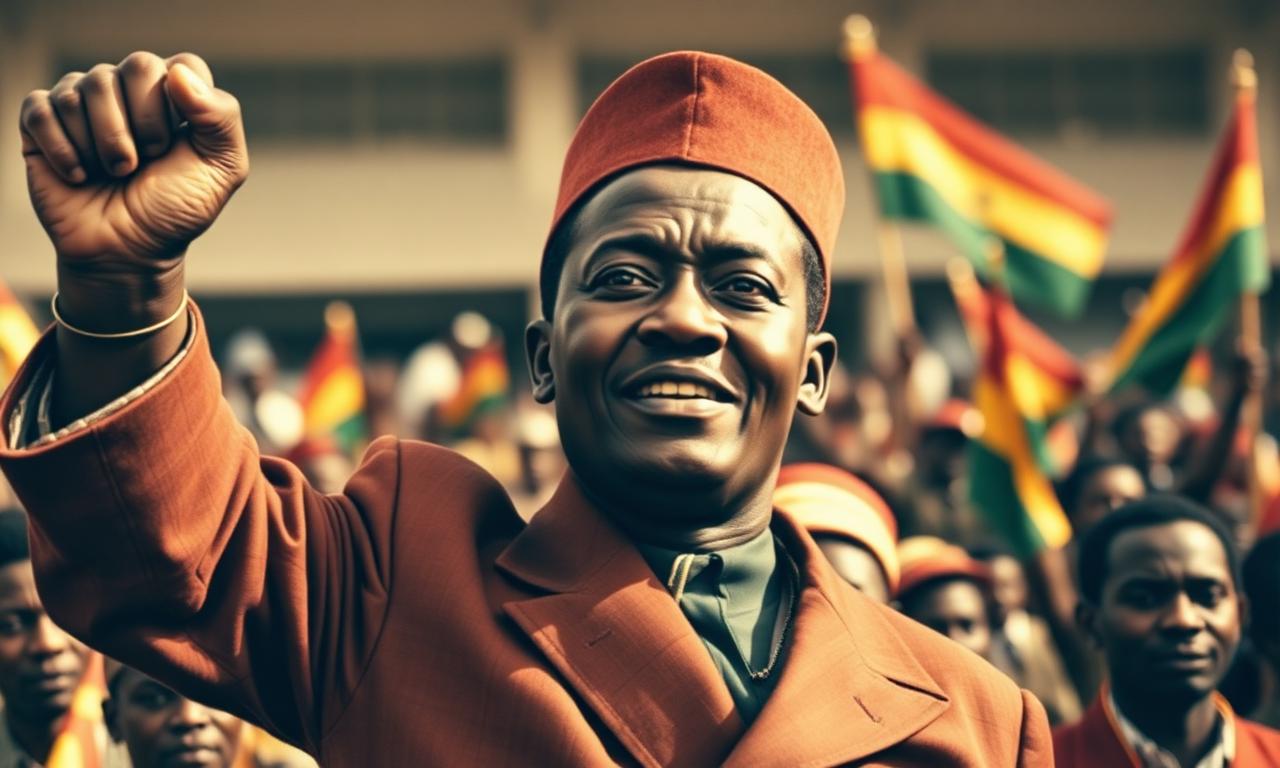
Dr. Kwame Nkrumah is the man most Ghanaians call the 'Father of the Nation'. He led the Gold Coast to freedom from British rule on 6 March 1957, making Ghana the first country in sub-Saharan Africa to win independence from European colonialism.
His ideas, speeches and projects did not only change Ghana. They inspired the whole African continent and many Black communities around the world. This article tells his story in a simple, clear way — from his childhood in a small village to his last days in exile.
Early Life in Nkroful
Kwame Nkrumah was born on 21 September 1909 in Nkroful, a small village in the Nzema area of what is now the Western Region of Ghana. His father was a goldsmith and his mother was a retail trader. He was their only child.
As a young boy, Nkrumah loved books. He walked long distances to attend the Roman Catholic primary school at Half Assini. His teachers noticed that he was very intelligent and very curious. He often asked questions that adults found hard to answer.
At the age of 17 he entered the Government Training College in Accra, which later became Achimota School. There he met Dr. Kwegyir Aggrey, the great African educator who told his students, 'The best of both worlds — Africa and Europe — must combine in the new African.' That message shaped Nkrumah for the rest of his life.
Studies in America and London
In 1935 Nkrumah travelled to the United States to study at Lincoln University in Pennsylvania, a historically Black college. To pay his fees he worked in factories, on ships, and even sold fish in the streets of Harlem. Life was very hard, but he never gave up.
He earned degrees in economics, sociology, philosophy and theology. He also taught at Lincoln. While in America, he read the works of Marcus Garvey, W.E.B. Du Bois and other Pan-African thinkers. Their belief that all Black people should unite to free themselves from racism and colonialism gripped him.
In 1945 he moved to London to study law. There he helped organise the famous Fifth Pan-African Congress in Manchester together with George Padmore, Jomo Kenyatta (later President of Kenya) and others. The congress demanded that all African colonies be set free.
Return to the Gold Coast
In December 1947 Nkrumah came home to join the United Gold Coast Convention (UGCC), a political party led by lawyer J.B. Danquah. He became its General Secretary. The party wanted self-government 'in the shortest possible time'.
Nkrumah, however, was in a hurry. His slogan was clear and powerful: 'Self-Government Now!' Young people, market women, farmers, ex-servicemen and chiefs were drawn to him.
After the 1948 Accra riots (when British police shot three ex-servicemen who were marching peacefully to the Christiansborg Castle), the British arrested Nkrumah and five other UGCC leaders. They became known as the Big Six. Their faces today appear on every Ghana cedi note.
Advertisement
The Convention People's Party (CPP)
In June 1949 Nkrumah broke away from the UGCC and formed his own party, the Convention People's Party (CPP). The CPP attracted ordinary people — drivers, fishermen, market women, junior workers and youth — who felt the UGCC was too elitist.
Nkrumah launched 'Positive Action' in January 1950 — a campaign of non-violent strikes and boycotts copied from Mahatma Gandhi's methods in India. The British declared a state of emergency and threw him into James Fort Prison.
But the people of the Gold Coast already loved him. In the 1951 general election the CPP won 34 of the 38 contested seats. The British were forced to release Nkrumah from prison and ask him to lead the government. He became 'Leader of Government Business' and a year later, in 1952, the first Prime Minister of the Gold Coast.
The Road to Independence
Between 1951 and 1957 Nkrumah and his government negotiated patiently with the British. There were elections in 1954 and 1956 which the CPP also won. The British government finally agreed to grant independence.
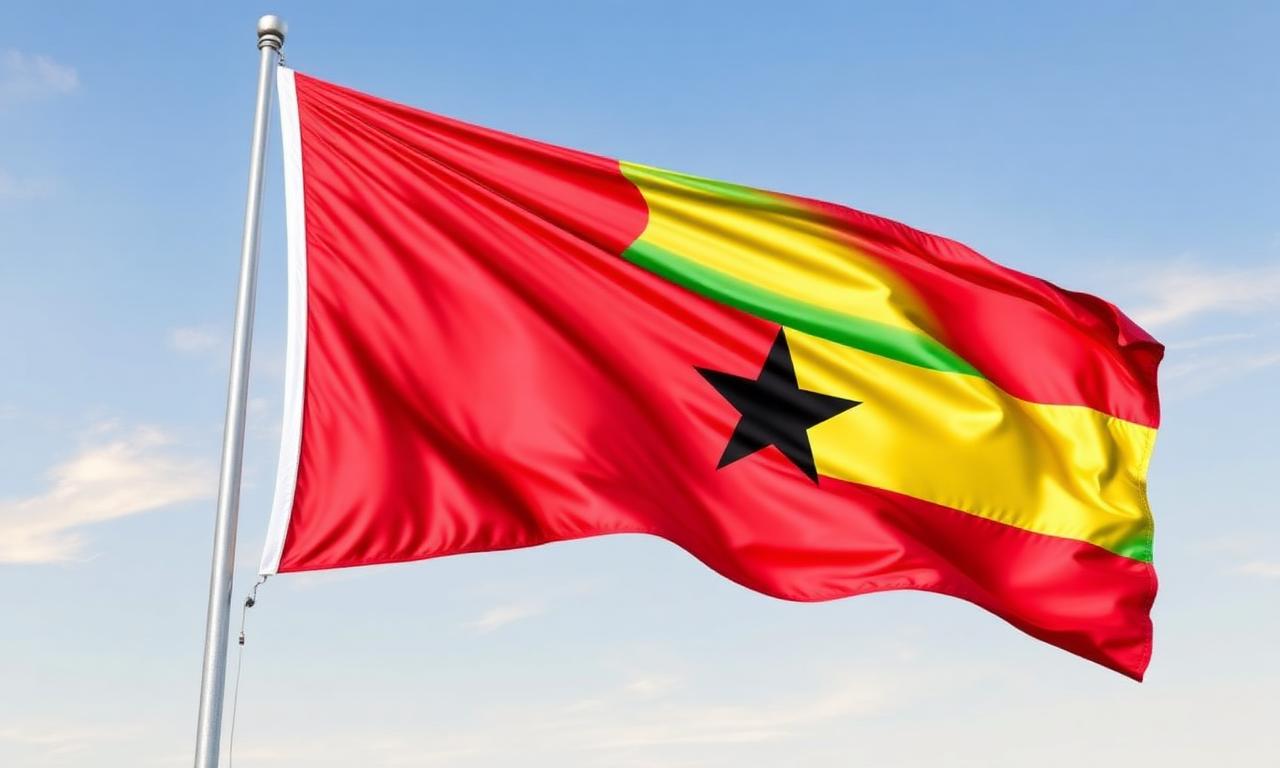
On the night of 5 March 1957, thousands of people gathered at the Old Polo Grounds in Accra. At midnight the Union Jack was lowered and the new red, gold and green flag with the black star was raised for the first time. Nkrumah, dressed in a white northern smock, made one of the most famous speeches in African history.
He told the cheering crowd: 'At long last the battle has ended! Ghana, your beloved country, is free forever!' He went on to declare, 'Our independence is meaningless unless it is linked up with the total liberation of the African continent.'
President of the First Republic
On 1 July 1960 Ghana became a republic and Nkrumah was elected the first President. He no longer answered to the British Queen. The cedi replaced the pound. New ministries, schools and factories sprang up.
Among his most famous projects are the Akosombo Dam on the Volta River, the Tema Harbour, the Tema Motorway, the Tema Oil Refinery, the State Steelworks, and the Kwame Nkrumah University of Science and Technology in Kumasi. He also introduced free primary education and free school uniforms.
Internationally, Nkrumah helped create the Organisation of African Unity (OAU) in 1963, which is today the African Union (AU). He believed in 'African Personality' — that Africa must speak with one voice on the world stage.
Overthrow and Exile
Not everyone agreed with Nkrumah's methods. He passed laws like the Preventive Detention Act that allowed people to be jailed without trial. The economy faced problems when cocoa prices fell on the world market.
On 24 February 1966, while Nkrumah was on a peace mission to Hanoi, soldiers and police led by Col. Emmanuel Kotoka and Major Akwasi Afrifa overthrew his government. The National Liberation Council (NLC) took power.
Nkrumah went into exile in Guinea, where President Sékou Touré made him 'Co-President'. He wrote books such as 'Africa Must Unite', 'Consciencism' and 'Neo-Colonialism: The Last Stage of Imperialism'.
He died of cancer in Bucharest, Romania, on 27 April 1972. His body was returned home and now rests in the Kwame Nkrumah Memorial Park in Accra — the very spot where he had declared independence in 1957.
Legacy
Today Nkrumah is honoured every 21 September as Founders' Day, a public holiday in Ghana. His statue stands at the African Union headquarters in Addis Ababa. Schools, roads, scholarships and a major university bear his name.
His writings are still studied at universities around the world. Many African presidents say their dream of a united Africa was lit by Nkrumah's example.
Understanding the background
Kwame Nkrumah and Ghana's Independence is an important topic because it helps learners connect names, dates, places and decisions to the wider story of Ghana. The subject belongs to independence, but it also links with citizenship, geography, culture and moral education. When students read about Kwame Nkrumah and Ghana's Independence, they are not only memorising facts; they are learning how people solved problems, protected communities, built institutions and passed lessons from one generation to another.
A useful way to study this topic is to begin with the main evidence. One important fact is: Born: 21 September 1909, Nkroful, Western Region. Another point to remember is: Died: 27 April 1972, Bucharest, Romania. These details give the article a clear anchor. They help learners explain what happened, where it happened, who was involved and why the event or place remains important in Ghanaian life today.
The story should also be read with empathy. History is about real people: leaders making hard choices, ordinary families facing change, traders moving goods, chiefs protecting their people, students demanding a better future, and communities keeping traditions alive. Some parts of Ghana's past are joyful and proud, while others are painful. A good reader respects both sides and tries to understand the human experience behind the facts.
For long reading, pause after each section and ask three simple questions: What is the main idea? Which details support it? How does it connect to Ghana today? This method makes Kwame Nkrumah and Ghana's Independence easier to remember and easier to discuss in class. It also helps learners write stronger essays because every paragraph can be connected to a clear point, a clear example and a clear explanation.
This topic is also useful for national identity. Ghana is made up of many regions, languages, ethnic groups, faiths and occupations, yet the history of the country shows repeated efforts to build unity. Whether the topic is a president, a castle, a kingdom, a region, a festival or a national event, the lesson is that Ghana's story was built by many hands. Understanding Kwame Nkrumah and Ghana's Independence helps learners appreciate that shared responsibility.
When preparing for quizzes or examinations, learners should create a short timeline, write down key names, mark important places on a map and explain the meaning of each fact in their own words. Copying sentences is less helpful than retelling the story clearly. If a learner can explain Kwame Nkrumah and Ghana's Independence to a younger pupil in simple English, then the learner has truly understood the topic.
People, places and decisions
Kwame Nkrumah and Ghana's Independence is an important topic because it helps learners connect names, dates, places and decisions to the wider story of Ghana. The subject belongs to independence, but it also links with citizenship, geography, culture and moral education. When students read about Kwame Nkrumah and Ghana's Independence, they are not only memorising facts; they are learning how people solved problems, protected communities, built institutions and passed lessons from one generation to another.
A useful way to study this topic is to begin with the main evidence. One important fact is: Died: 27 April 1972, Bucharest, Romania. Another point to remember is: Party: Convention People's Party (CPP). These details give the article a clear anchor. They help learners explain what happened, where it happened, who was involved and why the event or place remains important in Ghanaian life today.
The story should also be read with empathy. History is about real people: leaders making hard choices, ordinary families facing change, traders moving goods, chiefs protecting their people, students demanding a better future, and communities keeping traditions alive. Some parts of Ghana's past are joyful and proud, while others are painful. A good reader respects both sides and tries to understand the human experience behind the facts.
For long reading, pause after each section and ask three simple questions: What is the main idea? Which details support it? How does it connect to Ghana today? This method makes Kwame Nkrumah and Ghana's Independence easier to remember and easier to discuss in class. It also helps learners write stronger essays because every paragraph can be connected to a clear point, a clear example and a clear explanation.
This topic is also useful for national identity. Ghana is made up of many regions, languages, ethnic groups, faiths and occupations, yet the history of the country shows repeated efforts to build unity. Whether the topic is a president, a castle, a kingdom, a region, a festival or a national event, the lesson is that Ghana's story was built by many hands. Understanding Kwame Nkrumah and Ghana's Independence helps learners appreciate that shared responsibility.
When preparing for quizzes or examinations, learners should create a short timeline, write down key names, mark important places on a map and explain the meaning of each fact in their own words. Copying sentences is less helpful than retelling the story clearly. If a learner can explain Kwame Nkrumah and Ghana's Independence to a younger pupil in simple English, then the learner has truly understood the topic.
Cause and effect
Kwame Nkrumah and Ghana's Independence is an important topic because it helps learners connect names, dates, places and decisions to the wider story of Ghana. The subject belongs to independence, but it also links with citizenship, geography, culture and moral education. When students read about Kwame Nkrumah and Ghana's Independence, they are not only memorising facts; they are learning how people solved problems, protected communities, built institutions and passed lessons from one generation to another.
A useful way to study this topic is to begin with the main evidence. One important fact is: Party: Convention People's Party (CPP). Another point to remember is: Independence Day: 6 March 1957. These details give the article a clear anchor. They help learners explain what happened, where it happened, who was involved and why the event or place remains important in Ghanaian life today.
The story should also be read with empathy. History is about real people: leaders making hard choices, ordinary families facing change, traders moving goods, chiefs protecting their people, students demanding a better future, and communities keeping traditions alive. Some parts of Ghana's past are joyful and proud, while others are painful. A good reader respects both sides and tries to understand the human experience behind the facts.
For long reading, pause after each section and ask three simple questions: What is the main idea? Which details support it? How does it connect to Ghana today? This method makes Kwame Nkrumah and Ghana's Independence easier to remember and easier to discuss in class. It also helps learners write stronger essays because every paragraph can be connected to a clear point, a clear example and a clear explanation.
This topic is also useful for national identity. Ghana is made up of many regions, languages, ethnic groups, faiths and occupations, yet the history of the country shows repeated efforts to build unity. Whether the topic is a president, a castle, a kingdom, a region, a festival or a national event, the lesson is that Ghana's story was built by many hands. Understanding Kwame Nkrumah and Ghana's Independence helps learners appreciate that shared responsibility.
When preparing for quizzes or examinations, learners should create a short timeline, write down key names, mark important places on a map and explain the meaning of each fact in their own words. Copying sentences is less helpful than retelling the story clearly. If a learner can explain Kwame Nkrumah and Ghana's Independence to a younger pupil in simple English, then the learner has truly understood the topic.
Life in Ghana at the time
Kwame Nkrumah and Ghana's Independence is an important topic because it helps learners connect names, dates, places and decisions to the wider story of Ghana. The subject belongs to independence, but it also links with citizenship, geography, culture and moral education. When students read about Kwame Nkrumah and Ghana's Independence, they are not only memorising facts; they are learning how people solved problems, protected communities, built institutions and passed lessons from one generation to another.
A useful way to study this topic is to begin with the main evidence. One important fact is: Independence Day: 6 March 1957. Another point to remember is: Republic Day: 1 July 1960. These details give the article a clear anchor. They help learners explain what happened, where it happened, who was involved and why the event or place remains important in Ghanaian life today.
The story should also be read with empathy. History is about real people: leaders making hard choices, ordinary families facing change, traders moving goods, chiefs protecting their people, students demanding a better future, and communities keeping traditions alive. Some parts of Ghana's past are joyful and proud, while others are painful. A good reader respects both sides and tries to understand the human experience behind the facts.
For long reading, pause after each section and ask three simple questions: What is the main idea? Which details support it? How does it connect to Ghana today? This method makes Kwame Nkrumah and Ghana's Independence easier to remember and easier to discuss in class. It also helps learners write stronger essays because every paragraph can be connected to a clear point, a clear example and a clear explanation.
This topic is also useful for national identity. Ghana is made up of many regions, languages, ethnic groups, faiths and occupations, yet the history of the country shows repeated efforts to build unity. Whether the topic is a president, a castle, a kingdom, a region, a festival or a national event, the lesson is that Ghana's story was built by many hands. Understanding Kwame Nkrumah and Ghana's Independence helps learners appreciate that shared responsibility.
When preparing for quizzes or examinations, learners should create a short timeline, write down key names, mark important places on a map and explain the meaning of each fact in their own words. Copying sentences is less helpful than retelling the story clearly. If a learner can explain Kwame Nkrumah and Ghana's Independence to a younger pupil in simple English, then the learner has truly understood the topic.
Why the topic matters today
Kwame Nkrumah and Ghana's Independence is an important topic because it helps learners connect names, dates, places and decisions to the wider story of Ghana. The subject belongs to independence, but it also links with citizenship, geography, culture and moral education. When students read about Kwame Nkrumah and Ghana's Independence, they are not only memorising facts; they are learning how people solved problems, protected communities, built institutions and passed lessons from one generation to another.
A useful way to study this topic is to begin with the main evidence. One important fact is: Republic Day: 1 July 1960. Another point to remember is: Major projects: Akosombo Dam, Tema Harbour, KNUST. These details give the article a clear anchor. They help learners explain what happened, where it happened, who was involved and why the event or place remains important in Ghanaian life today.
The story should also be read with empathy. History is about real people: leaders making hard choices, ordinary families facing change, traders moving goods, chiefs protecting their people, students demanding a better future, and communities keeping traditions alive. Some parts of Ghana's past are joyful and proud, while others are painful. A good reader respects both sides and tries to understand the human experience behind the facts.
For long reading, pause after each section and ask three simple questions: What is the main idea? Which details support it? How does it connect to Ghana today? This method makes Kwame Nkrumah and Ghana's Independence easier to remember and easier to discuss in class. It also helps learners write stronger essays because every paragraph can be connected to a clear point, a clear example and a clear explanation.
This topic is also useful for national identity. Ghana is made up of many regions, languages, ethnic groups, faiths and occupations, yet the history of the country shows repeated efforts to build unity. Whether the topic is a president, a castle, a kingdom, a region, a festival or a national event, the lesson is that Ghana's story was built by many hands. Understanding Kwame Nkrumah and Ghana's Independence helps learners appreciate that shared responsibility.
When preparing for quizzes or examinations, learners should create a short timeline, write down key names, mark important places on a map and explain the meaning of each fact in their own words. Copying sentences is less helpful than retelling the story clearly. If a learner can explain Kwame Nkrumah and Ghana's Independence to a younger pupil in simple English, then the learner has truly understood the topic.
Common misunderstandings
Kwame Nkrumah and Ghana's Independence is an important topic because it helps learners connect names, dates, places and decisions to the wider story of Ghana. The subject belongs to independence, but it also links with citizenship, geography, culture and moral education. When students read about Kwame Nkrumah and Ghana's Independence, they are not only memorising facts; they are learning how people solved problems, protected communities, built institutions and passed lessons from one generation to another.
A useful way to study this topic is to begin with the main evidence. One important fact is: Major projects: Akosombo Dam, Tema Harbour, KNUST. Another point to remember is: Founded the Organisation of African Unity (OAU) in 1963. These details give the article a clear anchor. They help learners explain what happened, where it happened, who was involved and why the event or place remains important in Ghanaian life today.
The story should also be read with empathy. History is about real people: leaders making hard choices, ordinary families facing change, traders moving goods, chiefs protecting their people, students demanding a better future, and communities keeping traditions alive. Some parts of Ghana's past are joyful and proud, while others are painful. A good reader respects both sides and tries to understand the human experience behind the facts.
For long reading, pause after each section and ask three simple questions: What is the main idea? Which details support it? How does it connect to Ghana today? This method makes Kwame Nkrumah and Ghana's Independence easier to remember and easier to discuss in class. It also helps learners write stronger essays because every paragraph can be connected to a clear point, a clear example and a clear explanation.
This topic is also useful for national identity. Ghana is made up of many regions, languages, ethnic groups, faiths and occupations, yet the history of the country shows repeated efforts to build unity. Whether the topic is a president, a castle, a kingdom, a region, a festival or a national event, the lesson is that Ghana's story was built by many hands. Understanding Kwame Nkrumah and Ghana's Independence helps learners appreciate that shared responsibility.
When preparing for quizzes or examinations, learners should create a short timeline, write down key names, mark important places on a map and explain the meaning of each fact in their own words. Copying sentences is less helpful than retelling the story clearly. If a learner can explain Kwame Nkrumah and Ghana's Independence to a younger pupil in simple English, then the learner has truly understood the topic.
Classroom study notes
Kwame Nkrumah and Ghana's Independence is an important topic because it helps learners connect names, dates, places and decisions to the wider story of Ghana. The subject belongs to independence, but it also links with citizenship, geography, culture and moral education. When students read about Kwame Nkrumah and Ghana's Independence, they are not only memorising facts; they are learning how people solved problems, protected communities, built institutions and passed lessons from one generation to another.
A useful way to study this topic is to begin with the main evidence. One important fact is: Founded the Organisation of African Unity (OAU) in 1963. Another point to remember is: Born: 21 September 1909, Nkroful, Western Region. These details give the article a clear anchor. They help learners explain what happened, where it happened, who was involved and why the event or place remains important in Ghanaian life today.
The story should also be read with empathy. History is about real people: leaders making hard choices, ordinary families facing change, traders moving goods, chiefs protecting their people, students demanding a better future, and communities keeping traditions alive. Some parts of Ghana's past are joyful and proud, while others are painful. A good reader respects both sides and tries to understand the human experience behind the facts.
For long reading, pause after each section and ask three simple questions: What is the main idea? Which details support it? How does it connect to Ghana today? This method makes Kwame Nkrumah and Ghana's Independence easier to remember and easier to discuss in class. It also helps learners write stronger essays because every paragraph can be connected to a clear point, a clear example and a clear explanation.
This topic is also useful for national identity. Ghana is made up of many regions, languages, ethnic groups, faiths and occupations, yet the history of the country shows repeated efforts to build unity. Whether the topic is a president, a castle, a kingdom, a region, a festival or a national event, the lesson is that Ghana's story was built by many hands. Understanding Kwame Nkrumah and Ghana's Independence helps learners appreciate that shared responsibility.
When preparing for quizzes or examinations, learners should create a short timeline, write down key names, mark important places on a map and explain the meaning of each fact in their own words. Copying sentences is less helpful than retelling the story clearly. If a learner can explain Kwame Nkrumah and Ghana's Independence to a younger pupil in simple English, then the learner has truly understood the topic.
Summary
Kwame Nkrumah turned a small West African colony into a free, modern nation and inspired Africans everywhere to demand their freedom. Through his courage, his dream of African unity, and his big development projects, he changed the course of history — not only for Ghana but for the whole African continent.
Frequently Asked Questions
Q:When was Ghana's Independence Day?
6 March 1957. It is celebrated every year as a public holiday.
Q:What does the slogan 'Self-Government Now' mean?
It was Nkrumah's demand that Ghanaians govern themselves immediately, without delay, instead of waiting many more years as the British wanted.
Q:Why is Nkrumah called the Father of Ghana?
Because he led the country to independence and was its first Prime Minister and first President, founding modern Ghana's institutions.
Q:Where is Nkrumah buried?
At the Kwame Nkrumah Memorial Park in central Accra, on the spot where he declared independence.
Q:Why was Nkrumah overthrown?
A mix of falling cocoa prices, harsh laws like the Preventive Detention Act and opposition from soldiers and politicians led to the 1966 coup while he was abroad.