The Trans-Atlantic Slave Trade, sometimes called the Triangular Trade, was the forced movement of African men, women and children across the Atlantic Ocean to work as slaves in the Americas. It lasted from the early 1500s to the late 1800s and is one of the darkest chapters of human history.
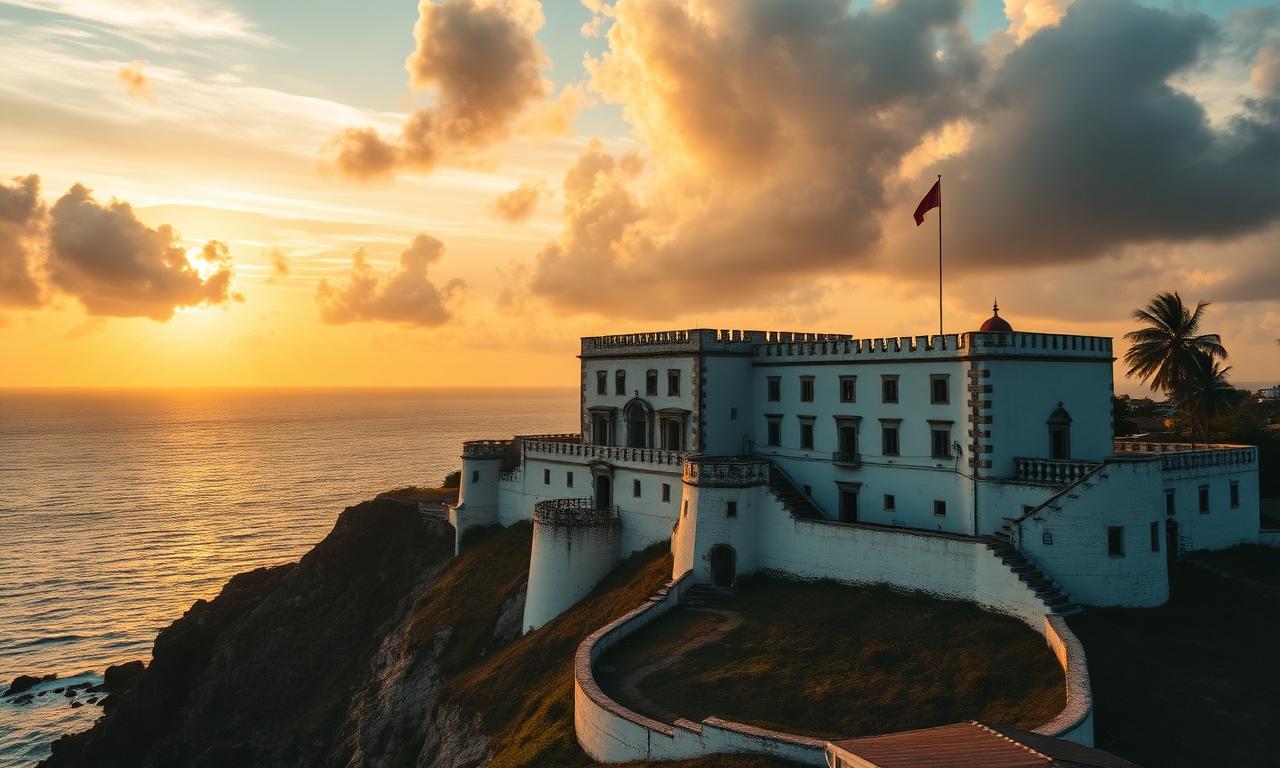
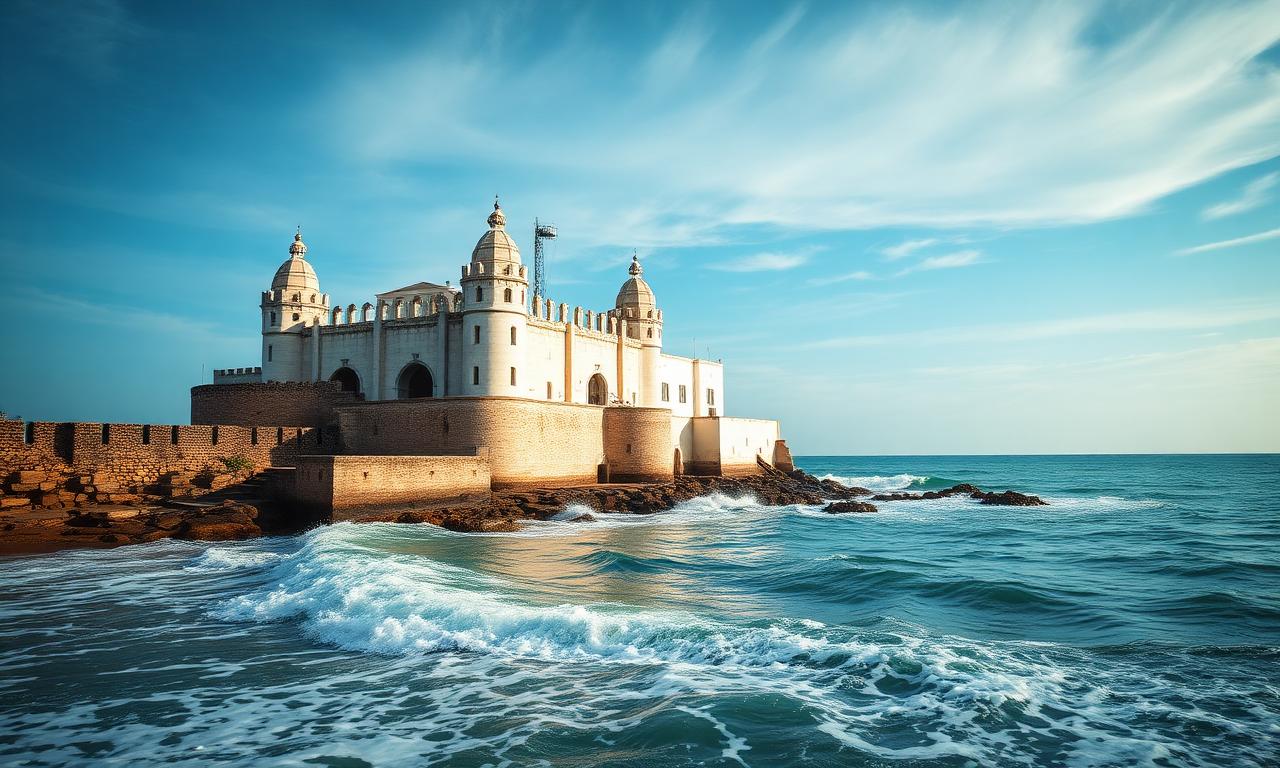
Cape Coast Castle and Elmina Castle on the Gold Coast were two of the busiest 'slave castles' on the entire West African coast. This article tells the story plainly, so that learners understand what happened, why it happened, who was responsible, and why we must never forget.
Background and Historical Overview
After 1492, when Christopher Columbus reached the Americas, European nations began to set up large sugar, cotton, tobacco and coffee plantations there. They needed huge numbers of strong workers. First they tried to enslave the native peoples of the Americas, but disease and harsh work killed most of them.
European traders then turned to Africa. They built forts along the West African coast, including on the Gold Coast, and began buying captives from African middlemen — often warriors who had captured prisoners during inter-state wars.
From the 1500s to the late 1800s, an estimated 12 to 15 million Africans were forced onto slave ships. Around 2 million died on the way. The route became known as the Middle Passage because it was the second leg of a triangular trade between Europe, Africa and the Americas.
Main Events Explained Clearly
1518 — The Spanish king allowed direct shipment of enslaved Africans to the Americas, marking the official start of the trade.
Late 1500s — Cape Coast and Elmina castles began to be used as holding places (dungeons) for captives before they were loaded onto ships.
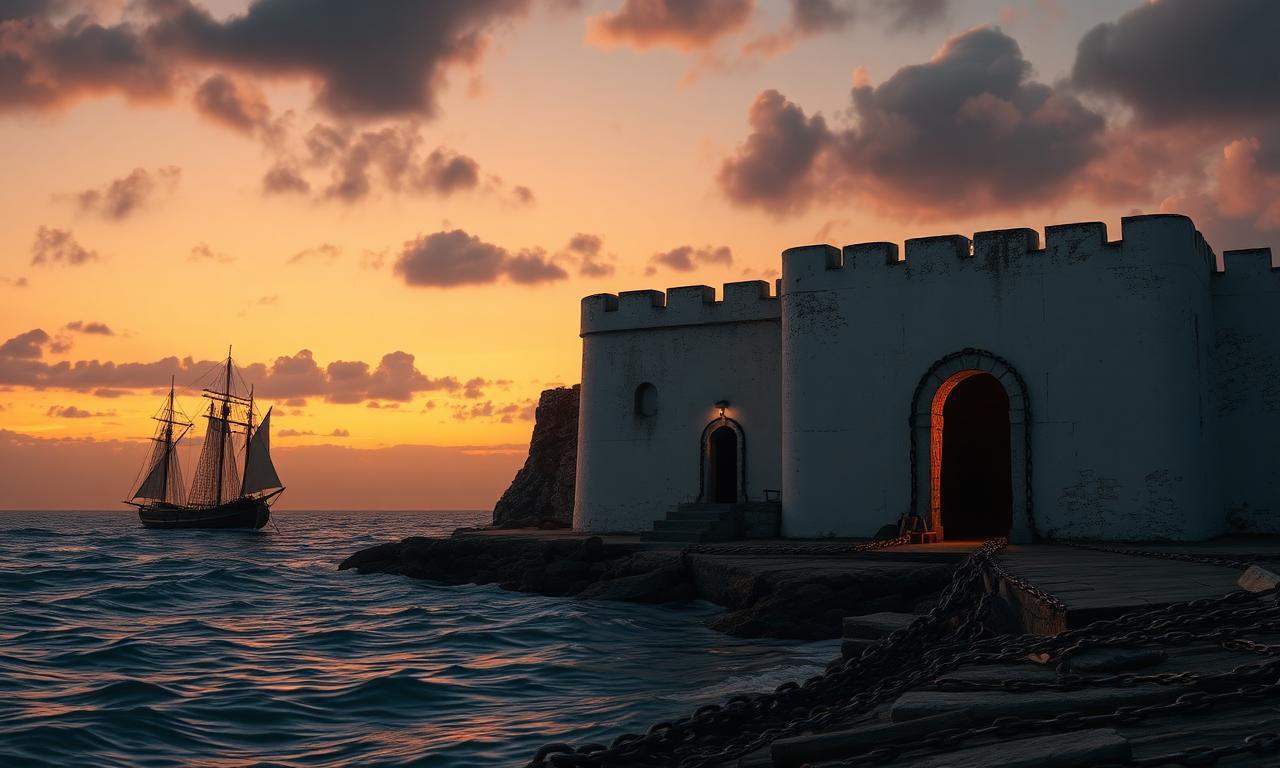
1600s–1700s — The trade grew rapidly. Britain, France, the Netherlands, Portugal and Denmark all took part. The famous 'Door of No Return' at Cape Coast Castle was the last point captives saw of Africa.
Inside the country, wars among kingdoms such as Asante, Denkyira, Akwamu and Fante produced thousands of captives every year. These were exchanged at the castles for guns, gunpowder, cloth, alcohol and metal goods.
1787 — The Society for the Abolition of the Slave Trade was formed in Britain, led by William Wilberforce, Thomas Clarkson and Olaudah Equiano (a freed African).
1807 — Britain passed the Abolition of the Slave Trade Act, making it illegal for British ships to carry slaves.
1834 — Britain abolished slavery itself throughout its empire.
1865 — The United States ended slavery after its Civil War.
1888 — Brazil became the last country in the Americas to abolish slavery.
Important People Involved
African chiefs and middlemen who sold captives to the Europeans — they bear part of the responsibility.
European traders and ship owners such as the Royal African Company of Britain.
Olaudah Equiano — an Igbo who was sold into slavery, bought his freedom, and wrote a famous book that helped end the trade.
William Wilberforce — British politician whose long campaign in Parliament led to the 1807 Abolition Act.
Thomas Clarkson — British abolitionist who gathered evidence of the cruelty of the trade.
Granville Sharp — lawyer who fought important court cases for the freedom of enslaved Africans in Britain.
Toussaint L'Ouverture — leader of the successful slave revolt in Haiti (1791–1804) that shook the entire slave system.
Advertisement
Causes and Effects
Causes: huge demand for cheap labour on American plantations, the high profits made from sugar and cotton, racist beliefs that Africans were inferior, the desire of European nations to enrich themselves, and African wars that produced captives who were then sold.
Effects on Africa: loss of about 12–15 million strong young people; many wars among African states fought just to capture more slaves; weakening of African industries because trade was diverted to slave-taking; lasting psychological wounds.
Effects on the Americas: huge wealth for plantation owners and European countries; the creation of a large African diaspora whose music, food, religion and language enriched the Americas; the long-term problem of racial inequality.
Effects on Europe: massive profits that helped finance the Industrial Revolution; the rise of port cities like Liverpool and Bristol; eventually a moral movement that ended the trade.
Simple Real-Life Explanation
Imagine you go to the market to buy yam but instead the seller forces you into a truck, takes away your name, locks you in a dark room with hundreds of others, and sends you to a faraway land to work without pay for the rest of your life. You may never see your family again. You may not even speak the language of the place you are sent.
That is what happened to millions of Africans for over three hundred years. Cape Coast Castle, just a few hours' drive from Accra, was one of the places where this terrible thing took place. The 'Door of No Return' was the last spot they stood on African soil.
Understanding the background
The Trans-Atlantic Slave Trade is an important topic because it helps learners connect names, dates, places and decisions to the wider story of Ghana. The subject belongs to historical events, but it also links with citizenship, geography, culture and moral education. When students read about The Trans-Atlantic Slave Trade, they are not only memorising facts; they are learning how people solved problems, protected communities, built institutions and passed lessons from one generation to another.
A useful way to study this topic is to begin with the main evidence. One important fact is: Key lesson 1: Greed and racism can lead human beings to commit terrible crimes against fellow humans.. Another point to remember is: Key lesson 2: Disunity and wars between African states made the slave trade possible — unity is strength.. These details give the article a clear anchor. They help learners explain what happened, where it happened, who was involved and why the event or place remains important in Ghanaian life today.
The story should also be read with empathy. History is about real people: leaders making hard choices, ordinary families facing change, traders moving goods, chiefs protecting their people, students demanding a better future, and communities keeping traditions alive. Some parts of Ghana's past are joyful and proud, while others are painful. A good reader respects both sides and tries to understand the human experience behind the facts.
For long reading, pause after each section and ask three simple questions: What is the main idea? Which details support it? How does it connect to Ghana today? This method makes The Trans-Atlantic Slave Trade easier to remember and easier to discuss in class. It also helps learners write stronger essays because every paragraph can be connected to a clear point, a clear example and a clear explanation.
This topic is also useful for national identity. Ghana is made up of many regions, languages, ethnic groups, faiths and occupations, yet the history of the country shows repeated efforts to build unity. Whether the topic is a president, a castle, a kingdom, a region, a festival or a national event, the lesson is that Ghana's story was built by many hands. Understanding The Trans-Atlantic Slave Trade helps learners appreciate that shared responsibility.
When preparing for quizzes or examinations, learners should create a short timeline, write down key names, mark important places on a map and explain the meaning of each fact in their own words. Copying sentences is less helpful than retelling the story clearly. If a learner can explain The Trans-Atlantic Slave Trade to a younger pupil in simple English, then the learner has truly understood the topic.
People, places and decisions
The Trans-Atlantic Slave Trade is an important topic because it helps learners connect names, dates, places and decisions to the wider story of Ghana. The subject belongs to historical events, but it also links with citizenship, geography, culture and moral education. When students read about The Trans-Atlantic Slave Trade, they are not only memorising facts; they are learning how people solved problems, protected communities, built institutions and passed lessons from one generation to another.
A useful way to study this topic is to begin with the main evidence. One important fact is: Key lesson 2: Disunity and wars between African states made the slave trade possible — unity is strength.. Another point to remember is: Key lesson 3: One brave voice (Wilberforce, Equiano, Clarkson) can start a movement that changes the world.. These details give the article a clear anchor. They help learners explain what happened, where it happened, who was involved and why the event or place remains important in Ghanaian life today.
The story should also be read with empathy. History is about real people: leaders making hard choices, ordinary families facing change, traders moving goods, chiefs protecting their people, students demanding a better future, and communities keeping traditions alive. Some parts of Ghana's past are joyful and proud, while others are painful. A good reader respects both sides and tries to understand the human experience behind the facts.
For long reading, pause after each section and ask three simple questions: What is the main idea? Which details support it? How does it connect to Ghana today? This method makes The Trans-Atlantic Slave Trade easier to remember and easier to discuss in class. It also helps learners write stronger essays because every paragraph can be connected to a clear point, a clear example and a clear explanation.
This topic is also useful for national identity. Ghana is made up of many regions, languages, ethnic groups, faiths and occupations, yet the history of the country shows repeated efforts to build unity. Whether the topic is a president, a castle, a kingdom, a region, a festival or a national event, the lesson is that Ghana's story was built by many hands. Understanding The Trans-Atlantic Slave Trade helps learners appreciate that shared responsibility.
When preparing for quizzes or examinations, learners should create a short timeline, write down key names, mark important places on a map and explain the meaning of each fact in their own words. Copying sentences is less helpful than retelling the story clearly. If a learner can explain The Trans-Atlantic Slave Trade to a younger pupil in simple English, then the learner has truly understood the topic.
Cause and effect
The Trans-Atlantic Slave Trade is an important topic because it helps learners connect names, dates, places and decisions to the wider story of Ghana. The subject belongs to historical events, but it also links with citizenship, geography, culture and moral education. When students read about The Trans-Atlantic Slave Trade, they are not only memorising facts; they are learning how people solved problems, protected communities, built institutions and passed lessons from one generation to another.
A useful way to study this topic is to begin with the main evidence. One important fact is: Key lesson 3: One brave voice (Wilberforce, Equiano, Clarkson) can start a movement that changes the world.. Another point to remember is: Key lesson 4: We must remember painful history, not to hate, but to make sure such evil never happens again.. These details give the article a clear anchor. They help learners explain what happened, where it happened, who was involved and why the event or place remains important in Ghanaian life today.
The story should also be read with empathy. History is about real people: leaders making hard choices, ordinary families facing change, traders moving goods, chiefs protecting their people, students demanding a better future, and communities keeping traditions alive. Some parts of Ghana's past are joyful and proud, while others are painful. A good reader respects both sides and tries to understand the human experience behind the facts.
For long reading, pause after each section and ask three simple questions: What is the main idea? Which details support it? How does it connect to Ghana today? This method makes The Trans-Atlantic Slave Trade easier to remember and easier to discuss in class. It also helps learners write stronger essays because every paragraph can be connected to a clear point, a clear example and a clear explanation.
This topic is also useful for national identity. Ghana is made up of many regions, languages, ethnic groups, faiths and occupations, yet the history of the country shows repeated efforts to build unity. Whether the topic is a president, a castle, a kingdom, a region, a festival or a national event, the lesson is that Ghana's story was built by many hands. Understanding The Trans-Atlantic Slave Trade helps learners appreciate that shared responsibility.
When preparing for quizzes or examinations, learners should create a short timeline, write down key names, mark important places on a map and explain the meaning of each fact in their own words. Copying sentences is less helpful than retelling the story clearly. If a learner can explain The Trans-Atlantic Slave Trade to a younger pupil in simple English, then the learner has truly understood the topic.
Life in Ghana at the time
The Trans-Atlantic Slave Trade is an important topic because it helps learners connect names, dates, places and decisions to the wider story of Ghana. The subject belongs to historical events, but it also links with citizenship, geography, culture and moral education. When students read about The Trans-Atlantic Slave Trade, they are not only memorising facts; they are learning how people solved problems, protected communities, built institutions and passed lessons from one generation to another.
A useful way to study this topic is to begin with the main evidence. One important fact is: Key lesson 4: We must remember painful history, not to hate, but to make sure such evil never happens again.. Another point to remember is: Key lesson 5: The African diaspora — descendants of those who were taken — are part of our extended family today.. These details give the article a clear anchor. They help learners explain what happened, where it happened, who was involved and why the event or place remains important in Ghanaian life today.
The story should also be read with empathy. History is about real people: leaders making hard choices, ordinary families facing change, traders moving goods, chiefs protecting their people, students demanding a better future, and communities keeping traditions alive. Some parts of Ghana's past are joyful and proud, while others are painful. A good reader respects both sides and tries to understand the human experience behind the facts.
For long reading, pause after each section and ask three simple questions: What is the main idea? Which details support it? How does it connect to Ghana today? This method makes The Trans-Atlantic Slave Trade easier to remember and easier to discuss in class. It also helps learners write stronger essays because every paragraph can be connected to a clear point, a clear example and a clear explanation.
This topic is also useful for national identity. Ghana is made up of many regions, languages, ethnic groups, faiths and occupations, yet the history of the country shows repeated efforts to build unity. Whether the topic is a president, a castle, a kingdom, a region, a festival or a national event, the lesson is that Ghana's story was built by many hands. Understanding The Trans-Atlantic Slave Trade helps learners appreciate that shared responsibility.
When preparing for quizzes or examinations, learners should create a short timeline, write down key names, mark important places on a map and explain the meaning of each fact in their own words. Copying sentences is less helpful than retelling the story clearly. If a learner can explain The Trans-Atlantic Slave Trade to a younger pupil in simple English, then the learner has truly understood the topic.
Why the topic matters today
The Trans-Atlantic Slave Trade is an important topic because it helps learners connect names, dates, places and decisions to the wider story of Ghana. The subject belongs to historical events, but it also links with citizenship, geography, culture and moral education. When students read about The Trans-Atlantic Slave Trade, they are not only memorising facts; they are learning how people solved problems, protected communities, built institutions and passed lessons from one generation to another.
A useful way to study this topic is to begin with the main evidence. One important fact is: Key lesson 5: The African diaspora — descendants of those who were taken — are part of our extended family today.. Another point to remember is: Key lesson 1: Greed and racism can lead human beings to commit terrible crimes against fellow humans.. These details give the article a clear anchor. They help learners explain what happened, where it happened, who was involved and why the event or place remains important in Ghanaian life today.
The story should also be read with empathy. History is about real people: leaders making hard choices, ordinary families facing change, traders moving goods, chiefs protecting their people, students demanding a better future, and communities keeping traditions alive. Some parts of Ghana's past are joyful and proud, while others are painful. A good reader respects both sides and tries to understand the human experience behind the facts.
For long reading, pause after each section and ask three simple questions: What is the main idea? Which details support it? How does it connect to Ghana today? This method makes The Trans-Atlantic Slave Trade easier to remember and easier to discuss in class. It also helps learners write stronger essays because every paragraph can be connected to a clear point, a clear example and a clear explanation.
This topic is also useful for national identity. Ghana is made up of many regions, languages, ethnic groups, faiths and occupations, yet the history of the country shows repeated efforts to build unity. Whether the topic is a president, a castle, a kingdom, a region, a festival or a national event, the lesson is that Ghana's story was built by many hands. Understanding The Trans-Atlantic Slave Trade helps learners appreciate that shared responsibility.
When preparing for quizzes or examinations, learners should create a short timeline, write down key names, mark important places on a map and explain the meaning of each fact in their own words. Copying sentences is less helpful than retelling the story clearly. If a learner can explain The Trans-Atlantic Slave Trade to a younger pupil in simple English, then the learner has truly understood the topic.
Common misunderstandings
The Trans-Atlantic Slave Trade is an important topic because it helps learners connect names, dates, places and decisions to the wider story of Ghana. The subject belongs to historical events, but it also links with citizenship, geography, culture and moral education. When students read about The Trans-Atlantic Slave Trade, they are not only memorising facts; they are learning how people solved problems, protected communities, built institutions and passed lessons from one generation to another.
A useful way to study this topic is to begin with the main evidence. One important fact is: Key lesson 1: Greed and racism can lead human beings to commit terrible crimes against fellow humans.. Another point to remember is: Key lesson 2: Disunity and wars between African states made the slave trade possible — unity is strength.. These details give the article a clear anchor. They help learners explain what happened, where it happened, who was involved and why the event or place remains important in Ghanaian life today.
The story should also be read with empathy. History is about real people: leaders making hard choices, ordinary families facing change, traders moving goods, chiefs protecting their people, students demanding a better future, and communities keeping traditions alive. Some parts of Ghana's past are joyful and proud, while others are painful. A good reader respects both sides and tries to understand the human experience behind the facts.
For long reading, pause after each section and ask three simple questions: What is the main idea? Which details support it? How does it connect to Ghana today? This method makes The Trans-Atlantic Slave Trade easier to remember and easier to discuss in class. It also helps learners write stronger essays because every paragraph can be connected to a clear point, a clear example and a clear explanation.
This topic is also useful for national identity. Ghana is made up of many regions, languages, ethnic groups, faiths and occupations, yet the history of the country shows repeated efforts to build unity. Whether the topic is a president, a castle, a kingdom, a region, a festival or a national event, the lesson is that Ghana's story was built by many hands. Understanding The Trans-Atlantic Slave Trade helps learners appreciate that shared responsibility.
When preparing for quizzes or examinations, learners should create a short timeline, write down key names, mark important places on a map and explain the meaning of each fact in their own words. Copying sentences is less helpful than retelling the story clearly. If a learner can explain The Trans-Atlantic Slave Trade to a younger pupil in simple English, then the learner has truly understood the topic.
Classroom study notes
The Trans-Atlantic Slave Trade is an important topic because it helps learners connect names, dates, places and decisions to the wider story of Ghana. The subject belongs to historical events, but it also links with citizenship, geography, culture and moral education. When students read about The Trans-Atlantic Slave Trade, they are not only memorising facts; they are learning how people solved problems, protected communities, built institutions and passed lessons from one generation to another.
A useful way to study this topic is to begin with the main evidence. One important fact is: Key lesson 2: Disunity and wars between African states made the slave trade possible — unity is strength.. Another point to remember is: Key lesson 3: One brave voice (Wilberforce, Equiano, Clarkson) can start a movement that changes the world.. These details give the article a clear anchor. They help learners explain what happened, where it happened, who was involved and why the event or place remains important in Ghanaian life today.
The story should also be read with empathy. History is about real people: leaders making hard choices, ordinary families facing change, traders moving goods, chiefs protecting their people, students demanding a better future, and communities keeping traditions alive. Some parts of Ghana's past are joyful and proud, while others are painful. A good reader respects both sides and tries to understand the human experience behind the facts.
For long reading, pause after each section and ask three simple questions: What is the main idea? Which details support it? How does it connect to Ghana today? This method makes The Trans-Atlantic Slave Trade easier to remember and easier to discuss in class. It also helps learners write stronger essays because every paragraph can be connected to a clear point, a clear example and a clear explanation.
This topic is also useful for national identity. Ghana is made up of many regions, languages, ethnic groups, faiths and occupations, yet the history of the country shows repeated efforts to build unity. Whether the topic is a president, a castle, a kingdom, a region, a festival or a national event, the lesson is that Ghana's story was built by many hands. Understanding The Trans-Atlantic Slave Trade helps learners appreciate that shared responsibility.
When preparing for quizzes or examinations, learners should create a short timeline, write down key names, mark important places on a map and explain the meaning of each fact in their own words. Copying sentences is less helpful than retelling the story clearly. If a learner can explain The Trans-Atlantic Slave Trade to a younger pupil in simple English, then the learner has truly understood the topic.
Summary
The Trans-Atlantic Slave Trade lasted about 400 years and forced 12 to 15 million Africans across the ocean in conditions of unimaginable cruelty. The Gold Coast played a central role through castles like Cape Coast and Elmina. Britain abolished the trade in 1807 and slavery in 1834, but the wounds remain. Today the castles are UNESCO World Heritage Sites where Ghanaians and visitors from the diaspora come to remember, mourn and learn.
Frequently Asked Questions
Q:When did the slave trade start and end?
It officially started around 1518 and Britain abolished it in 1807; slavery itself ended in different countries between 1834 and 1888.
Q:How many Africans were taken?
An estimated 12 to 15 million, with about 2 million dying during the Middle Passage.
Q:Which Ghanaian castles were used?
Cape Coast Castle, Elmina Castle, Christiansborg and many smaller forts along the coast.
Q:What is the 'Door of No Return'?
The last doorway captives passed through before being loaded onto ships; once they walked through it, they never returned to Africa.