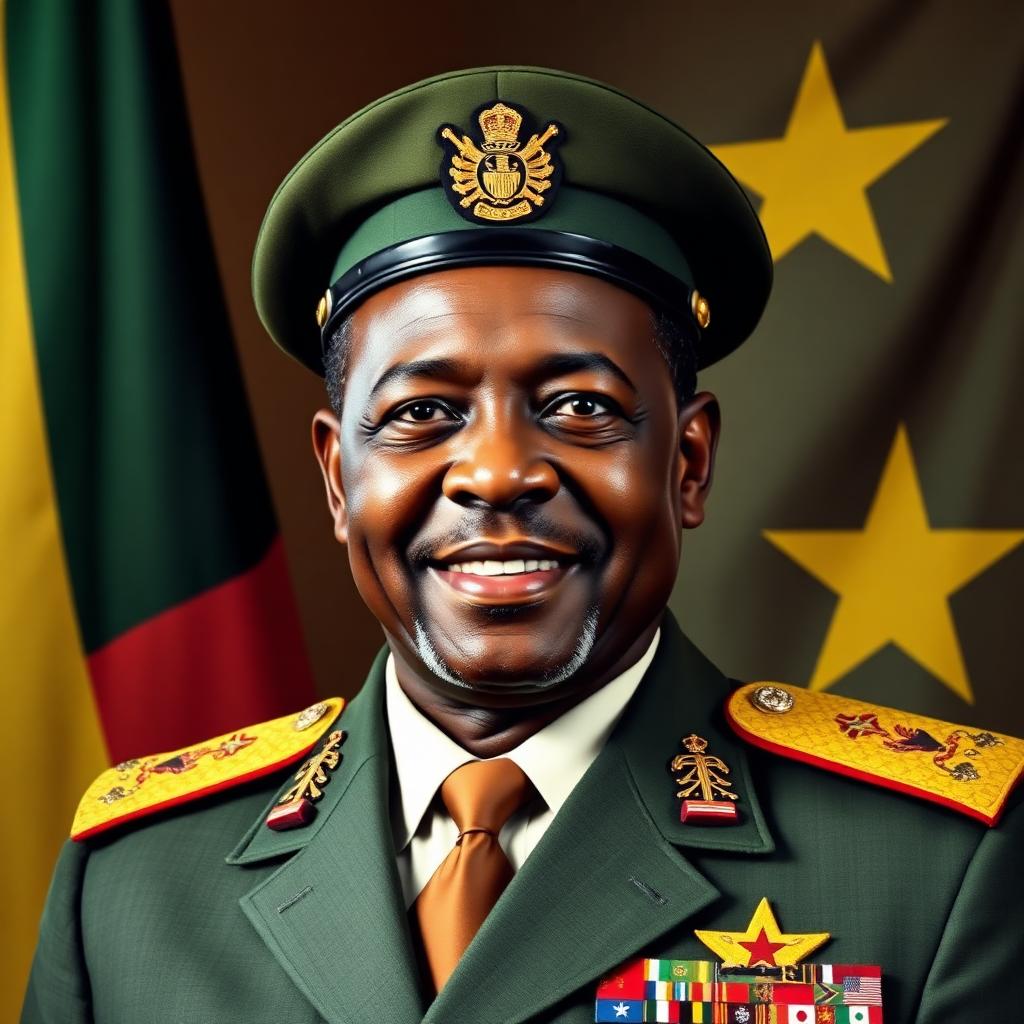
Flight Lieutenant Jerry John Rawlings — known to millions of Ghanaians simply as 'J.J.' — is one of the most important figures in the modern history of Ghana. He ruled the country for almost 20 years: first as a young military leader and later as a twice-elected president of the Fourth Republic.
He was loved by some and feared by others, but no honest history of Ghana since 1979 can be told without him.
Early Life and Air Force Career
Jerry John Rawlings was born on 22 June 1947 in Accra. His mother was Madam Victoria Agbotui from Dzelukope in the Volta Region, and his father was a Scottish chemist named James Ramsey John. He attended Achimota School and later joined the Ghana Air Force, where he trained as a fighter pilot and earned the rank of Flight Lieutenant.
In the late 1970s Ghana was suffering under military rule, corruption and severe shortages of food and fuel. The young Rawlings became known among his fellow junior officers for openly criticising senior officers who were stealing public money.
The June 4th Uprising (1979)
On 15 May 1979 Rawlings led a failed attempt to overthrow the Supreme Military Council government of General Akuffo. He was arrested and put on trial. At the trial his honesty and passion turned him into a national hero overnight.
On 4 June 1979 junior officers freed him from his cell and a successful uprising took place. The Armed Forces Revolutionary Council (AFRC) ruled for about three months, executed three former heads of state, then handed power to the elected civilian president Dr. Hilla Limann on 24 September 1979.
The 31st December Revolution (1981)
On 31 December 1981 Rawlings struck again, this time overthrowing the Limann government. He set up the Provisional National Defence Council (PNDC) and ruled Ghana for the next 11 years.
The PNDC years were hard. The economy was in ruins, droughts caused famine in 1983 and Nigeria expelled over a million Ghanaian workers. But Rawlings pushed through the Economic Recovery Programme with the IMF and World Bank, rebuilt roads and schools, and slowly stabilised the country.
Advertisement
The Fourth Republic (1992–2001)
In 1992 Rawlings returned Ghana to multi-party democracy with a new constitution. He took off his military uniform, formed the National Democratic Congress (NDC) and won the presidential elections of 1992 and 1996.
On 7 January 2001 he peacefully handed over power to John Agyekum Kufuor of the opposition NPP — the first time in Ghana's history that one elected government replaced another through the ballot box.
Death and Legacy
Rawlings died on 12 November 2020 at the age of 73 and was given a full state funeral. He is buried at the Military Cemetery in Burma Camp, Accra.
His legacy is mixed: critics point to the executions of 1979 and human rights abuses during the PNDC years; supporters credit him with rescuing the economy and giving Ghana its longest period of stable democracy.
Understanding the background
Flt. Lt. Jerry John Rawlings: Soldier, Revolutionary, President is an important topic because it helps learners connect names, dates, places and decisions to the wider story of Ghana. The subject belongs to presidents, but it also links with citizenship, geography, culture and moral education. When students read about Flt. Lt. Jerry John Rawlings: Soldier, Revolutionary, President, they are not only memorising facts; they are learning how people solved problems, protected communities, built institutions and passed lessons from one generation to another.
A useful way to study this topic is to begin with the main evidence. One important fact is: Born: 22 June 1947, Accra. Another point to remember is: Died: 12 November 2020. These details give the article a clear anchor. They help learners explain what happened, where it happened, who was involved and why the event or place remains important in Ghanaian life today.
The story should also be read with empathy. History is about real people: leaders making hard choices, ordinary families facing change, traders moving goods, chiefs protecting their people, students demanding a better future, and communities keeping traditions alive. Some parts of Ghana's past are joyful and proud, while others are painful. A good reader respects both sides and tries to understand the human experience behind the facts.
For long reading, pause after each section and ask three simple questions: What is the main idea? Which details support it? How does it connect to Ghana today? This method makes Flt. Lt. Jerry John Rawlings: Soldier, Revolutionary, President easier to remember and easier to discuss in class. It also helps learners write stronger essays because every paragraph can be connected to a clear point, a clear example and a clear explanation.
This topic is also useful for national identity. Ghana is made up of many regions, languages, ethnic groups, faiths and occupations, yet the history of the country shows repeated efforts to build unity. Whether the topic is a president, a castle, a kingdom, a region, a festival or a national event, the lesson is that Ghana's story was built by many hands. Understanding Flt. Lt. Jerry John Rawlings: Soldier, Revolutionary, President helps learners appreciate that shared responsibility.
When preparing for quizzes or examinations, learners should create a short timeline, write down key names, mark important places on a map and explain the meaning of each fact in their own words. Copying sentences is less helpful than retelling the story clearly. If a learner can explain Flt. Lt. Jerry John Rawlings: Soldier, Revolutionary, President to a younger pupil in simple English, then the learner has truly understood the topic.
People, places and decisions
Flt. Lt. Jerry John Rawlings: Soldier, Revolutionary, President is an important topic because it helps learners connect names, dates, places and decisions to the wider story of Ghana. The subject belongs to presidents, but it also links with citizenship, geography, culture and moral education. When students read about Flt. Lt. Jerry John Rawlings: Soldier, Revolutionary, President, they are not only memorising facts; they are learning how people solved problems, protected communities, built institutions and passed lessons from one generation to another.
A useful way to study this topic is to begin with the main evidence. One important fact is: Died: 12 November 2020. Another point to remember is: Led the 4 June 1979 uprising and the 31 December 1981 revolution. These details give the article a clear anchor. They help learners explain what happened, where it happened, who was involved and why the event or place remains important in Ghanaian life today.
The story should also be read with empathy. History is about real people: leaders making hard choices, ordinary families facing change, traders moving goods, chiefs protecting their people, students demanding a better future, and communities keeping traditions alive. Some parts of Ghana's past are joyful and proud, while others are painful. A good reader respects both sides and tries to understand the human experience behind the facts.
For long reading, pause after each section and ask three simple questions: What is the main idea? Which details support it? How does it connect to Ghana today? This method makes Flt. Lt. Jerry John Rawlings: Soldier, Revolutionary, President easier to remember and easier to discuss in class. It also helps learners write stronger essays because every paragraph can be connected to a clear point, a clear example and a clear explanation.
This topic is also useful for national identity. Ghana is made up of many regions, languages, ethnic groups, faiths and occupations, yet the history of the country shows repeated efforts to build unity. Whether the topic is a president, a castle, a kingdom, a region, a festival or a national event, the lesson is that Ghana's story was built by many hands. Understanding Flt. Lt. Jerry John Rawlings: Soldier, Revolutionary, President helps learners appreciate that shared responsibility.
When preparing for quizzes or examinations, learners should create a short timeline, write down key names, mark important places on a map and explain the meaning of each fact in their own words. Copying sentences is less helpful than retelling the story clearly. If a learner can explain Flt. Lt. Jerry John Rawlings: Soldier, Revolutionary, President to a younger pupil in simple English, then the learner has truly understood the topic.
Cause and effect
Flt. Lt. Jerry John Rawlings: Soldier, Revolutionary, President is an important topic because it helps learners connect names, dates, places and decisions to the wider story of Ghana. The subject belongs to presidents, but it also links with citizenship, geography, culture and moral education. When students read about Flt. Lt. Jerry John Rawlings: Soldier, Revolutionary, President, they are not only memorising facts; they are learning how people solved problems, protected communities, built institutions and passed lessons from one generation to another.
A useful way to study this topic is to begin with the main evidence. One important fact is: Led the 4 June 1979 uprising and the 31 December 1981 revolution. Another point to remember is: Founded the NDC (National Democratic Congress). These details give the article a clear anchor. They help learners explain what happened, where it happened, who was involved and why the event or place remains important in Ghanaian life today.
The story should also be read with empathy. History is about real people: leaders making hard choices, ordinary families facing change, traders moving goods, chiefs protecting their people, students demanding a better future, and communities keeping traditions alive. Some parts of Ghana's past are joyful and proud, while others are painful. A good reader respects both sides and tries to understand the human experience behind the facts.
For long reading, pause after each section and ask three simple questions: What is the main idea? Which details support it? How does it connect to Ghana today? This method makes Flt. Lt. Jerry John Rawlings: Soldier, Revolutionary, President easier to remember and easier to discuss in class. It also helps learners write stronger essays because every paragraph can be connected to a clear point, a clear example and a clear explanation.
This topic is also useful for national identity. Ghana is made up of many regions, languages, ethnic groups, faiths and occupations, yet the history of the country shows repeated efforts to build unity. Whether the topic is a president, a castle, a kingdom, a region, a festival or a national event, the lesson is that Ghana's story was built by many hands. Understanding Flt. Lt. Jerry John Rawlings: Soldier, Revolutionary, President helps learners appreciate that shared responsibility.
When preparing for quizzes or examinations, learners should create a short timeline, write down key names, mark important places on a map and explain the meaning of each fact in their own words. Copying sentences is less helpful than retelling the story clearly. If a learner can explain Flt. Lt. Jerry John Rawlings: Soldier, Revolutionary, President to a younger pupil in simple English, then the learner has truly understood the topic.
Life in Ghana at the time
Flt. Lt. Jerry John Rawlings: Soldier, Revolutionary, President is an important topic because it helps learners connect names, dates, places and decisions to the wider story of Ghana. The subject belongs to presidents, but it also links with citizenship, geography, culture and moral education. When students read about Flt. Lt. Jerry John Rawlings: Soldier, Revolutionary, President, they are not only memorising facts; they are learning how people solved problems, protected communities, built institutions and passed lessons from one generation to another.
A useful way to study this topic is to begin with the main evidence. One important fact is: Founded the NDC (National Democratic Congress). Another point to remember is: President of Ghana: 1993–2001 (two elected terms). These details give the article a clear anchor. They help learners explain what happened, where it happened, who was involved and why the event or place remains important in Ghanaian life today.
The story should also be read with empathy. History is about real people: leaders making hard choices, ordinary families facing change, traders moving goods, chiefs protecting their people, students demanding a better future, and communities keeping traditions alive. Some parts of Ghana's past are joyful and proud, while others are painful. A good reader respects both sides and tries to understand the human experience behind the facts.
For long reading, pause after each section and ask three simple questions: What is the main idea? Which details support it? How does it connect to Ghana today? This method makes Flt. Lt. Jerry John Rawlings: Soldier, Revolutionary, President easier to remember and easier to discuss in class. It also helps learners write stronger essays because every paragraph can be connected to a clear point, a clear example and a clear explanation.
This topic is also useful for national identity. Ghana is made up of many regions, languages, ethnic groups, faiths and occupations, yet the history of the country shows repeated efforts to build unity. Whether the topic is a president, a castle, a kingdom, a region, a festival or a national event, the lesson is that Ghana's story was built by many hands. Understanding Flt. Lt. Jerry John Rawlings: Soldier, Revolutionary, President helps learners appreciate that shared responsibility.
When preparing for quizzes or examinations, learners should create a short timeline, write down key names, mark important places on a map and explain the meaning of each fact in their own words. Copying sentences is less helpful than retelling the story clearly. If a learner can explain Flt. Lt. Jerry John Rawlings: Soldier, Revolutionary, President to a younger pupil in simple English, then the learner has truly understood the topic.
Why the topic matters today
Flt. Lt. Jerry John Rawlings: Soldier, Revolutionary, President is an important topic because it helps learners connect names, dates, places and decisions to the wider story of Ghana. The subject belongs to presidents, but it also links with citizenship, geography, culture and moral education. When students read about Flt. Lt. Jerry John Rawlings: Soldier, Revolutionary, President, they are not only memorising facts; they are learning how people solved problems, protected communities, built institutions and passed lessons from one generation to another.
A useful way to study this topic is to begin with the main evidence. One important fact is: President of Ghana: 1993–2001 (two elected terms). Another point to remember is: Born: 22 June 1947, Accra. These details give the article a clear anchor. They help learners explain what happened, where it happened, who was involved and why the event or place remains important in Ghanaian life today.
The story should also be read with empathy. History is about real people: leaders making hard choices, ordinary families facing change, traders moving goods, chiefs protecting their people, students demanding a better future, and communities keeping traditions alive. Some parts of Ghana's past are joyful and proud, while others are painful. A good reader respects both sides and tries to understand the human experience behind the facts.
For long reading, pause after each section and ask three simple questions: What is the main idea? Which details support it? How does it connect to Ghana today? This method makes Flt. Lt. Jerry John Rawlings: Soldier, Revolutionary, President easier to remember and easier to discuss in class. It also helps learners write stronger essays because every paragraph can be connected to a clear point, a clear example and a clear explanation.
This topic is also useful for national identity. Ghana is made up of many regions, languages, ethnic groups, faiths and occupations, yet the history of the country shows repeated efforts to build unity. Whether the topic is a president, a castle, a kingdom, a region, a festival or a national event, the lesson is that Ghana's story was built by many hands. Understanding Flt. Lt. Jerry John Rawlings: Soldier, Revolutionary, President helps learners appreciate that shared responsibility.
When preparing for quizzes or examinations, learners should create a short timeline, write down key names, mark important places on a map and explain the meaning of each fact in their own words. Copying sentences is less helpful than retelling the story clearly. If a learner can explain Flt. Lt. Jerry John Rawlings: Soldier, Revolutionary, President to a younger pupil in simple English, then the learner has truly understood the topic.
Common misunderstandings
Flt. Lt. Jerry John Rawlings: Soldier, Revolutionary, President is an important topic because it helps learners connect names, dates, places and decisions to the wider story of Ghana. The subject belongs to presidents, but it also links with citizenship, geography, culture and moral education. When students read about Flt. Lt. Jerry John Rawlings: Soldier, Revolutionary, President, they are not only memorising facts; they are learning how people solved problems, protected communities, built institutions and passed lessons from one generation to another.
A useful way to study this topic is to begin with the main evidence. One important fact is: Born: 22 June 1947, Accra. Another point to remember is: Died: 12 November 2020. These details give the article a clear anchor. They help learners explain what happened, where it happened, who was involved and why the event or place remains important in Ghanaian life today.
The story should also be read with empathy. History is about real people: leaders making hard choices, ordinary families facing change, traders moving goods, chiefs protecting their people, students demanding a better future, and communities keeping traditions alive. Some parts of Ghana's past are joyful and proud, while others are painful. A good reader respects both sides and tries to understand the human experience behind the facts.
For long reading, pause after each section and ask three simple questions: What is the main idea? Which details support it? How does it connect to Ghana today? This method makes Flt. Lt. Jerry John Rawlings: Soldier, Revolutionary, President easier to remember and easier to discuss in class. It also helps learners write stronger essays because every paragraph can be connected to a clear point, a clear example and a clear explanation.
This topic is also useful for national identity. Ghana is made up of many regions, languages, ethnic groups, faiths and occupations, yet the history of the country shows repeated efforts to build unity. Whether the topic is a president, a castle, a kingdom, a region, a festival or a national event, the lesson is that Ghana's story was built by many hands. Understanding Flt. Lt. Jerry John Rawlings: Soldier, Revolutionary, President helps learners appreciate that shared responsibility.
When preparing for quizzes or examinations, learners should create a short timeline, write down key names, mark important places on a map and explain the meaning of each fact in their own words. Copying sentences is less helpful than retelling the story clearly. If a learner can explain Flt. Lt. Jerry John Rawlings: Soldier, Revolutionary, President to a younger pupil in simple English, then the learner has truly understood the topic.
Classroom study notes
Flt. Lt. Jerry John Rawlings: Soldier, Revolutionary, President is an important topic because it helps learners connect names, dates, places and decisions to the wider story of Ghana. The subject belongs to presidents, but it also links with citizenship, geography, culture and moral education. When students read about Flt. Lt. Jerry John Rawlings: Soldier, Revolutionary, President, they are not only memorising facts; they are learning how people solved problems, protected communities, built institutions and passed lessons from one generation to another.
A useful way to study this topic is to begin with the main evidence. One important fact is: Died: 12 November 2020. Another point to remember is: Led the 4 June 1979 uprising and the 31 December 1981 revolution. These details give the article a clear anchor. They help learners explain what happened, where it happened, who was involved and why the event or place remains important in Ghanaian life today.
The story should also be read with empathy. History is about real people: leaders making hard choices, ordinary families facing change, traders moving goods, chiefs protecting their people, students demanding a better future, and communities keeping traditions alive. Some parts of Ghana's past are joyful and proud, while others are painful. A good reader respects both sides and tries to understand the human experience behind the facts.
For long reading, pause after each section and ask three simple questions: What is the main idea? Which details support it? How does it connect to Ghana today? This method makes Flt. Lt. Jerry John Rawlings: Soldier, Revolutionary, President easier to remember and easier to discuss in class. It also helps learners write stronger essays because every paragraph can be connected to a clear point, a clear example and a clear explanation.
This topic is also useful for national identity. Ghana is made up of many regions, languages, ethnic groups, faiths and occupations, yet the history of the country shows repeated efforts to build unity. Whether the topic is a president, a castle, a kingdom, a region, a festival or a national event, the lesson is that Ghana's story was built by many hands. Understanding Flt. Lt. Jerry John Rawlings: Soldier, Revolutionary, President helps learners appreciate that shared responsibility.
When preparing for quizzes or examinations, learners should create a short timeline, write down key names, mark important places on a map and explain the meaning of each fact in their own words. Copying sentences is less helpful than retelling the story clearly. If a learner can explain Flt. Lt. Jerry John Rawlings: Soldier, Revolutionary, President to a younger pupil in simple English, then the learner has truly understood the topic.
How to remember the lesson
Flt. Lt. Jerry John Rawlings: Soldier, Revolutionary, President is an important topic because it helps learners connect names, dates, places and decisions to the wider story of Ghana. The subject belongs to presidents, but it also links with citizenship, geography, culture and moral education. When students read about Flt. Lt. Jerry John Rawlings: Soldier, Revolutionary, President, they are not only memorising facts; they are learning how people solved problems, protected communities, built institutions and passed lessons from one generation to another.
A useful way to study this topic is to begin with the main evidence. One important fact is: Led the 4 June 1979 uprising and the 31 December 1981 revolution. Another point to remember is: Founded the NDC (National Democratic Congress). These details give the article a clear anchor. They help learners explain what happened, where it happened, who was involved and why the event or place remains important in Ghanaian life today.
The story should also be read with empathy. History is about real people: leaders making hard choices, ordinary families facing change, traders moving goods, chiefs protecting their people, students demanding a better future, and communities keeping traditions alive. Some parts of Ghana's past are joyful and proud, while others are painful. A good reader respects both sides and tries to understand the human experience behind the facts.
For long reading, pause after each section and ask three simple questions: What is the main idea? Which details support it? How does it connect to Ghana today? This method makes Flt. Lt. Jerry John Rawlings: Soldier, Revolutionary, President easier to remember and easier to discuss in class. It also helps learners write stronger essays because every paragraph can be connected to a clear point, a clear example and a clear explanation.
This topic is also useful for national identity. Ghana is made up of many regions, languages, ethnic groups, faiths and occupations, yet the history of the country shows repeated efforts to build unity. Whether the topic is a president, a castle, a kingdom, a region, a festival or a national event, the lesson is that Ghana's story was built by many hands. Understanding Flt. Lt. Jerry John Rawlings: Soldier, Revolutionary, President helps learners appreciate that shared responsibility.
When preparing for quizzes or examinations, learners should create a short timeline, write down key names, mark important places on a map and explain the meaning of each fact in their own words. Copying sentences is less helpful than retelling the story clearly. If a learner can explain Flt. Lt. Jerry John Rawlings: Soldier, Revolutionary, President to a younger pupil in simple English, then the learner has truly understood the topic.
Summary
Whether loved or feared, J.J. Rawlings dominated Ghanaian politics for two decades and laid the foundation of the stable Fourth Republic we live in today.
Frequently Asked Questions
Q:What does 'J.J.' stand for?
Jerry John — his two first names.
Q:Was Rawlings ever convicted of a crime?
No. He was arrested in 1979 but freed by the uprising before sentencing.