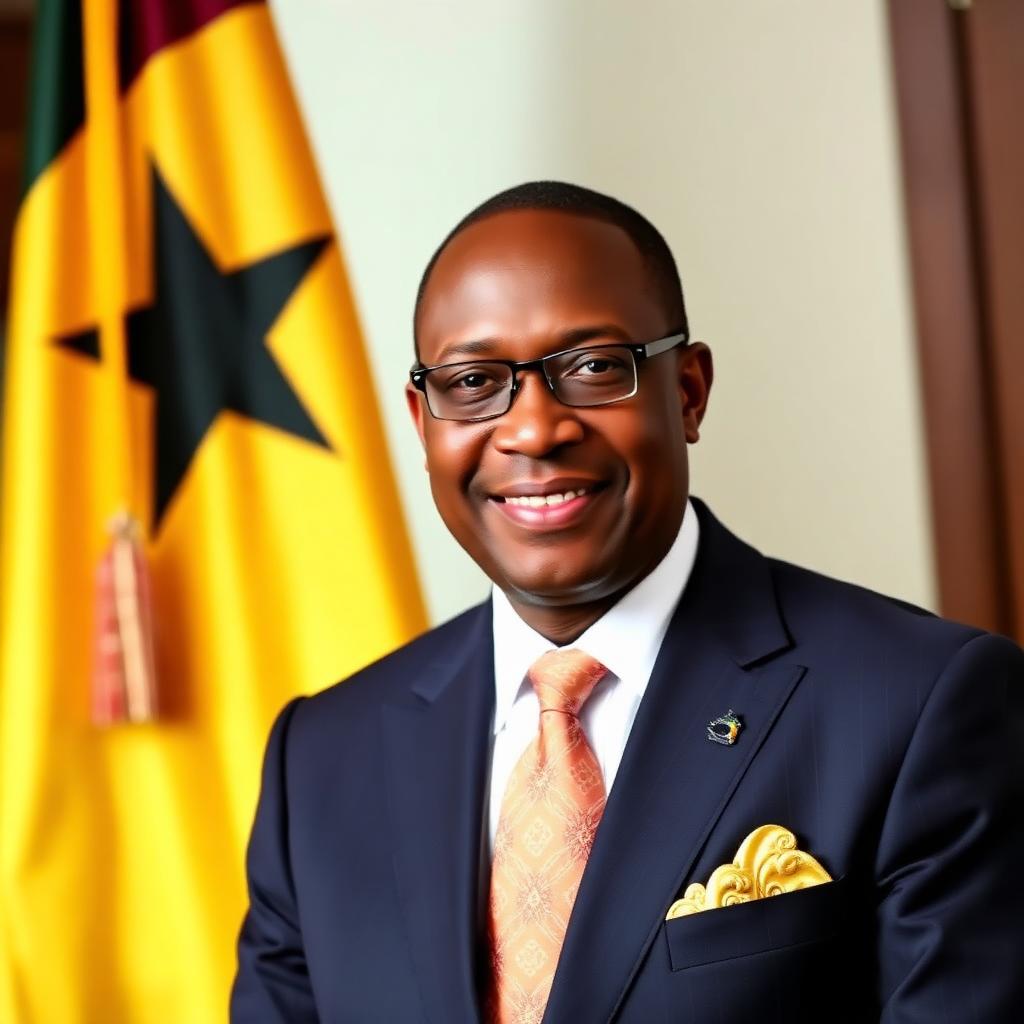
Nana Addo Dankwa Akufo-Addo is one of the most experienced politicians in Ghana's modern history. After running for the presidency three times, he finally won the 2016 election and served two terms as the 5th President of the Fourth Republic, from 7 January 2017 to 7 January 2025.
His government is best remembered for the Free Senior High School policy, which removed school fees for all SHS students in Ghana.
Family Background
Nana Addo was born on 29 March 1944 in Accra into one of Ghana's most famous political families. His father, Edward Akufo-Addo, was Ghana's third Chief Justice and later the ceremonial President of the Second Republic from 1970 to 1972.
He is a great-nephew of J.B. Danquah, one of the 'Big Six' who founded the United Gold Coast Convention (UGCC) that began the struggle for independence. So politics, law and public service have always been in his blood.
Education and Law Career
Akufo-Addo attended Government Boys School in Accra, Rowe Road School, Lancing College in England and the University of Ghana, Legon, where he studied economics. He went on to read law in the United Kingdom and was called to the English Bar at Middle Temple in 1971.
He returned to Ghana and built a successful law practice. In the 1970s and 1980s he was an outspoken human rights lawyer and a defender of press freedom, often challenging military governments in court.
Political Journey
Akufo-Addo joined the New Patriotic Party (NPP) when it was formed in 1992 and rose quickly through its ranks. He became Member of Parliament for Abuakwa South in 1996 and served in the Kufuor government as Attorney-General and then as Minister of Foreign Affairs.
He ran for president in 2008 and 2012, losing both times. In December 2016 he defeated the sitting president John Dramani Mahama by a wide margin and was sworn in on 7 January 2017. He was re-elected in 2020 and finished his second term in January 2025.
Advertisement
Major Policies
His most famous policy is the Free SHS programme, launched in September 2017, which makes secondary education free for every Ghanaian child. Other key programmes include One District One Factory (1D1F), Planting for Food and Jobs, the National Identification Card (Ghana Card) and the digital address system.
His second term was dominated by the Covid-19 pandemic, the global economic crisis of 2022–2023 and Ghana's debt restructuring programme with the International Monetary Fund.
Legacy
Supporters of Akufo-Addo point to Free SHS, the Ghana Card and the strong response to Covid-19 as major achievements. Critics raise concerns about the rising cost of living and the level of public debt during his time in office.
Whatever one's view, he is the first NPP leader to win two consecutive presidential elections under the Fourth Republic and the second Ghanaian president (after Kufuor) to complete two full elected terms.
Understanding the background
President Nana Addo Dankwa Akufo-Addo is an important topic because it helps learners connect names, dates, places and decisions to the wider story of Ghana. The subject belongs to presidents, but it also links with citizenship, geography, culture and moral education. When students read about President Nana Addo Dankwa Akufo-Addo, they are not only memorising facts; they are learning how people solved problems, protected communities, built institutions and passed lessons from one generation to another.
A useful way to study this topic is to begin with the main evidence. One important fact is: Born: 29 March 1944, Accra. Another point to remember is: Profession: Lawyer (Middle Temple, 1971). These details give the article a clear anchor. They help learners explain what happened, where it happened, who was involved and why the event or place remains important in Ghanaian life today.
The story should also be read with empathy. History is about real people: leaders making hard choices, ordinary families facing change, traders moving goods, chiefs protecting their people, students demanding a better future, and communities keeping traditions alive. Some parts of Ghana's past are joyful and proud, while others are painful. A good reader respects both sides and tries to understand the human experience behind the facts.
For long reading, pause after each section and ask three simple questions: What is the main idea? Which details support it? How does it connect to Ghana today? This method makes President Nana Addo Dankwa Akufo-Addo easier to remember and easier to discuss in class. It also helps learners write stronger essays because every paragraph can be connected to a clear point, a clear example and a clear explanation.
This topic is also useful for national identity. Ghana is made up of many regions, languages, ethnic groups, faiths and occupations, yet the history of the country shows repeated efforts to build unity. Whether the topic is a president, a castle, a kingdom, a region, a festival or a national event, the lesson is that Ghana's story was built by many hands. Understanding President Nana Addo Dankwa Akufo-Addo helps learners appreciate that shared responsibility.
When preparing for quizzes or examinations, learners should create a short timeline, write down key names, mark important places on a map and explain the meaning of each fact in their own words. Copying sentences is less helpful than retelling the story clearly. If a learner can explain President Nana Addo Dankwa Akufo-Addo to a younger pupil in simple English, then the learner has truly understood the topic.
People, places and decisions
President Nana Addo Dankwa Akufo-Addo is an important topic because it helps learners connect names, dates, places and decisions to the wider story of Ghana. The subject belongs to presidents, but it also links with citizenship, geography, culture and moral education. When students read about President Nana Addo Dankwa Akufo-Addo, they are not only memorising facts; they are learning how people solved problems, protected communities, built institutions and passed lessons from one generation to another.
A useful way to study this topic is to begin with the main evidence. One important fact is: Profession: Lawyer (Middle Temple, 1971). Another point to remember is: Party: New Patriotic Party (NPP). These details give the article a clear anchor. They help learners explain what happened, where it happened, who was involved and why the event or place remains important in Ghanaian life today.
The story should also be read with empathy. History is about real people: leaders making hard choices, ordinary families facing change, traders moving goods, chiefs protecting their people, students demanding a better future, and communities keeping traditions alive. Some parts of Ghana's past are joyful and proud, while others are painful. A good reader respects both sides and tries to understand the human experience behind the facts.
For long reading, pause after each section and ask three simple questions: What is the main idea? Which details support it? How does it connect to Ghana today? This method makes President Nana Addo Dankwa Akufo-Addo easier to remember and easier to discuss in class. It also helps learners write stronger essays because every paragraph can be connected to a clear point, a clear example and a clear explanation.
This topic is also useful for national identity. Ghana is made up of many regions, languages, ethnic groups, faiths and occupations, yet the history of the country shows repeated efforts to build unity. Whether the topic is a president, a castle, a kingdom, a region, a festival or a national event, the lesson is that Ghana's story was built by many hands. Understanding President Nana Addo Dankwa Akufo-Addo helps learners appreciate that shared responsibility.
When preparing for quizzes or examinations, learners should create a short timeline, write down key names, mark important places on a map and explain the meaning of each fact in their own words. Copying sentences is less helpful than retelling the story clearly. If a learner can explain President Nana Addo Dankwa Akufo-Addo to a younger pupil in simple English, then the learner has truly understood the topic.
Cause and effect
President Nana Addo Dankwa Akufo-Addo is an important topic because it helps learners connect names, dates, places and decisions to the wider story of Ghana. The subject belongs to presidents, but it also links with citizenship, geography, culture and moral education. When students read about President Nana Addo Dankwa Akufo-Addo, they are not only memorising facts; they are learning how people solved problems, protected communities, built institutions and passed lessons from one generation to another.
A useful way to study this topic is to begin with the main evidence. One important fact is: Party: New Patriotic Party (NPP). Another point to remember is: President of Ghana: 2017–2025 (two terms). These details give the article a clear anchor. They help learners explain what happened, where it happened, who was involved and why the event or place remains important in Ghanaian life today.
The story should also be read with empathy. History is about real people: leaders making hard choices, ordinary families facing change, traders moving goods, chiefs protecting their people, students demanding a better future, and communities keeping traditions alive. Some parts of Ghana's past are joyful and proud, while others are painful. A good reader respects both sides and tries to understand the human experience behind the facts.
For long reading, pause after each section and ask three simple questions: What is the main idea? Which details support it? How does it connect to Ghana today? This method makes President Nana Addo Dankwa Akufo-Addo easier to remember and easier to discuss in class. It also helps learners write stronger essays because every paragraph can be connected to a clear point, a clear example and a clear explanation.
This topic is also useful for national identity. Ghana is made up of many regions, languages, ethnic groups, faiths and occupations, yet the history of the country shows repeated efforts to build unity. Whether the topic is a president, a castle, a kingdom, a region, a festival or a national event, the lesson is that Ghana's story was built by many hands. Understanding President Nana Addo Dankwa Akufo-Addo helps learners appreciate that shared responsibility.
When preparing for quizzes or examinations, learners should create a short timeline, write down key names, mark important places on a map and explain the meaning of each fact in their own words. Copying sentences is less helpful than retelling the story clearly. If a learner can explain President Nana Addo Dankwa Akufo-Addo to a younger pupil in simple English, then the learner has truly understood the topic.
Life in Ghana at the time
President Nana Addo Dankwa Akufo-Addo is an important topic because it helps learners connect names, dates, places and decisions to the wider story of Ghana. The subject belongs to presidents, but it also links with citizenship, geography, culture and moral education. When students read about President Nana Addo Dankwa Akufo-Addo, they are not only memorising facts; they are learning how people solved problems, protected communities, built institutions and passed lessons from one generation to another.
A useful way to study this topic is to begin with the main evidence. One important fact is: President of Ghana: 2017–2025 (two terms). Another point to remember is: Signature policy: Free Senior High School (2017). These details give the article a clear anchor. They help learners explain what happened, where it happened, who was involved and why the event or place remains important in Ghanaian life today.
The story should also be read with empathy. History is about real people: leaders making hard choices, ordinary families facing change, traders moving goods, chiefs protecting their people, students demanding a better future, and communities keeping traditions alive. Some parts of Ghana's past are joyful and proud, while others are painful. A good reader respects both sides and tries to understand the human experience behind the facts.
For long reading, pause after each section and ask three simple questions: What is the main idea? Which details support it? How does it connect to Ghana today? This method makes President Nana Addo Dankwa Akufo-Addo easier to remember and easier to discuss in class. It also helps learners write stronger essays because every paragraph can be connected to a clear point, a clear example and a clear explanation.
This topic is also useful for national identity. Ghana is made up of many regions, languages, ethnic groups, faiths and occupations, yet the history of the country shows repeated efforts to build unity. Whether the topic is a president, a castle, a kingdom, a region, a festival or a national event, the lesson is that Ghana's story was built by many hands. Understanding President Nana Addo Dankwa Akufo-Addo helps learners appreciate that shared responsibility.
When preparing for quizzes or examinations, learners should create a short timeline, write down key names, mark important places on a map and explain the meaning of each fact in their own words. Copying sentences is less helpful than retelling the story clearly. If a learner can explain President Nana Addo Dankwa Akufo-Addo to a younger pupil in simple English, then the learner has truly understood the topic.
Why the topic matters today
President Nana Addo Dankwa Akufo-Addo is an important topic because it helps learners connect names, dates, places and decisions to the wider story of Ghana. The subject belongs to presidents, but it also links with citizenship, geography, culture and moral education. When students read about President Nana Addo Dankwa Akufo-Addo, they are not only memorising facts; they are learning how people solved problems, protected communities, built institutions and passed lessons from one generation to another.
A useful way to study this topic is to begin with the main evidence. One important fact is: Signature policy: Free Senior High School (2017). Another point to remember is: Born: 29 March 1944, Accra. These details give the article a clear anchor. They help learners explain what happened, where it happened, who was involved and why the event or place remains important in Ghanaian life today.
The story should also be read with empathy. History is about real people: leaders making hard choices, ordinary families facing change, traders moving goods, chiefs protecting their people, students demanding a better future, and communities keeping traditions alive. Some parts of Ghana's past are joyful and proud, while others are painful. A good reader respects both sides and tries to understand the human experience behind the facts.
For long reading, pause after each section and ask three simple questions: What is the main idea? Which details support it? How does it connect to Ghana today? This method makes President Nana Addo Dankwa Akufo-Addo easier to remember and easier to discuss in class. It also helps learners write stronger essays because every paragraph can be connected to a clear point, a clear example and a clear explanation.
This topic is also useful for national identity. Ghana is made up of many regions, languages, ethnic groups, faiths and occupations, yet the history of the country shows repeated efforts to build unity. Whether the topic is a president, a castle, a kingdom, a region, a festival or a national event, the lesson is that Ghana's story was built by many hands. Understanding President Nana Addo Dankwa Akufo-Addo helps learners appreciate that shared responsibility.
When preparing for quizzes or examinations, learners should create a short timeline, write down key names, mark important places on a map and explain the meaning of each fact in their own words. Copying sentences is less helpful than retelling the story clearly. If a learner can explain President Nana Addo Dankwa Akufo-Addo to a younger pupil in simple English, then the learner has truly understood the topic.
Common misunderstandings
President Nana Addo Dankwa Akufo-Addo is an important topic because it helps learners connect names, dates, places and decisions to the wider story of Ghana. The subject belongs to presidents, but it also links with citizenship, geography, culture and moral education. When students read about President Nana Addo Dankwa Akufo-Addo, they are not only memorising facts; they are learning how people solved problems, protected communities, built institutions and passed lessons from one generation to another.
A useful way to study this topic is to begin with the main evidence. One important fact is: Born: 29 March 1944, Accra. Another point to remember is: Profession: Lawyer (Middle Temple, 1971). These details give the article a clear anchor. They help learners explain what happened, where it happened, who was involved and why the event or place remains important in Ghanaian life today.
The story should also be read with empathy. History is about real people: leaders making hard choices, ordinary families facing change, traders moving goods, chiefs protecting their people, students demanding a better future, and communities keeping traditions alive. Some parts of Ghana's past are joyful and proud, while others are painful. A good reader respects both sides and tries to understand the human experience behind the facts.
For long reading, pause after each section and ask three simple questions: What is the main idea? Which details support it? How does it connect to Ghana today? This method makes President Nana Addo Dankwa Akufo-Addo easier to remember and easier to discuss in class. It also helps learners write stronger essays because every paragraph can be connected to a clear point, a clear example and a clear explanation.
This topic is also useful for national identity. Ghana is made up of many regions, languages, ethnic groups, faiths and occupations, yet the history of the country shows repeated efforts to build unity. Whether the topic is a president, a castle, a kingdom, a region, a festival or a national event, the lesson is that Ghana's story was built by many hands. Understanding President Nana Addo Dankwa Akufo-Addo helps learners appreciate that shared responsibility.
When preparing for quizzes or examinations, learners should create a short timeline, write down key names, mark important places on a map and explain the meaning of each fact in their own words. Copying sentences is less helpful than retelling the story clearly. If a learner can explain President Nana Addo Dankwa Akufo-Addo to a younger pupil in simple English, then the learner has truly understood the topic.
Classroom study notes
President Nana Addo Dankwa Akufo-Addo is an important topic because it helps learners connect names, dates, places and decisions to the wider story of Ghana. The subject belongs to presidents, but it also links with citizenship, geography, culture and moral education. When students read about President Nana Addo Dankwa Akufo-Addo, they are not only memorising facts; they are learning how people solved problems, protected communities, built institutions and passed lessons from one generation to another.
A useful way to study this topic is to begin with the main evidence. One important fact is: Profession: Lawyer (Middle Temple, 1971). Another point to remember is: Party: New Patriotic Party (NPP). These details give the article a clear anchor. They help learners explain what happened, where it happened, who was involved and why the event or place remains important in Ghanaian life today.
The story should also be read with empathy. History is about real people: leaders making hard choices, ordinary families facing change, traders moving goods, chiefs protecting their people, students demanding a better future, and communities keeping traditions alive. Some parts of Ghana's past are joyful and proud, while others are painful. A good reader respects both sides and tries to understand the human experience behind the facts.
For long reading, pause after each section and ask three simple questions: What is the main idea? Which details support it? How does it connect to Ghana today? This method makes President Nana Addo Dankwa Akufo-Addo easier to remember and easier to discuss in class. It also helps learners write stronger essays because every paragraph can be connected to a clear point, a clear example and a clear explanation.
This topic is also useful for national identity. Ghana is made up of many regions, languages, ethnic groups, faiths and occupations, yet the history of the country shows repeated efforts to build unity. Whether the topic is a president, a castle, a kingdom, a region, a festival or a national event, the lesson is that Ghana's story was built by many hands. Understanding President Nana Addo Dankwa Akufo-Addo helps learners appreciate that shared responsibility.
When preparing for quizzes or examinations, learners should create a short timeline, write down key names, mark important places on a map and explain the meaning of each fact in their own words. Copying sentences is less helpful than retelling the story clearly. If a learner can explain President Nana Addo Dankwa Akufo-Addo to a younger pupil in simple English, then the learner has truly understood the topic.
How to remember the lesson
President Nana Addo Dankwa Akufo-Addo is an important topic because it helps learners connect names, dates, places and decisions to the wider story of Ghana. The subject belongs to presidents, but it also links with citizenship, geography, culture and moral education. When students read about President Nana Addo Dankwa Akufo-Addo, they are not only memorising facts; they are learning how people solved problems, protected communities, built institutions and passed lessons from one generation to another.
A useful way to study this topic is to begin with the main evidence. One important fact is: Party: New Patriotic Party (NPP). Another point to remember is: President of Ghana: 2017–2025 (two terms). These details give the article a clear anchor. They help learners explain what happened, where it happened, who was involved and why the event or place remains important in Ghanaian life today.
The story should also be read with empathy. History is about real people: leaders making hard choices, ordinary families facing change, traders moving goods, chiefs protecting their people, students demanding a better future, and communities keeping traditions alive. Some parts of Ghana's past are joyful and proud, while others are painful. A good reader respects both sides and tries to understand the human experience behind the facts.
For long reading, pause after each section and ask three simple questions: What is the main idea? Which details support it? How does it connect to Ghana today? This method makes President Nana Addo Dankwa Akufo-Addo easier to remember and easier to discuss in class. It also helps learners write stronger essays because every paragraph can be connected to a clear point, a clear example and a clear explanation.
This topic is also useful for national identity. Ghana is made up of many regions, languages, ethnic groups, faiths and occupations, yet the history of the country shows repeated efforts to build unity. Whether the topic is a president, a castle, a kingdom, a region, a festival or a national event, the lesson is that Ghana's story was built by many hands. Understanding President Nana Addo Dankwa Akufo-Addo helps learners appreciate that shared responsibility.
When preparing for quizzes or examinations, learners should create a short timeline, write down key names, mark important places on a map and explain the meaning of each fact in their own words. Copying sentences is less helpful than retelling the story clearly. If a learner can explain President Nana Addo Dankwa Akufo-Addo to a younger pupil in simple English, then the learner has truly understood the topic.
Questions for deeper thinking
President Nana Addo Dankwa Akufo-Addo is an important topic because it helps learners connect names, dates, places and decisions to the wider story of Ghana. The subject belongs to presidents, but it also links with citizenship, geography, culture and moral education. When students read about President Nana Addo Dankwa Akufo-Addo, they are not only memorising facts; they are learning how people solved problems, protected communities, built institutions and passed lessons from one generation to another.
A useful way to study this topic is to begin with the main evidence. One important fact is: President of Ghana: 2017–2025 (two terms). Another point to remember is: Signature policy: Free Senior High School (2017). These details give the article a clear anchor. They help learners explain what happened, where it happened, who was involved and why the event or place remains important in Ghanaian life today.
The story should also be read with empathy. History is about real people: leaders making hard choices, ordinary families facing change, traders moving goods, chiefs protecting their people, students demanding a better future, and communities keeping traditions alive. Some parts of Ghana's past are joyful and proud, while others are painful. A good reader respects both sides and tries to understand the human experience behind the facts.
For long reading, pause after each section and ask three simple questions: What is the main idea? Which details support it? How does it connect to Ghana today? This method makes President Nana Addo Dankwa Akufo-Addo easier to remember and easier to discuss in class. It also helps learners write stronger essays because every paragraph can be connected to a clear point, a clear example and a clear explanation.
This topic is also useful for national identity. Ghana is made up of many regions, languages, ethnic groups, faiths and occupations, yet the history of the country shows repeated efforts to build unity. Whether the topic is a president, a castle, a kingdom, a region, a festival or a national event, the lesson is that Ghana's story was built by many hands. Understanding President Nana Addo Dankwa Akufo-Addo helps learners appreciate that shared responsibility.
When preparing for quizzes or examinations, learners should create a short timeline, write down key names, mark important places on a map and explain the meaning of each fact in their own words. Copying sentences is less helpful than retelling the story clearly. If a learner can explain President Nana Addo Dankwa Akufo-Addo to a younger pupil in simple English, then the learner has truly understood the topic.
Summary
Nana Addo Dankwa Akufo-Addo dedicated more than 40 years to law and politics before becoming president and using that office to open the doors of secondary school to every Ghanaian child.
Frequently Asked Questions
Q:Who succeeded Akufo-Addo as president?
John Dramani Mahama, who returned to the presidency on 7 January 2025.
Q:What is Free SHS?
A 2017 government programme that pays the fees of all students in public senior high schools in Ghana.